What is mastic gum?

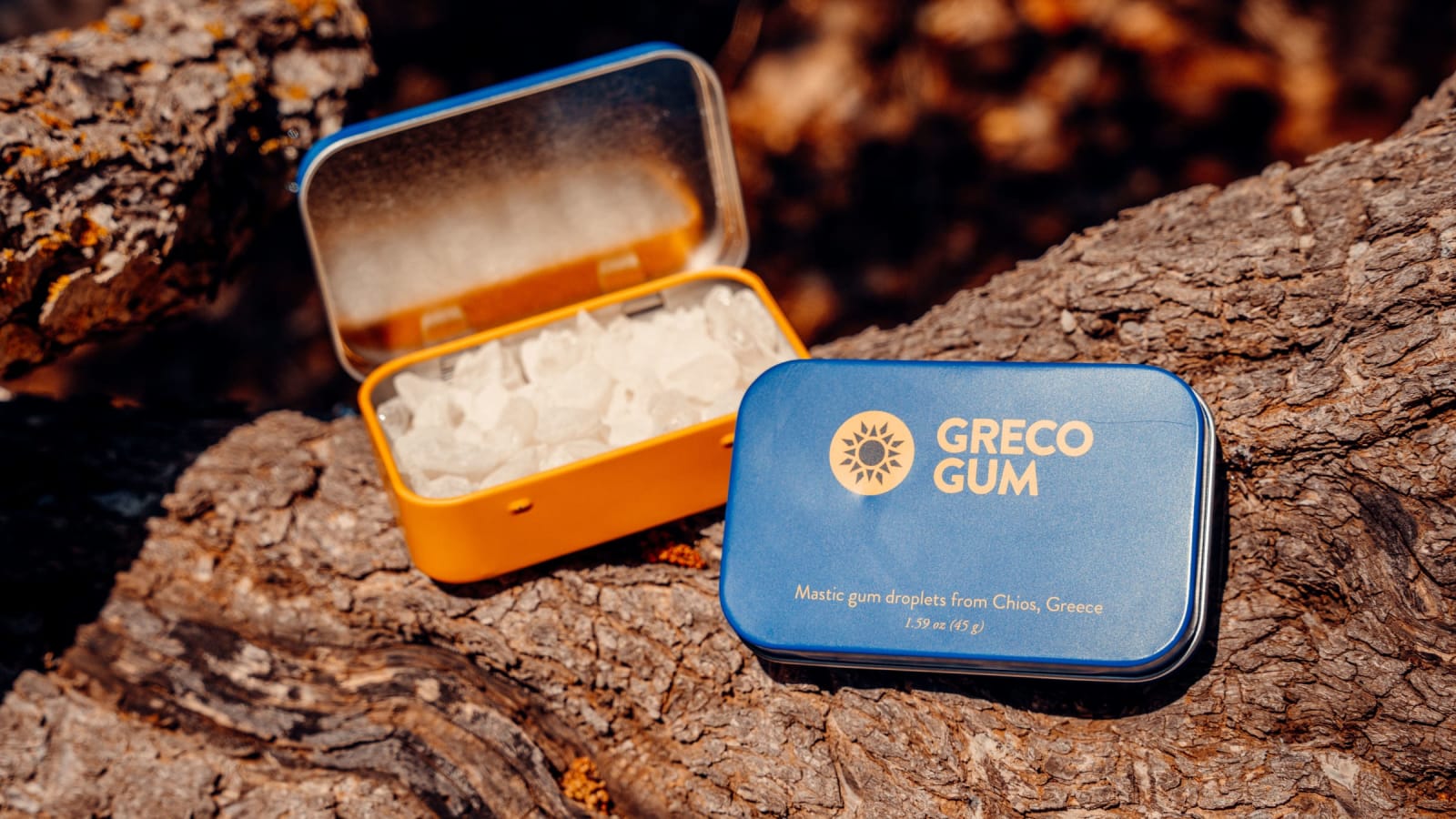
Mastic gum is the pure, hardened resin of the Pistacia lentiscus tree, chewed medicinally for thousands of years.
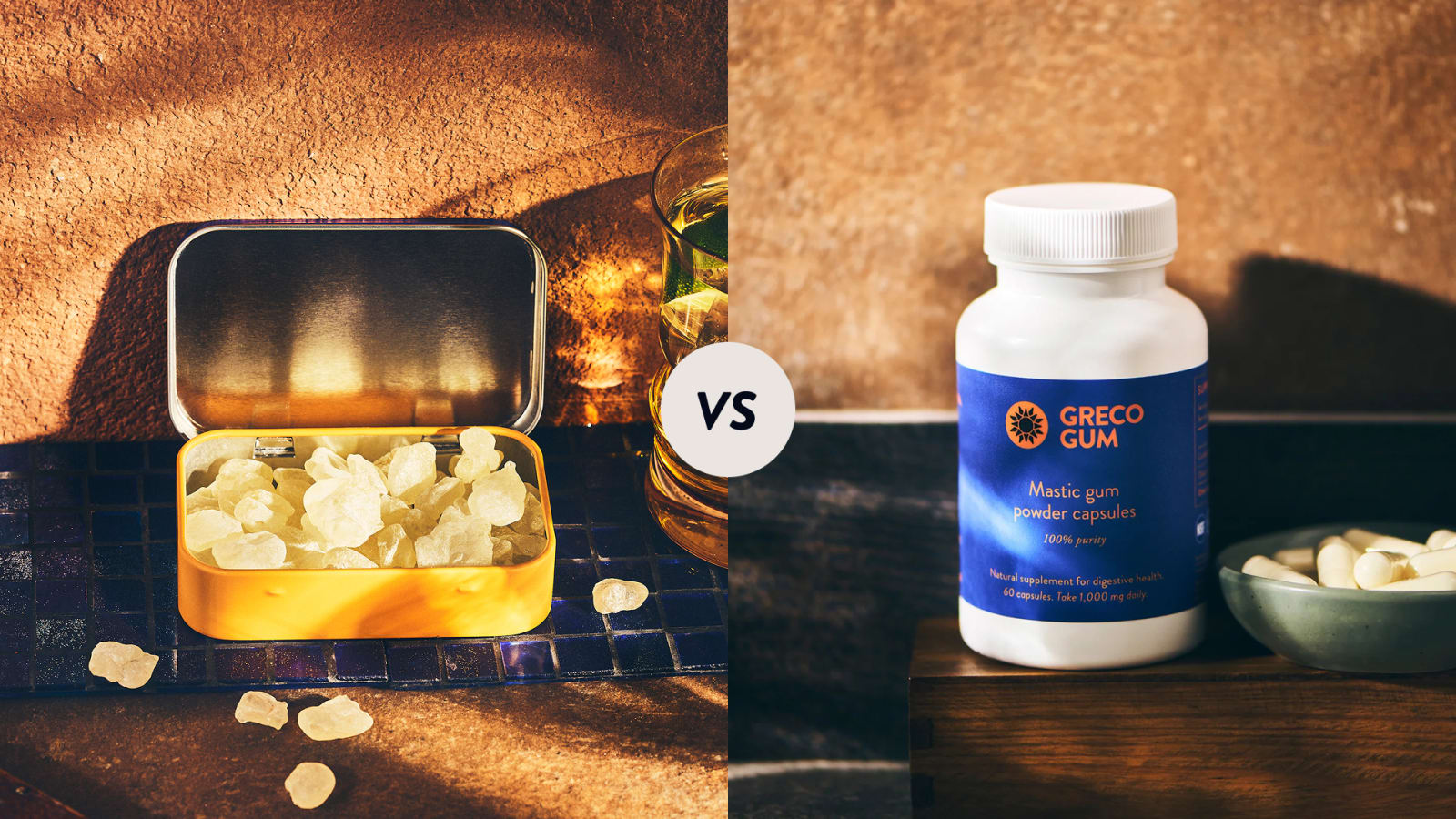
Mastic gum is a tough, single-ingredient natural chewing gum with traditional and researched uses. Unlike conventional chewing gum, which consists of a soft, synthetic plastic base mixed with artificial sweeteners, colors, and preservatives, mastic gum is pure tree resin.
- Used for jaw training, gut and oral health, and as a toxin-free chewing gum
- Comes from Chios, Greece
- Chew it daily or take it by capsule (gut health only)
Where does mastic gum come from?
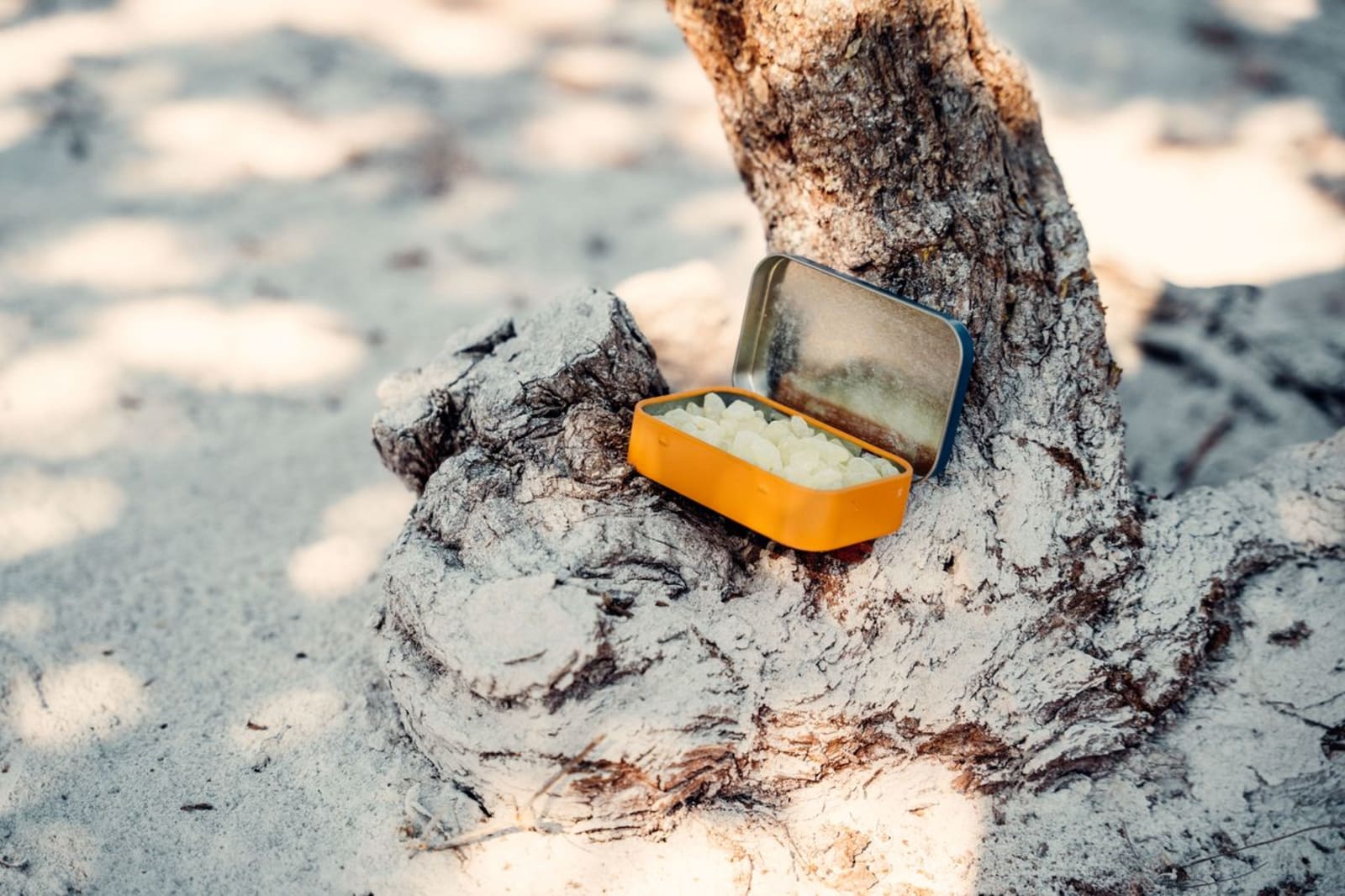
The Pistacia lentiscus tree grows throughout the Mediterranean, but only produces high-quality, abundant sap on the island of Chios, Greece, due to the unique climate and soil. For thousands of years, this resin has been harvested and chewed medicinally. In fact, the word mastic derives from the Greek word for chewing, masasthai (along with the verb masticate and the muscles of the jaw, the masseters).12
Because mastic gum is produced only on Chios, the European Union grants it Protected Designation of Origin (PDO) status to legally link the authentic product to the historic region of production. This is the same designation given to other products tied to specific regions like Champagne and Parmigiano Reggiano.
Finally, to keep mastic gum’s reputation as pure as its ingredient list, the Chios Mastiha Growers’ Association standardizes how the resin is sorted, handled, and shipped after harvest.
What is mastic gum used for?

While it may just seem like a healthy chewing gum, mastic gum is a versatile tool with multiple uses backed by both ancient observation and modern scientific research. The antimicrobial compounds in mastic gum benefit your mouth and gut, while its hardness makes it invaluable for jaw and facial muscle development. For the full rundown of every benefit and the research behind each one, see mastic gum benefits and uses.
Jawline
Conventional plastic-based gums and even plant-based gums are not hard enough to adequately activate jaw muscles.3 Mastic gum’s toughness provides the resistance needed to work the masseter muscle over time, leading to strength and muscle gains.
For more info on mastic gum and jawline, see:
Oral health
Mastic gum has been noted throughout history for its ability to freshen the breath, and modern science is now confirming why: mastic contains antimicrobial compounds that target the bad bacteria responsible for cavities, plaque buildup, and bad breath.4
For more info on mastic gum for oral health, see:
Digestion and gut health
Chewing anything (food or gum) revs up the digestive system, but mastic gum is unique in that its antimicrobial compounds have effects on specific gut problems like H. pylori infection and acid reflux.
For more info on mastic gum for gut health, see:
If sensitive dental work prevents you from chewing hard mastic gum, but you still want the gut benefits, try our mastic gum powder capsules:
How mastic gum differs from regular chewing gum

Many chew mastic gum to avoid ingesting microplastics and toxins found in virtually all other gum. Besides a few other plant-based options, every chewing gum is made from petroleum-derived plastic, softened with plasticizers, then artificially sweetened, colored, and preserved.
Mastic gum skips all of these toxins entirely, made of a single ingredient (pure mastic resin). We’d call it a natural alternative to plastic gum, but it’s actually the original chewing gum, chewed for thousands of years since the Ancient Greeks.
Learn more about the toxins you’re avoiding when you chew mastic.
What to know before you buy mastic gum

Mastic gum offers genuine benefits across multiple areas of health, but the combination of widespread hype and significant quality variation means people often write it off as ineffective when their experience falls short.
Knowing what to expect and how to evaluate quality before you buy protects you from unnecessary disappointment.
Safety
Mastic gum is safe for most people to chew daily, though some conditions warrant caution. If you have sensitive dental work or TMJ (temporomandibular joint disorder), mastic gum’s hardness and potential stickiness can pose problems.
Understand the full risks and safety profile of mastic gum.
Sourcing
Not all mastic is created equally. Sourcing, sorting, handling, and shipping all affect the final product. Some brands skip secondary sorting, ship in plastic that melts the resin and leaches microplastics into your gum, or disappear when you need customer support.
Greco’s approach differs. Our resin is hand-sorted twice (once on Chios, once at the US warehouse) for consistency and piece size. We then ship it cold to your doorstep to prevent melting and degradation. Finally, we are always willing to work with you if something goes wrong with our responsive customer support.
Learn what to look for when evaluating a mastic gum brand before you buy.
Pricing
Many are deterred by mastic gum’s high price. But when they understand how rare mastic gum is and how much sourcing, sorting, and shipping affect quality, they start to see the value. Add in its rechewability, and it becomes clear that mastic is a sound investment for jaw training and oral or gut health.
Understand what goes into mastic gum’s price and see a cost-per-day comparison to other gum types.
Timeline & expectations
When you begin to see benefits from mastic gum varies by use case. Jaw development takes months of consistent chewing, while oral and gut health improvements may show up momentarily, or in days or weeks.
See real jawline transformations and find chewing routines for your specific use.
Ready to try it?

The best brands sort their mastic gum into 2 types: larger pieces that can be softer (Nuggets) and smaller pieces that are consistently hard (Droplets).
Choose your type of mastic gum based on your goal:
- Nuggets for oral health, digestion, and general leisurely chewing
- Droplets if you’re focused on jaw training
Mastic gum is not formulated in a lab and the texture and hardness can vary. Ideally, you want a mix of both types to customize your chew. Or, if you’re new to mastic and want to try them both before settling on your go-to, try our starter pack that includes both:
If you want to explore more about specific use cases, history, and the health risks of chewing conventional gum browse our full blog.
Have questions before you order? See the FAQ below, contact us directly via email (info@grecogum.com), or shoot us a DM on social media.
Is mastic gum the same as Falim?
No. Falim is artificial, plastic-based gum with mastic flavoring sprinkled on top. Real mastic gum is pure resin. See how Falim stacks up against mastic gum.
Is it safe to chew mastic gum daily?
For most people, yes. That said, exercise caution and consult a medical professional before chewing if you have TMJ or sensitive dental work. See the potential side effects of chewing mastic and what to consider if you have TMJ concerns.
What does mastic gum taste like?
Mastic gum is not sweet like conventional chewing gum. It has a subtle earthy, somewhat piney flavor. For many it is the entire reason for chewing, and for others it grows on them over time. Read more on mastic gum’s taste to see exactly what we mean.
Does mastic gum help with bad breath?
Yes. Mastic’s antimicrobial compounds target the bacteria responsible for bad breath. Learn how it works and what to expect.
This article originally appeared online in 2026; it was most recently updated on June 22, 2026, to include current information.

Christian Arnold
Christian writes about technology’s impact on health and medicine 3.0. Among other things he’s a contributor to The Solarium.
References
-
“Mastic (plant resin).” Wikipedia, Wikimedia Foundation. wikipedia.org ↩
-
“Mastic.” Online Etymology Dictionary. etymonline.com ↩
-
Ishii, T., et al. “Coordinated features in jaw and neck muscle activities induced by chewing of soft and hard gum in healthy subjects.” Clinical and Experimental Dental Research, vol. 7, no. 4, 2021, pp. 520-530. doi.org ↩
-
Dimas, K.S., et al. “Chios Mastic Gum: A Plant-produced Resin Exhibiting Numerous Diverse Pharmaceutical and Biomedical Properties.” In Vivo, vol. 26, no. 5, 2012, pp. 777–785. International Institute of Anticancer Research ↩