
Mastic gum for acid reflux: what the research shows

Clinical research shows mastic gum can ease upper GI symptoms, including heartburn.
Below, we break down what that evidence actually covers, how mastic gum works for reflux, and how to try it.
Can mastic gum help with acid reflux?
A few related terms to get straight first:
- Heartburn: a burning feeling in the chest caused by acid reflux
- Dyspepsia: a digestion issue that causes a burning sensation in the upper abdomen, nausea, bloating, early satiety, and general upper GI discomfort
- Gastroesophageal Reflux Disease (GERD): a more serious condition where acid reflux occurs chronically and damages the body gradually
Most of the research around mastic gum for acid reflux has focused on relieving functional dyspepsia rather than diagnosed reflux or GERD. But for those with functional dyspepsia, which includes heartburn, mastic gum has led to meaningful symptom improvement.1
Mastic gum has been used as a digestive remedy in the Mediterranean for thousands of years. The European Medicines Agency has even registered Chios mastic resin as a traditional herbal medicine for mild dyspeptic disorders.2 That registration reflects a long, documented history of safe use.

What the research shows
The strongest clinical evidence comes from a 2010 trial by Dabos et al. The study tracked four symptoms, including heartburn, and all four improved significantly against placebo.1
148 patients took either 350 mg of mastic gum or a placebo three times a day for three weeks. By the end of the study, 77% of the group taking mastic gum had experienced an improvement in acid reflux symptoms compared to 40% of the placebo group.1 23% of the mastic group did not improve, which is worth keeping in mind. It doesn’t work for everyone.
The biggest limitation is that most of the clinical evidence comes from studies of functional dyspepsia, not diagnosed acid reflux or GERD. Heartburn was one of the symptoms measured, so the research still applies, but it’s a narrower picture than the marketing around mastic gum sometimes suggests.
There are a few more limitations worth noting:
- 1Studies have been small and short-term.
- 2Inconsistent doses and forms of mastic gum were administered.
- 3The results were measured by patients self-reporting symptoms rather than being clinically tested.
Anecdotal reports line up with the research. In one Reddit thread on mastic gum for digestive issues, a commenter taking it for acid reflux wrote: “I took mastic gum twice a day for a week and noticed my symptoms started to leave... I stopped taking it for a week and the symptoms came back.”3
How mastic gum improves reflux symptoms
Mastic gum works on reflux in two ways: mechanically and biochemically.
Mechanically, chewing produces saliva, which contains bicarbonate that neutralizes esophageal acid 4. It also increases how often you swallow to clear acid back into the stomach 4. Regular chewing gum also has these effects, but what sets mastic gum apart is its bioactive properties.
Mastic gum contains compounds that reduce inflammation and protect the stomach lining, partly by blocking an enzyme (Protein Kinase C) that triggers oxidative damage.5 Mastic gum also fights H. pylori, a stomach infection that can make reflux worse.

Chewing vs. capsules for reflux relief
Mastic gum comes in both chewing and capsule forms. For acid reflux specifically, chewing is the better format. A lot of mastic gum’s benefit for reflux comes from the act of chewing itself. Chewing stimulates saliva, which contains bicarbonate that helps neutralize acid in the esophagus and speeds up its clearance.4
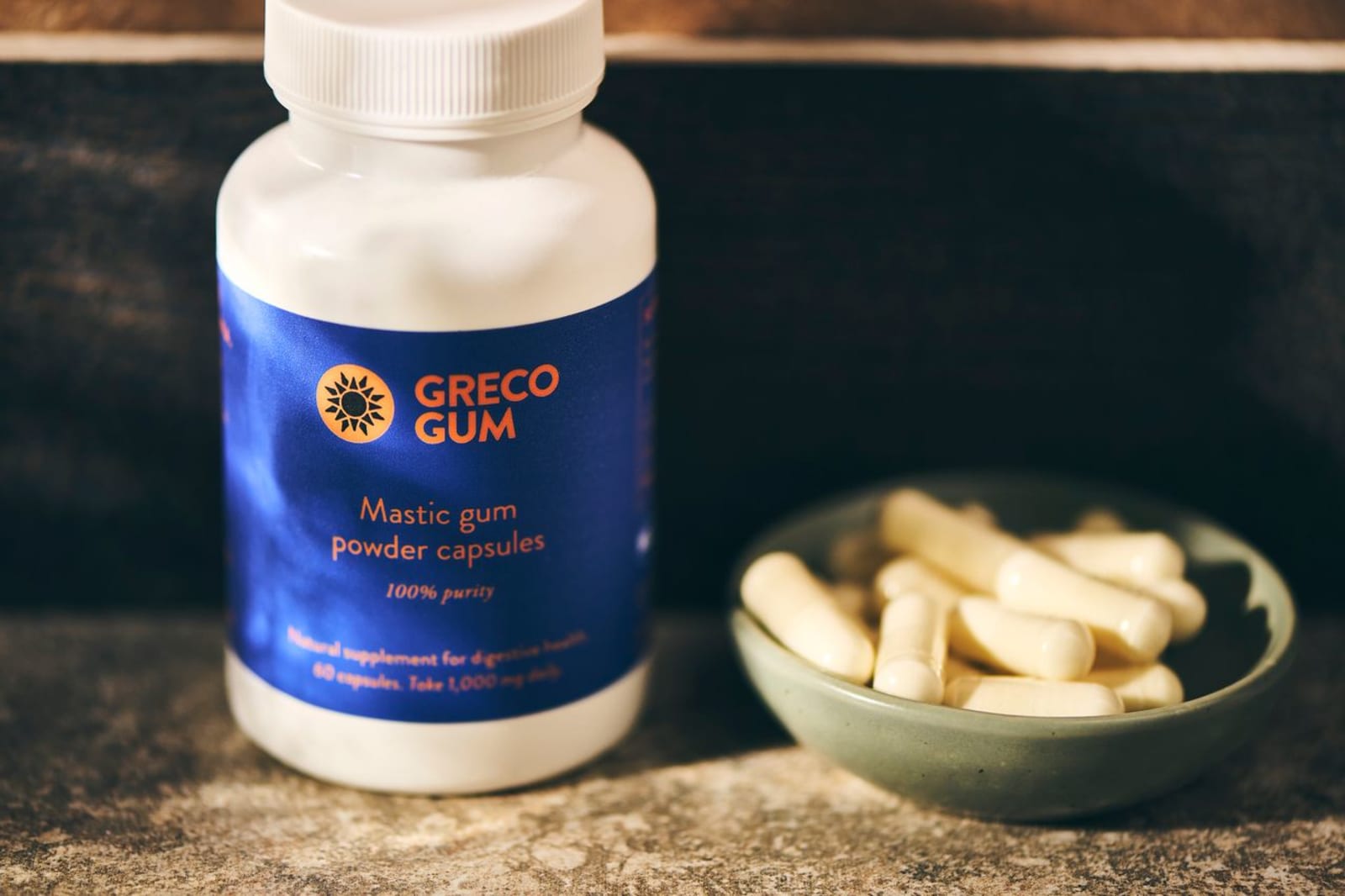
Capsules bypass the mouth entirely and lack the acid-neutralizing saliva effect that matters most for reflux. That doesn’t mean capsules are useless, though. Mastic powder capsules still deliver the bioactive compounds that drive mastic’s anti-inflammatory and gastroprotective effects.6 They’re digested in the stomach and lower GI tract, where those compounds act directly on the gastric lining. So for someone managing reflux, capsules can still support the underlying inflammation and gut-lining factors, even without the saliva mechanism.
If you can chew comfortably, chew. But if dental work, jaw issues, or sensitivity to harder substances make chewing difficult for you, capsules are a reasonable alternative. Some people do both: chew after meals when reflux risk is highest, and take capsules between meals for steadier exposure to the bioactive compounds. Our chew vs. powder guide goes deeper into the tradeoffs.
How to try mastic gum for acid reflux
The best way to begin chewing mastic gum is to start small. Since reflux risk is highest right after eating, chew one or two pieces for ten to fifteen minutes after meals. As that becomes comfortable, gradually extend your sessions up to 30 minutes.
Mastic chewing gum tastes faintly like pine. Depending on how sensitive you are, you may find it more or less flavorful. It is firm, chewy, and slightly sticky.
For best results, authenticity matters. The clinical research has specifically studied Chios mastic (Pistacia lentiscus var. chia), which has Protected Designation of Origin status in the EU. Check the label before buying to make sure the gum is sourced from Chios and free of additives or fillers.
After taking mastic gum for acid reflux, many people notice reduced symptoms within the first three weeks.1 Don’t expect overnight results. Give it at least three weeks of consistent use before judging whether it’s working. Long-term, the anti-inflammatory and gastroprotective properties of mastic gum may also help address some of the factors that make reflux worse.6
While research supports using mastic gum to improve heartburn and upper GI discomfort, the evidence is specifically for functional dyspepsia. For diagnosed GERD, mastic gum complements medical treatment but doesn’t replace it.
In other words, if you are prescribed treatment for diagnosed GERD, you can take mastic gum as an extra supplement, but you should still follow your treatment plan.
If your reflux symptoms are persistent or severe, see a doctor.
Safety and next steps
Mastic gum is safe and well-tolerated by most people, but if you want more information, you can get the full safety breakdown in this article.
And if you want to try mastic gum for acid reflux, our Chios mastic is available in both chewing gum and capsule form:
This article originally appeared online in 2026; it was most recently updated on April 16, 2026, to include current information.

Beatrix Turajski
Beatrix is a health and wellness writer with two blogs and a special passion for mental health, fitness, and nutrition. Her career has taken her from creative writing to interning to freelancing.
References
-
Dabos, K.J., et al. “Is Chios mastic gum effective in the treatment of functional dyspepsia? A prospective randomised double-blind placebo controlled trial.” Journal of Ethnopharmacology 127, no. 2 (2010): 205-209. doi.org. ↩ ↩2 ↩3 ↩4
-
“Mastic – Herbal Medicinal Product.” European Medicines Agency. ema.europa.eu. ↩
-
“Thoughts on why Mastic Gum is helping.” Reddit. reddit.com. ↩
-
Moazzez, R., D. Bartlett, and A. Anggiansah. “The Effect of Chewing Sugar-Free Gum on Gastro-Esophageal Reflux.” Journal of Dental Research 84, no. 11 (2005): 1062–1065. doi.org ↩ ↩2 ↩3
-
Triantafyllou, Aikaterini, Sergey Bikineyeva, Anna Dikalova, et al. “Anti-inflammatory Activity of Chios Mastic Gum Is Associated with Inhibition of TNF-alpha Induced Oxidative Stress.” Nutrition Journal 10, no. 1 (2011): 64. doi.org. ↩
-
Soulaidopoulos, Stergios, Aikaterini Tsiogka, Christina Chrysohoou, et al. “Overview of Chios Mastic Gum (Pistacia lentiscus) Effects on Human Health.” Nutrients 14, no. 3 (2022): 590. doi.org. ↩ ↩2