Buy four tins and enjoy 10% off.Free US standard shipping on orders over $100.Get the perfect last-minute gift with our digital gift cards.
Greco Gum Logo Icon
By Eric Chin·Updated September 5, 2025

Mastic gum vs. mastic powder: key differences, benefits, and best uses

Discover the differences between mastic gum and mastic powder, along with the advantages of each.
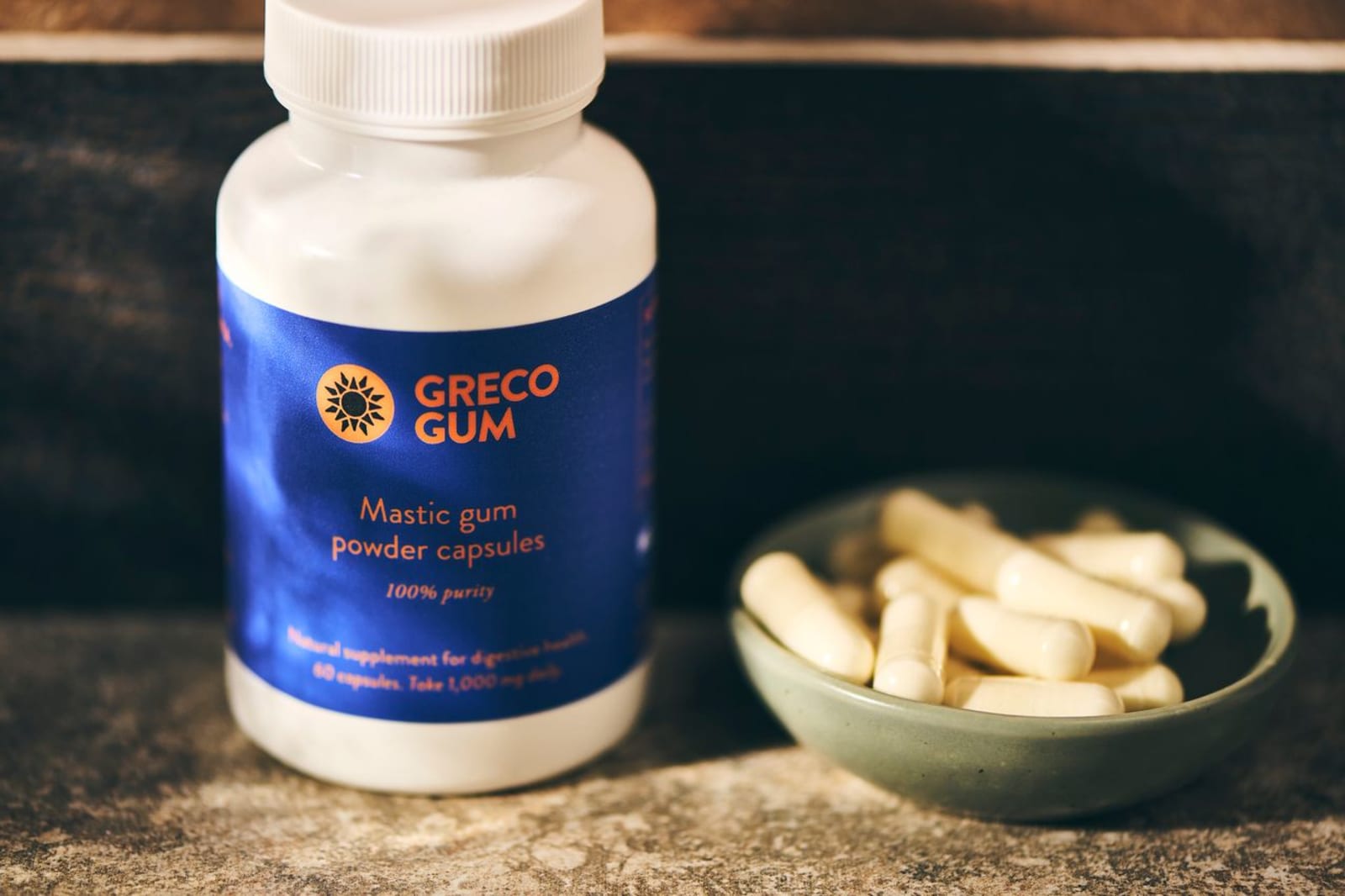
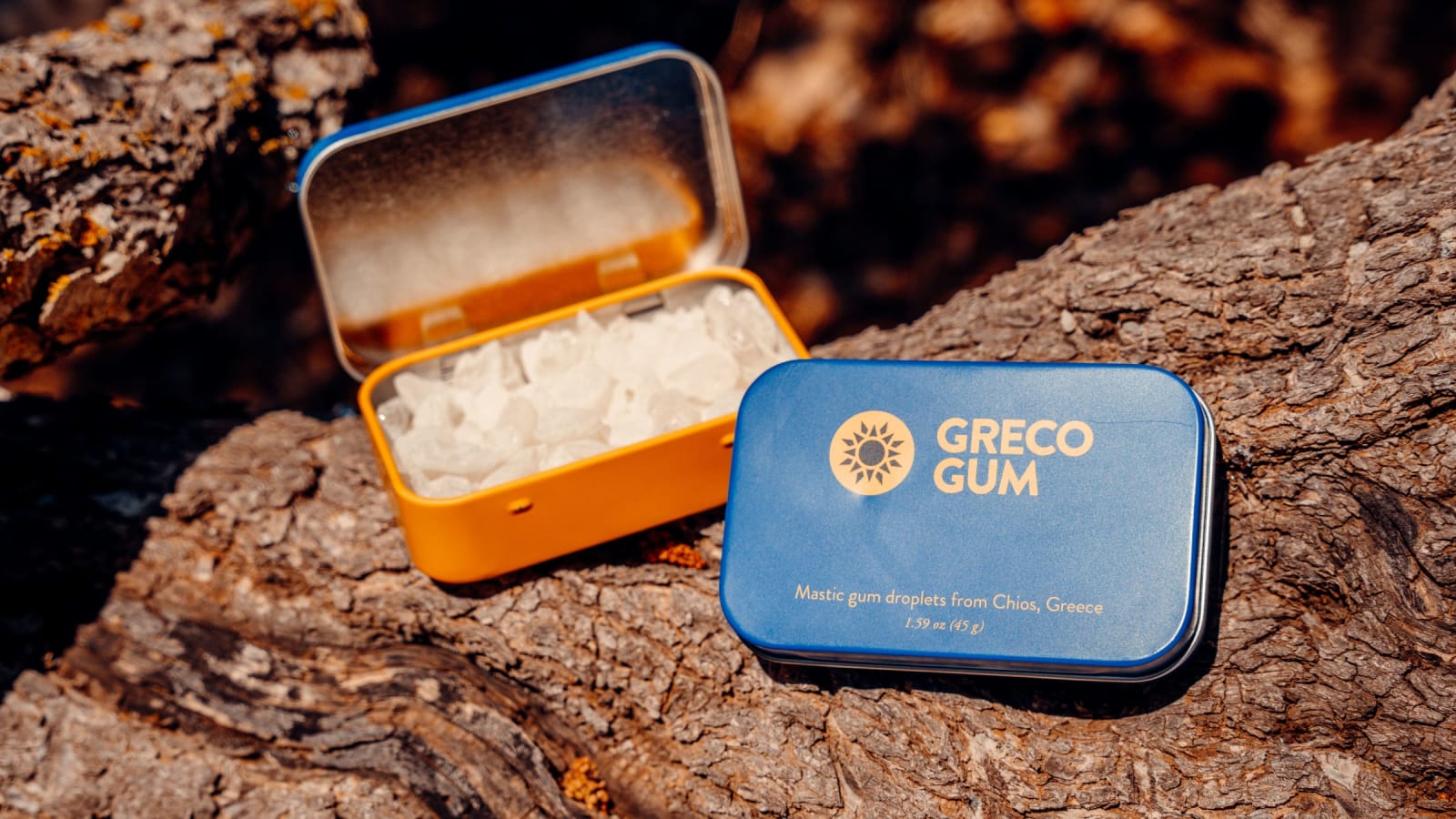
Photo of open mastic gum tin containing resin nuggets, juxtaposed to a photo of a bottle of mastic powder capsules.
Mastic gum contains powerful antimicrobial properties, extremely effective in combatting illness and infection.Photos by Greco Gum.

Differences between mastic gum and mastic powder

Chios mastic, which is resin harvested from the Greek mastic tree, has an impressive portfolio of health benefits. Used as chewing gum and powder capsules, both forms of mastic are powerful health supplements.

Mastic chewing gum and mastic powder capsules are both potent health agents that contain beneficial antimicrobial compounds12. This makes the activity of Chios mastic antibacterial134567891011, antiplaque1213, antifungal14, anti-inflammatory15161718, antioxidant1920.

However, there are some differences that may make one better than the other in different areas. Mastic gum tends to provide more oral health benefits, while mastic powder is said to provide better gut health benefits.

Chewing mastic gum allows for the antimicrobial compounds and essential oils to be released into the mouth. While chewing, they fight the unseen battles against bacteria, plaque, and fungi to help keep our mouths healthy. While we won’t notice these microscopic actions, chewing mastic gum for longer durations can strengthen the jawbone and jaw muscles, while shaping the jawline to be more defined.

Taking mastic powder essentially puts mastic on the fast track to the gut. It skips the chewing stage and goes straight to our digestive system to be absorbed. The compounds within mastic can then act as a powerful supplement to help protect our gut, support vital components of the digestive system, and alleviate painful symptoms of GI diseases.

Mastic gum: better oral health benefits

When chewing mastic gum, most of the antimicrobial action occurs and stays in the mouth.

Bowl of mastic gum droplets
Mastic gum is the dried raw resin chewed directly. Mastic powder is the same resin, ground and encapsulated. Both have similar active compounds, but your body absorbs them differently. Photo by Greco Gum.

Antibacterial

The antibacterial properties12 of mastic gum help to fight off harmful bacteria in the mouth. Studies have shown that Chios mastic can significantly reduce the amount of bacteria in saliva, as measured by salivary bacteria samples before and after chewing3456. Inhibiting the growth levels of bad bacteria in the mouth is a very effective way to help prevent disease and infection.

Antiplaque

The buildup of plaque makes it easier for debris to accumulate in the mouth, which can quickly create a breeding ground for oral bacteria. These pathogens produce acids that can erode tooth enamel (the strongest natural protection our teeth have). Since we cannot repair or regrow enamel, it is essential for us to protect and maintain.

The antiplaque activity demonstrated by mastic gum can stop these problems before they even start, by limiting plaque formation on teeth. Studies show significantly reduced amounts of forming and formed dental plaque with consistent use of Chios mastic1213, as well as a significant reduction in gingival inflammation (according to the gingival index)3.

Antifungal

The antifungal properties12 of mastic also contribute to proper oral hygiene. In one comparative study, researchers tested Chios mastiha against three types of dermatophytes (an infectious fungi). They found that mastic extract (which is released from mastic gum when chewing) inhibited growth of all three fungi by 90-100%14, showing how effective the antifungal activity of mastic actually is.

By thoroughly chewing mastic, the essential oils and pathogen fighting compounds are released. The mouth is then exposed to all of these incredible antimicrobial properties. Everything mastic touches (mainly the teeth, gums, and saliva) reaps the rewards of these oral health benefits, significantly helping to prevent tooth decay and periodontal disorders/infections.

Unfortunately, taking mastic powder will not provide the same level of oral health benefits. Compared to a piece of mastic gum, mastic powder will spend very little time in the mouth, making it difficult to draw out the antimicrobial properties for oral health. Certain properties like antiplaque activity are exclusive benefits of chewing mastic because prevention of plaque formation on teeth occurs in the mouth (and not in the gut where the powder does its best work).

However, there are still advantages of taking mastic powder over mastic gum, specifically for the gut. Swallowing your saliva and mastic gum itself (yes, it is safe to swallow mastic gum) will allow the benefits to reach your gut, but they won’t be as effective as taking pure mastic powder.

Mastic powder: better gut health benefits

Mastic gum powder: bottle and capsules
Mastic gum powder is a great digestive aid and easier for the body to absorb than mastic gum. Photo by Greco Gum.

Mastic powder can be taken on its own or washed down with water. Since no chewing is required to consume mastic powder, it goes straight to your gut to be digested. The digestive system won’t have to break mastic powder down into smaller bits to be digested (as it would with food or mastic gum), so it can start absorbing the nutrients right away and distribute them throughout the body.

As mentioned previously, this is why there are very little (if any) oral health benefits when consuming mastic powder compared to chewing a piece of mastic gum. Mastic powder spends little time inside the mouth and spends the majority of its time working to enhance the gut microbiome.

Its natural ability to fight harmful microbes and reduce their negative impact is nothing short of incredible.

Anti-inflammatory

Chios mastic contains anti-inflammatory properties12 that can help lower inflammation. While chewing mastic gum can help lower gingival inflammation in the mouth3, consuming mastic powder can help lower inflammation of the gut.

Inflammation in the gut is one of the main causes of gastrointestinal (GI) disorders. Inflammatory bowel diseases (IBDs), like Crohn’s disease and ulcerative colitis, can occur when parts of the gut become inflamed. Different parts of the digestive system, ranging from the GI tract to the small/large intestines to the lining of the gut, can become inflamed due to a number of factors. Inflammation can occur if the body is trying to fight off infection in these areas or if damage is caused by the oxidation of free radicals.

Regardless of what causes this inflammation, the compounds in Chios mastic can help protect the vital components of the digestive system. In fact, multiple studies have proven that mastic powder can significantly reduce inflammation in experimental colitis151617 and inflammatory bowel diseases (IBD)18.

By lowering inflammation in the gut, the digestive system can function healthier and more efficiently, while the immune system can direct its healing efforts elsewhere (fighting off potential illness, recovering from injury, repairing cells). A little bit of mastic powder can go a long way.

Antioxidant

The compounds found in mastic also have antioxidant properties12 that can aid gut health and function. Alongside the previously mentioned anti-inflammatory properties, the antioxidant activity of mastic displays potent cytoprotective effects against colitis through significant reductions in inflammation and oxidative stress19.

These components of Chios mastic (most notably polyphenols and terpenes) also help to reinforce the gut against oxidative damage caused by free radicals20. This additional protection against oxidative stress can help mitigate potential damage that free radicals can unleash upon the digestive system.

Antibacterial

The antibacterial activity12 shown by Chios mastic can have a profound impact on the gut and against infections.

Helicobacter pylori (also known as H. pylori) is a type of bacteria that can cause many different gut issues. The H. pylori stomach infection can cause severe aching and burning pain, before leading to further complications like stomach ulcers or internal bleeding. It can get very serious very quickly, which is why the antibacterial properties of mastic powder can be extremely useful to help prevent and treat H. pylori symptoms.

Studies show that Chios mastic has the potential to significantly combat H. pylori infection. In some patients, mastic was able to completely eradicate H. pylori infection78. In other studies, mastic may not have completely eradicated H. pylori, but it did kill off high percentages of the infection: 50% at a lower concentration and 90% at a higher concentration9.

While the antibacterial properties that combat the Helicobacter pylori bacterium have demonstrated great potential in preventing further infection, they have also shown that they can help with symptom relief12. In one study, mastic was studied as a potential treatment for duodenal ulcers. Symptomatic relief was experienced by 80% of patients and endoscopically proven healing occurred in 70%10. In another study, mastic was evaluated for its gastric and duodenal anti-ulcer activity. Researchers discovered that mastic significantly reduced the intensity of gastric mucosal damage11, supporting the idea that mastic could be used as an effective therapeutic treatment for duodenal ulcers.

When examining the anti-inflammatory, antioxidant, and antibacterial properties of mastic, reasonable evidence supports the idea that it can help improve gut health. Mastic has shown that it can help prevent the growth of harmful bacteria, kill existing pathogens within our gut, and limit (and even heal) the damage these microbes can cause.

Mastic gum or mastic powder - which is better?

The process of cleaning and sorting mastic resin from natural debris.
After a harvest, mastic resin is cleaned by hand and sorted from natural debris. Chios mastic can be processed as mastic chewing gum or turned into mastic powder. Photo by Greco Gum.

It all depends on what you’re looking to get out of mastic. Mastic gum has its advantages for oral health, just as mastic powder has its own for gut health.

The table below highlights the advantages of each form for a quick side-by-side comparison:

| | Mastic Gum | Mastic Powder | | Better for? | Oral health | Gut health | | Similar antimicrobial properties | Antibacterial
Antifungal
Anti-inflammatory | Antibacterial
Antifungal
Anti-inflammatory | | Exclusive antimicrobial properties | Antiplaque (teeth) | Antioxidant (digestive system) | | Other benefits | Stronger jaw muscles
Sculpted jawline
Denser jawbone
Convenient to carry and chew
Helps with proper nasal breathing | Quicker absorption of nutrients
Easier on the body to digest
Alleviates symptoms from gastrointestinal diseases
Relief from gut issues
Quick and easy to consume | | Who should use it? | Everyone who can chew harder substances | People who have gut issues
People who are sensitive to chewing harder substances | | Why use this form? | Mastic chewing gum can help improve oral health and boost physical appearance | Mastic powder can help with digestive issues and serve as a supplement to overall wellbeing | | Potential issues | Hard chewing substance, may cause issues to those with sensitive teeth
If swallowing, can be a choking hazard if not broken down into smaller pieces (just like all foods) | May be slightly less potent compared to mastic gum, due to additional processing to turn it into powder |

Why not both?

Mastic gum centered in a table setting with water, fruits, and herbs
Chios mastic is a powerful supplement to help improve overall health, in both gum and powder form. Photo by Greco Gum.

The differences between mastic chewing gum and mastic powder make them great complements of one another.

Their most profound impact mainly occurs in two different parts of the body: mastic gum for oral health in the mouth, mastic powder capsules for gut health.

They are taken in two completely different ways, in two very different time durations: mastic gum for longer chewing sessions, mastic powder in mere seconds.

Instead of choosing between them, a third option exists: do both. Chew mastic gum and consume mastic powder. Chew in between meals and take the powder before meals. Or take the powder between meals and chew after meals. However you decide to do it, having the option to do one, the other, or both will allow you to experience all of the health benefits we just detailed.

Loading…
Loading…
Loading…

References

  1. Soulaidopoulos, Stergios, Aikaterini Tsiogka, Christina Chrysohoou, et al. “Overview of Chios Mastic Gum (Pistacia lentiscus) Effects on Human Health.” Nutrients 14, no. 3 (2022): 590. doi.org. PMID 35276949; PMCID PMC8838553. 2 3 4 5 6 7 8

  2. Tabanca, Nurhayat, Ayse Nalbantsoy, Paul E. Kendra, Fatih Demirci, and Betul Demirci. “Chemical Characterization and Biological Activity of the Mastic Gum Essential Oils of Pistacia lentiscus var. chia from Turkey.” Molecules 25, no. 9 (2020): 2136. doi.org. 2 3 4 5 6 7

  3. Takahashi, K., M. Fukazawa, H. Motohira, et al. “A Pilot Study on Antiplaque Effects of Mastic Chewing Gum in the Oral Cavity.” Journal of Periodontology 74, no. 4 (2003): 501–505. doi.org. PMID 12747455. 2 3 4

  4. Aksoy, A., N. Duran, S. Toroglu, et al. “Short-Term Effect of Mastic Gum on Salivary Concentrations of Cariogenic Bacteria in Orthodontic Patients.” Angle Orthodontist 77, no. 1 (2007): 124–128. doi.org. PMID 17029554. 2

  5. Sakagami, H., K. Kishino, M. Kobayashi, et al. “Selective Antibacterial and Apoptosis-Modulating Activities of Mastic.” In Vivo 23 (2009): 215–224. PMID 19414406. 2

  6. Al-Mofarji, T., N. R. Al-Zahid, and E. H. Al-Hashimy. “Antibacterial Effect of Mastic Gum on Aerobic Oral Bacteria.” Iraqi National Journal of Nursing Specialties 26, no. 2 (2013): 136–140. 2

  7. Dabos, K. J., E. Sfika, L. J. Vlatta, and G. Giannikopoulos. “The Effect of Mastic Gum on Helicobacter pylori: A Randomized Pilot Study.” Phytomedicine 17, no. 3–4 (2010): 296–299. doi.org. PMID 19879118. 2

  8. Huwez, F. U., D. Thirlwell, A. Cockayne, and D. A. Ala’Aldeen. “Mastic Gum Kills Helicobacter pylori.” New England Journal of Medicine 339, no. 26 (1998): 1946. doi.org. PMID 9874617. 2

  9. Marone, P., L. Bono, E. Leone, et al. “Bactericidal Activity of Pistacia Lentiscus Mastic Gum Against Helicobacter pylori.” Journal of Chemotherapy 13, no. 6 (2001): 611–614. doi.org. 2

  10. Al-Habbal, M. J., Z. Al-Habbal, and F. U. Huwez. “A Double-Blind Controlled Clinical Trial of Mastic and Placebo in the Treatment of Duodenal Ulcer.” Clinical and Experimental Pharmacology and Physiology 11, no. 5 (1984): 541–544. doi.org. PMID 6395994. 2

  11. Al-Said, M. S., A. M. Ageel, N. S. Parmar, and M. Tariq. “Evaluation of Mastic, a Crude Drug Obtained from Pistacia lentiscus for Gastric and Duodenal Anti-Ulcer Activity.” Journal of Ethnopharmacology 15, no. 3 (1986): 271–278. doi.org. PMID 3724207. 2

  12. Topitsoglou-Themeli, V., P. Dangalis, and D. Lambrou. “Chios Mastiha and Oral Hygiene I: A Possible Measure for Decrease of Microbial Plaque Formation.” Hellenic Stomatological Chronicles 28 (1984): 166–170. PMID 6599089. 2

  13. Topitsoglou-Themeli, V., A. Kolokotronis, P. Dangalis, et al. “Chios Mastiha and Oral Hygiene II: Differentiation in Microbial Plaque Formation.” Redodontia 2 (1985): 56–59. 2

  14. Ali-Shtayeh, M. S., and S. I. Abu Ghdeib. “Antifungal Activity of Plant Extracts Against Dermatophytes.” Mycoses 42 (1999): 665–672. doi.org. PMID 10680445. 2

  15. Cui, H., X. Li, X. R. An, W. Liu, and T. Yuan. “Masticadienonic Acid from Chios Mastic Gum Mitigates Colitis in Mice via Modulating Inflammatory Response, Gut Barrier Integrity and Microbiota.” Phytomedicine 108 (2023): 154518. doi.org. PMID 36403513. 2

  16. Gioxari, A., A. C. Kaliora, A. Papalois, et al. “Pistacia lentiscus Resin Regulates Intestinal Damage and Inflammation in Trinitrobenzene Sulfonic Acid-Induced Colitis.” Journal of Medicinal Food 14, no. 11 (2011): 1403–1411. doi.org. PMID 21612460. 2

  17. Papalois, A., A. Gioxari, A. C. Kaliora, et al. “Chios Mastic Fractions in Experimental Colitis: Implication of the Nuclear Factor κB Pathway in Cultured HT29 Cells.” Journal of Medicinal Food 15, no. 11 (2012): 974–983. doi.org. PMID 22891614. 2

  18. Papada, E., A. Gioxari, C. Amerikanou, et al. “Regulation of Faecal Biomarkers in Inflammatory Bowel Disease Patients Treated with Oral Mastiha (Pistacia lentiscus) Supplement: A Double-Blind and Placebo-Controlled Randomised Trial.” Phytotherapy Research 33, no. 2 (2019): 360–369. doi.org. PMID 30450689. 2

  19. Zahouani, Y., K. Ben Rhouma, K. Kacem, H. Sebai, and M. Sakly. “Aqueous Leaf Extract of Pistacia lentiscus Improves Acute Acetic Acid-Induced Colitis in Rats by Reducing Inflammation and Oxidative Stress.” Journal of Medicinal Food 24, no. 7 (2021): 697–708. doi.org. PMID 33156733. 2

  20. Papada, E., A. Forbes, C. Amerikanou, et al. “Antioxidative Efficacy of a Pistacia Lentiscus Supplement and Its Effect on the Plasma Amino Acid Profile in Inflammatory Bowel Disease: A Randomised, Double-Blind, Placebo-Controlled Trial.” Nutrients 10, no. 11 (2018): 1779. doi.org. PMID 30453494; PMCID PMC6267573. 2