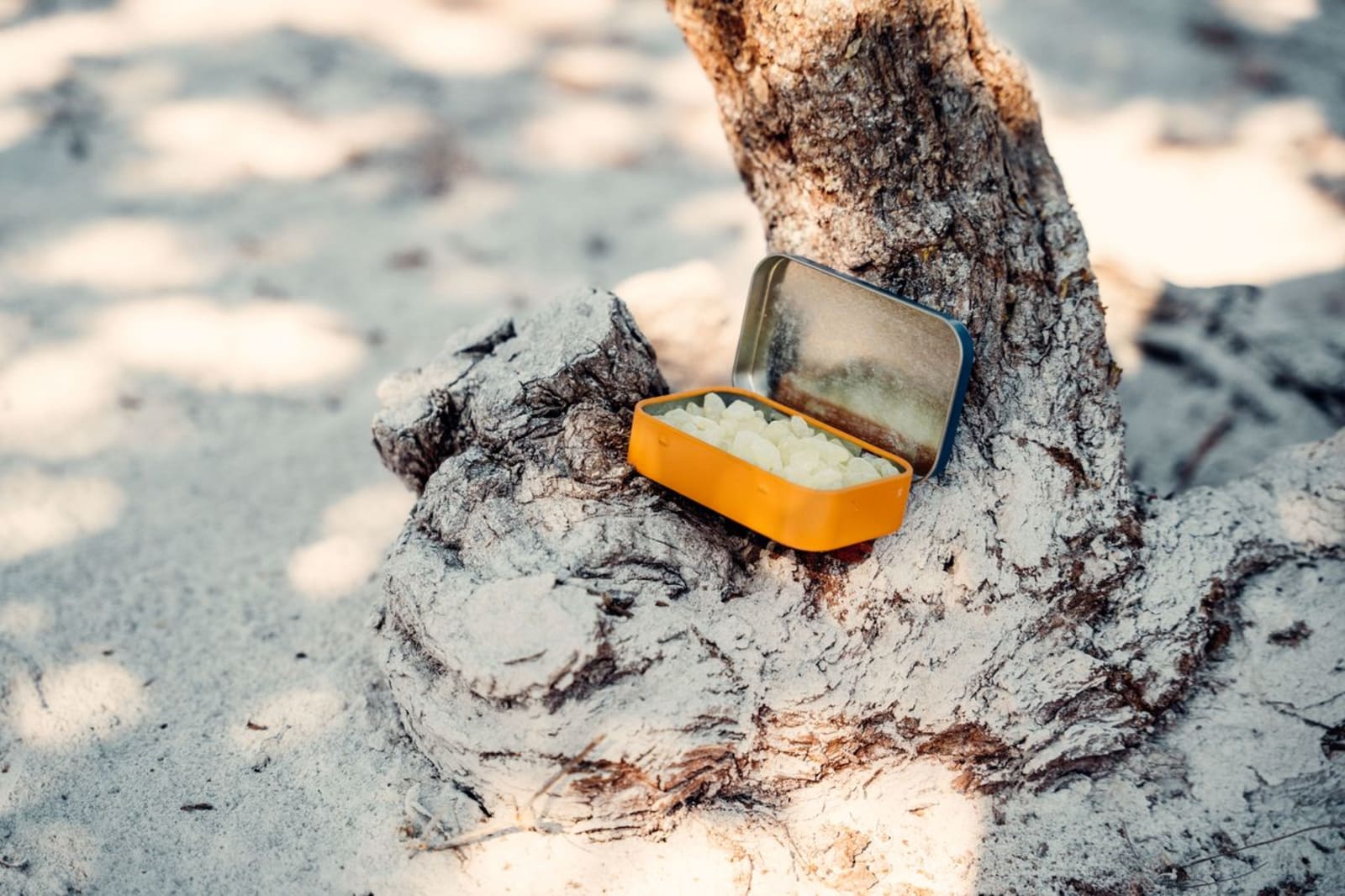
Mastic gum for bad breath

Does mastic gum actually help with bad breath?
Yes. Mastic gum reduces the sulfur gases that cause bad breath. Unlike regular gum, it also reduces the bacteria that produce those gases and the plaque they thrive on.
Halitosis
Halitosis, the medical term for bad breath, comes down to one main culprit: volatile sulfur compounds, the smelly gases released when oral bacteria break down leftover food.
Three main factors drive the production of these gases: leftover food that bacteria can break down, poor oral hygiene that lets bacteria accumulate, and plaque buildup that gives them somewhere to thrive.123
How mastic gum reduces bad breath

Antiplaque
Mastic has been shown to reduce both new and existing plaque.4 Less plaque means less territory for the bacteria that produce sulfur gases.
Antibacterial
Mastic also kills the bacteria that produce those sulfur gases.5 Fewer bacteria, fewer gases, less smell.
For a more in-depth analysis on what makes mastic effective against bad breath, learn more about mastic gum’s antibacterial and antiplaque properties.
One customer described this exact mechanism in his review: “It has helped with a myriad of medical and aesthetic needs, from acid reflux, gut health, better teeth and gum health, killing off of harmful bacteria that cause breath smell to a more defined jawline.”
Mastic gum vs. regular gum for breath: what’s different

Mastic gum works on bad breath differently than regular gum. Regular gum hides bad breath odor with mint flavoring that fades in minutes. It only masks the symptoms of the problem, it doesn’t work to fix it. On the other hand, mastic gum reduces oral bacteria, including the type that causes bad breath in the first place.67
Our customers notice this difference. One customer even left a review saying, “Standard chewing gum may mask bad breath but this stuff straight up eliminates it and gives you a crazy jaw workout in the process.”
In fact, dozens of verified customer reviews mention fresher breath as a reason they keep chewing our mastic instead of regular gum (in addition to many other oral health benefits).
While these are anecdotal, clinical research supports the validity of their experiences.
What the research shows: mastic against halitosis
One study showed a 50% reduction in sulfur gases from mastic, with levels in treated saliva cut in half.
In a blinded evaluation, untreated saliva scored 4.5 on a 5-point odor scale. With mastic, it dropped to 2.5, from ‘strong foul odor’ territory to barely noticeable.7
Duration
In a two-hour study, researchers measured participants’ salivary bacteria before and after chewing mastic gum for 15 minutes.
Bacteria dropped significantly right after chewing and were still below placebo levels at the 135-minute mark.5
How to use mastic gum for bad breath
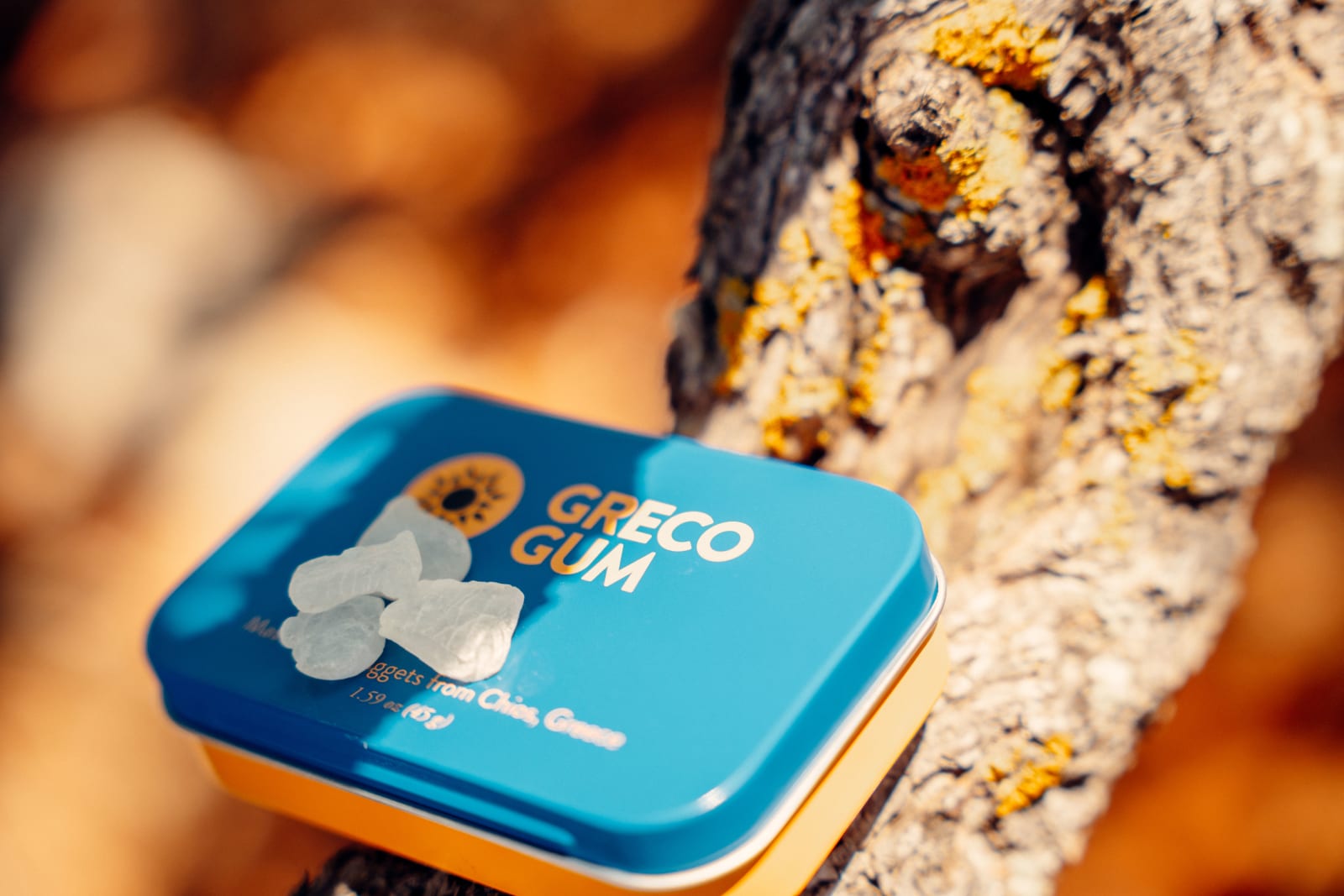
When to chew
The most effective time to chew mastic is after meals. Oral bacteria are most active right after you eat, when they break down leftover food debris and produce the sulfur gases that cause bad breath.
Chew right after you eat, before the bacteria can get to work.
How long to chew
Chewing for 15-30 minutes allows the antibacterial compounds to work. In one study, mastic significantly inhibited bacterial growth after 15 minutes of chewing.8
In another study, bacteria levels stayed below placebo for the full two hours researchers measured.5
How often to chew
Chew once after each meal. If bad breath is persistent, chew more often.
What mastic gum won’t fix
Mastic gum won’t fix the root cause of chronic halitosis. Bad breath can be caused by poor oral hygiene, gum disease, dry mouth, diet, or underlying medical conditions. Mastic gum can help fight against oral bacteria and dental plaque, but it won’t solve halitosis caused by something deeper.
If your bad breath persists, see your dentist.
Can mastic gum help with bad breath?
Yes. Bad breath comes from sulfur gases that oral bacteria produce when they break down food debris. Mastic gum reduces both the bacteria and the plaque they thrive on.57
New to mastic? Start with our general mastic guide.
When it comes to bad breath, what’s the difference between regular gum and mastic gum?
Regular gum uses mint flavoring to mask the smell. When the flavoring fades, the smell comes back.
Mastic attacks the cause. It kills the bacteria that produce sulfur gases in the first place.5
How can I use mastic gum to help with bad breath?
Chewing mastic gum is one of the best ways to fight off bad breath and experience a wide array of oral health benefits (plus some aesthetic improvements).
Take it from one of our customers, whose review says, “Killer jaw workout and also is the best gum I’ve ever had at eliminating coffee breath. If you work in an office environment Greco Gum is a must have to train your jaw and fend off bad breath.”
When should I chew mastic gum for bad breath?
After meals is the best time. Oral bacteria are most active then, breaking down leftover food debris and producing the sulfur gases that cause bad breath. Chewing mastic right after meals cuts off the process early.
For more on timing, see our guide to how long to chew mastic.
How long and how often should I chew mastic for bad breath?
Chew for 15 to 30 minutes, once after each meal. Mastic significantly inhibits oral bacteria after 15 minutes of chewing,8 with levels still down two hours later.5
For technique, see our mastic chewing guide.
How long does mastic fight bad breath for?
In one study, bacteria levels dropped after 15 minutes of chewing and stayed below placebo for the full two hours researchers measured.5
This article originally appeared online in 2026; it was most recently updated on July 29, 2026, to include current information.

Eric Chin
Eric writes about ancestral nutrition, functional training, and ingredient purity. He’s a contributor to The WarKitchen, including “Flavors of Combat” (Issue 28) and “The Egg: Nature’s Perfect Food” (Issue 35).
References
-
C. M. Bollen and T. Beikler, “Halitosis: The Multidisciplinary Approach,” International Journal of Oral Science 4, no. 2 (June 2012): 55–63, https://doi.org/10.1038/ijos.2012.39. ↩
-
Rita M. Khounganian et al., “Causes and Management of Halitosis: A Narrative Review,” Cureus 15, no. 8 (August 19, 2023): e43742, https://doi.org/10.7759/cureus.43742. ↩
-
Egle Patrizia Milia, Luigi Sardellitti, and Sigrun Eick, “Antimicrobial Efficiency of Pistacia lentiscus L. Derivates against Oral Biofilm-Associated Diseases—A Narrative Review,” Microorganisms 11, no. 6 (2023): 1378, https://doi.org/10.3390/microorganisms11061378. ↩
-
V. Topitsoglou-Themeli, P. Dangalis, and D. Lambrou, “Chios Mastiha and Oral Hygiene I: A Possible Measure for Decrease of Microbial Plaque Formation,” Hellenic Stomatological Chronicles 28 (1984): 166–170. ↩
-
A. Aksoy, N. Duran, S. Toroglu, et al., “Short-Term Effect of Mastic Gum on Salivary Concentrations of Cariogenic Bacteria in Orthodontic Patients,” Angle Orthodontist 77, no. 1 (2007): 124–128. doi.org. PMID 17029554. ↩ ↩2 ↩3 ↩4 ↩5 ↩6 ↩7
-
T. Al-Mofarji, N. R. Al-Zahid, and E. H. Al-Hashimy, “Antibacterial Effect of Mastic Gum on Aerobic Oral Bacteria,” Iraqi National Journal of Nursing Specialties 26, no. 2 (2013): 136–140. doi.org. ↩
-
Dental Biotechnology Ltd., “Echinacea, Lavender, Mastic Gum and Sage for Treating Halitosis,” European Patent EP 2 066 304 B1, July 2, 2014. PDF. ↩ ↩2 ↩3
-
A. Aksoy, N. Duran, and F. Koksal, “In Vitro and In Vivo Antimicrobial Effects of Mastic Chewing Gum against Streptococcus mutans and Mutans Streptococci,” Archives of Oral Biology 51, no. 6 (June 2006): 476–481, https://doi.org/10.1016/j.archoralbio.2005.11.003. ↩ ↩2