Mastic gum for plaque

Does mastic gum actually reduce plaque?
Yes, mastic gum can reduce existing plaque and create an environment that inhibits the potential growth of plaque in the future.
What the studies show
The research has been consistent for 40+ years. Two trials in the mid-1980s found that regular mastic chewing reduced both existing plaque and new plaque formation. The researchers saw this as evidence mastic could help prevent cavities and gum disease.12
A 2003 trial put this to a harder test. Students chewed either mastic gum or a placebo for a full week, with no brushing or flossing during the trial to isolate the gum’s effect. The mastic group ended up with significantly less plaque and gum inflammation than the placebo group. The researchers concluded mastic chewing gum could be a useful antiplaque agent.3
Research reviews
Two major reviews back the findings up. A 2014 systematic review in the International Journal of Dental Hygiene named mastic as one of the chewing gums with a positive effect on plaque and gingivitis scores.4 A 2023 review went further, concluding that mastic’s plaque-inhibiting effect, combined with its other antibacterial properties, makes it a useful tool for cavity prevention.5
Mastic outperforms standard antimicrobials
A 2017 study tested mastic extract against periodontal pathogens alongside two standard antimicrobial agents: hydrogen peroxide and chlorhexidine. Mastic inhibited the pathogens more effectively than hydrogen peroxide and was gentler on healthy cells than either agent.6
For a more in-depth safety analysis of mastic gum, check out our mastic safety guide.
Pre-clinical animal data suggests the effect extends beyond humans. A 2025 trial reported reduced plaque, gingivitis, and halitosis in dogs and cats after a month of daily mastic gel treatment.7
How mastic gum works against plaque

Mastic’s antiplaque benefits come from sustained chewing. Consistent contact with the gum releases antimicrobial compounds in the mouth. Other forms of mastic that make no sustained contact within the mouth or with teeth, such as mastic powder capsules, bypass this entirely.
Different forms of mastic offer different benefits.
Contact within the mouth
When you chew mastic gum, the essential oils and pathogen fighting compounds within the resin are released. Everything inside of your mouth (saliva, teeth, tongue, gums) that comes into contact with mastic gets to experience the antimicrobial benefits.
Your teeth are the main point of contact and spend the most time interacting with mastic (aside from your saliva). This consistent exposure allows antiplaque properties to inhibit plaque growth while the saliva takes in the antibacterial benefits. The same contact principle shows up in mastic-based mouthwashes and toothpastes, which produce similar antiplaque effects.89
How to use mastic gum for plaque

When to chew mastic
The best time to chew mastic is after you eat. After eating, oral bacteria activity will increase sharply because they will be looking to break down any leftover food within the mouth. Chewing at this time will help inhibit plaque from forming, while also decreasing existing dental plaque.12
Aim to chew daily or as consistently as you can. This will promote a healthy environment within your mouth, as well as consistent oral hygiene: two key factors that will help limit the formulation of plaque.
How long to chew mastic
Chewing mastic gum for 15-30 minutes allows the beneficial compounds within mastic ample time to do their job, working to reduce both plaque and oral bacteria. Clinical research supports this timeframe, as oral bacteria growth was proven to be significantly inhibited by mastic after a minimum of 15 minutes.10
What to expect
Observing some noticeable changes that came from chewing our mastic, one of our customers said that they were “Surprised to see the anti plaque effect it has.” After reading the studies on mastic’s antiplaque activity, you can expect to experience the same benefits as the participants:
- Less plaque
- Healthier gums (lower gingival inflammation)
- Fresher breath (reduced volatile sulfur compounds)
Other reviews left by our customers report additional benefits after chewing mastic, with one person stating that it “Leaves your teeth feeling very clean like you just came from a dental hygienist’s office.” Another customer’s experience actually corroborates this, by saying “My recent dentist appointment was given an ‘A’ rating. I think the mastic helps.”
While many start chewing mastic for its pronounced dental benefits, there are a number of people who start chewing for jawline aesthetics. There’s a recurring pattern for these types of customers, after chewing on a regular, consistent basis: they notice the oral health benefits as a bonus to a more defined jawline.
For more on how mastic supports overall oral health, see our guide to the oral health benefits of mastic gum.
What mastic gum won’t do

Despite how much research exists in support of mastic gum and all of its benefits, chewing mastic is not a replacement for oral care. Mastic should be treated as a supplement to a daily oral hygiene routine, not as a replacement for it.
One of the studies discussed earlier in this article did withhold its participants from brushing for the entire length of the experiment (7 days).3 In this case, eliminating oral hygiene was done to isolate the effect of mastic gum so that they could record and analyze it. It was not done to suggest skipping it or replacing it.
Mastic gum is best used to complement a daily oral hygiene regimen, not as a substitute for it.
How mastic gum compares to xylitol gum
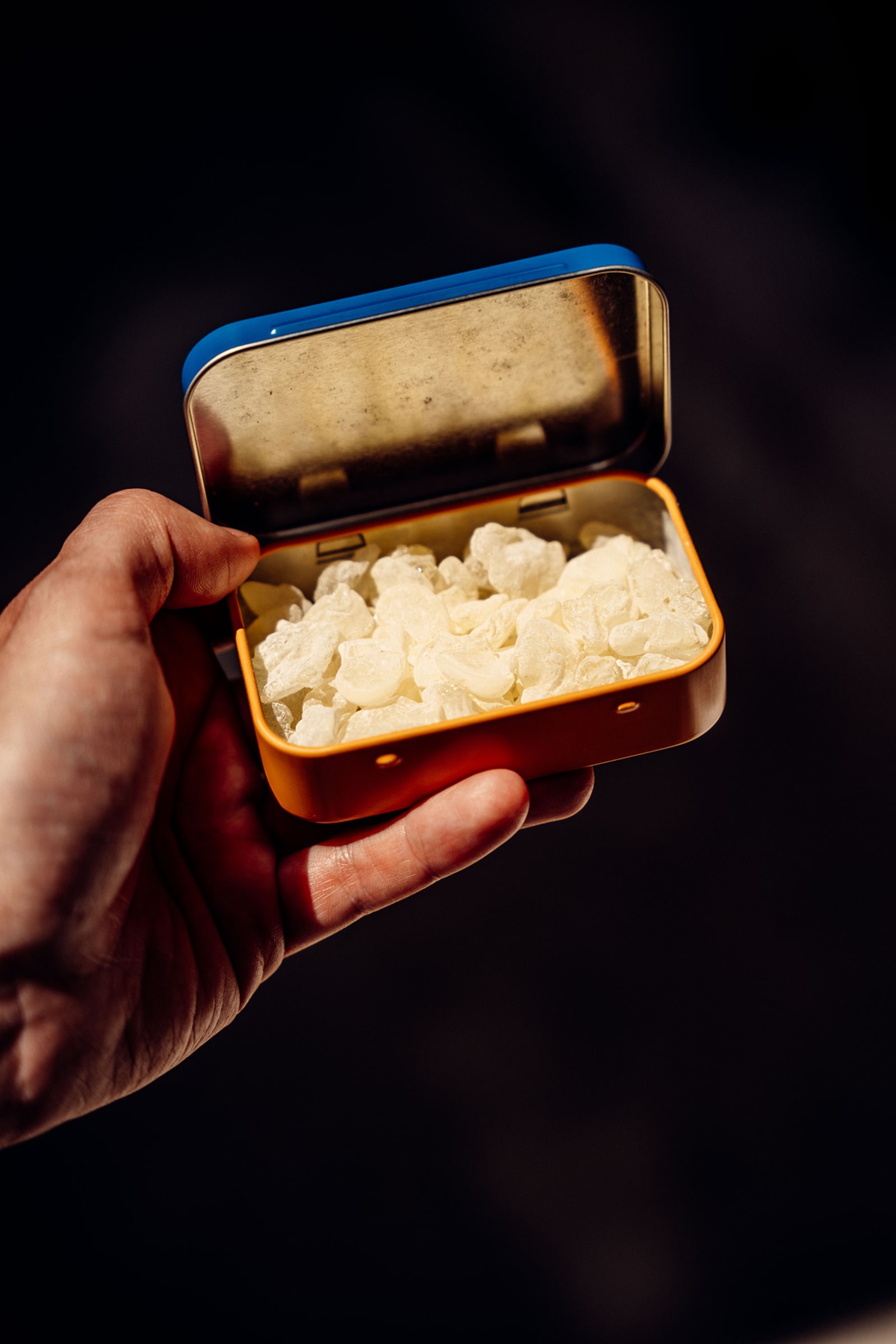
Mastic gum is not just “another sugar-free gum” for plaque. All sugar-free gum stimulates saliva. This lowers the acidity of dental plaque, which can lessen potential harm like tooth decay. However, while sugar-free gums aim to lower the acidity of plaque via saliva stimulation, research shows that they do not always have this degree of impact on plaque.
A randomized double-blind study from 2014 tested the impact of sugar-free chewing gum sweetened with xylitol on gingivitis and plaque scores under both brushing and non-brushing circumstances. When used alongside a regular brushing routine, researchers found that “no effect of chewing gum was observed on plaque scores.”11
When it comes to mastic, the triterpenic acids within the resin actively inhibit the bacteria that form plaque. A study from 2017 even showed that mastic outperformed hydrogen peroxide (one of the most common and effective antimicrobial agents) against periodontal pathogens.6
So while xylitol gum added no plaque reduction on top of regular brushing, multiple studies show that mastic significantly reduces dental plaque3 and oral bacteria.10 Unlike xylitol, which mainly aims to control the damage plaque can cause, mastic targets the bacteria that form plaque, reducing buildup at the source.
Where to go from here
Plaque is one piece of the oral health picture. For the full rundown on how mastic gum supports teeth and gums, read our guide to the oral health benefits of mastic gum.
Can mastic gum reduce plaque?
Yes, research shows that mastic gum significantly reduces plaque and inhibits its potential growth.123
How does mastic limit plaque?
When mastic gum is chewed, antimicrobial compounds are released and transferred from the resin to the mouth. Sustained chewing allows for consistent contact between the teeth and the gum, allowing the beneficial components of mastic (like essential oils, antibacterial and antiplaque agents) to fight off dental plaque and oral bacteria.46
What does mastic limiting plaque actually mean for oral health?
The accumulation of plaque makes it easier for leftover food to get stuck around the teeth. Oral bacteria use plaque as a breeding ground to break down leftover food. When this happens, they rapidly increase in population, while producing volatile sulfur compounds (the main cause of bad breath) and releasing enamel-eroding acids. Since we cannot repair or regrow destroyed tooth enamel (the strongest natural protection we have for our teeth), protecting it is essential to lower the chances of cavities, periodontal disease, and tooth decay.
Check out our guides for more information on mastic’s impact on halitosis and the importance of mastic’s antibacterial, antiplaque properties for oral health.
What’s the best way to take mastic for its antiplaque properties?
Thoroughly chewing mastic gum allows antimicrobial compounds and essential oils to be released from the resin. When released, everything it comes into contact with in the mouth (teeth, saliva, gums, tongue) take in the benefits, including the antiplaque activity.
Different forms of mastic offer different benefits, so swallowing mastic powder won’t give you the oral benefits that chewing mastic gum will, just as chewing mastic gum won’t give you the full gut health benefits that swallowing mastic powder capsules will. You can read more on the differences between mastic gum and mastic powder.
How long should I chew mastic for its antiplaque benefits?
Chewing for 15-30 minutes allows mastic to significantly inhibit oral bacteria growth. This helps to prevent the growth of plaque, while reducing existing amounts of plaque.310
How often should I chew mastic for its antiplaque benefits?
We recommend chewing mastic as consistently as you can. Constant exposure to mastic supplies your teeth with a steady source of antiplaque activity, reducing existing plaque and inhibiting its potential growth. This will make it difficult for plaque to accumulate, lowering the risk of harmful oral health consequences.
Sometimes mastic may stick to your teeth while you’re chewing. Learn why this may happen and how you can fix it.
Since it has many oral health benefits, can chewing mastic gum replace brushing or other dental health routines?
No. Mastic should be treated as a supplement to a daily oral health regimen. It should not be used to replace one.
As it relates to plaque, how is mastic different from other sugar free gums like xylitol?
Sugar-free gums mainly lower the acidity of plaque, which can help reduce its potential consequences (like tooth decay). However, research shows that xylitol gum had no impact on plaque scores when used with a regular brushing routine.11
On the other hand, mastic gum actively inhibit the oral bacteria that form plaque (thanks to its triterpenic acids) and reduce the amount of existing plaque on teeth.310
Sugar-free gums like xylitol try to control the damage that plaque can cause. Mastic gum directly attacks oral bacteria (the source of plaque) which reduces existing plaque and potential growth of future plaque.123
This article originally appeared online in 2026; it was most recently updated on April 24, 2026, to include current information.

Eric Chin
Eric writes about ancestral nutrition, functional training, and ingredient purity. He’s a contributor to The WarKitchen, including “Flavors of Combat” (Issue 28) and “The Egg: Nature’s Perfect Food” (Issue 35).
References
-
Topitsoglou-Themeli, V., Dangalis, P., and Lambrou, D. “Chios Mastiha and Oral Hygiene I: A Possible Measure for Decrease of Microbial Plaque Formation.” Hellenic Stomatological Chronicles 28 (1984): 166–170. ↩ ↩2 ↩3 ↩4
-
Topitsoglou-Themeli, V., Kolokotronis, A., Dangalis, P., et al. “Chios Mastiha and Oral Hygiene II: Differentiation in Microbial Plaque Formation.” Redodontia 2 (1985): 56–59. ↩ ↩2 ↩3 ↩4
-
Takahashi, K., Fukazawa, M., Motohira, H., et al. “A Pilot Study on Antiplaque Effects of Mastic Chewing Gum in the Oral Cavity.” Journal of Periodontology 74, no. 4 (2003): 501–505. https://doi.org/10.1902/jop.2003.74.4.501. ↩ ↩2 ↩3 ↩4 ↩5 ↩6 ↩7
-
Keukenmeester, R. S., Slot, D. E., Putt, M. S., et al. “The Effect of Medicated, Sugar-Free Chewing Gum on Plaque and Clinical Parameters of Gingival Inflammation: A Systematic Review.” International Journal of Dental Hygiene 12, no. 1 (2014): 2–16. https://doi.org/10.1111/idh.12026. ↩ ↩2
-
Alwadi, M. A. M., Sidhu, A., Khaled, M. B., et al. “Mastic (Pistacia lentiscus) Gum and Oral Health: A State-of-the-Art Review of the Literature.” Journal of Natural Medicines 77, no. 3 (2023): 430–445. https://doi.org/10.1007/s11418-023-01704-y. ↩
-
Koychev, S., Dommisch, H., Chen, H., et al. “Antimicrobial Effects of Mastic Extract Against Oral and Periodontal Pathogens.” Journal of Periodontology 88 (2017): 511–517. https://doi.org/10.1902/jop.2017.150691. ↩ ↩2 ↩3
-
Kaneki, M., Komai, N., Ohira, C., et al. “Whole Mastic Resin Ameliorates Halitosis and Gingivitis in Dogs and Cats Infected with Porphyromonas gulae.” Scientific Reports 15 (2025): 43332. https://doi.org/10.1038/s41598-025-27244-x. ↩
-
Alexiou, A., Mylonopoulou, I. M., Papageorgiou, S., et al. “The Effect of Chios Mastic Toothpaste on Halitosis and Oral Hygiene in Orthodontic Patients: A Randomized Clinical Trial.” Journal of Breath Research 19, no. 4 (2025). https://doi.org/10.1088/1752-7163/adf1bf. ↩
-
Tsironi, K., Mylonopoulou, I.-M., Pandis, N., et al. “The Effect of Mastic Mouthwash on Halitosis and Oral Hygiene in Orthodontic Patients: A Randomized Clinical Trial.” European Journal of Orthodontics 45, no. 6 (2023): 781–787. https://doi.org/10.1093/ejo/cjad036. ↩
-
A. Aksoy, N. Duran, and F. Koksal, “In Vitro and In Vivo Antimicrobial Effects of Mastic Chewing Gum against Streptococcus mutans and Mutans Streptococci,” Archives of Oral Biology 51, no. 6 (June 2006): 476–481, https://doi.org/10.1016/j.archoralbio.2005.11.003. ↩ ↩2 ↩3 ↩4
-
Keukenmeester, R. S., Slot, D. E., Rosema, N. A., et al. “Effects of Sugar-Free Chewing Gum Sweetened with Xylitol or Maltitol on the Development of Gingivitis and Plaque: A Randomized Clinical Trial.” International Journal of Dental Hygiene 12, no. 4 (2014): 238–244. https://doi.org/10.1111/idh.12071. ↩ ↩2