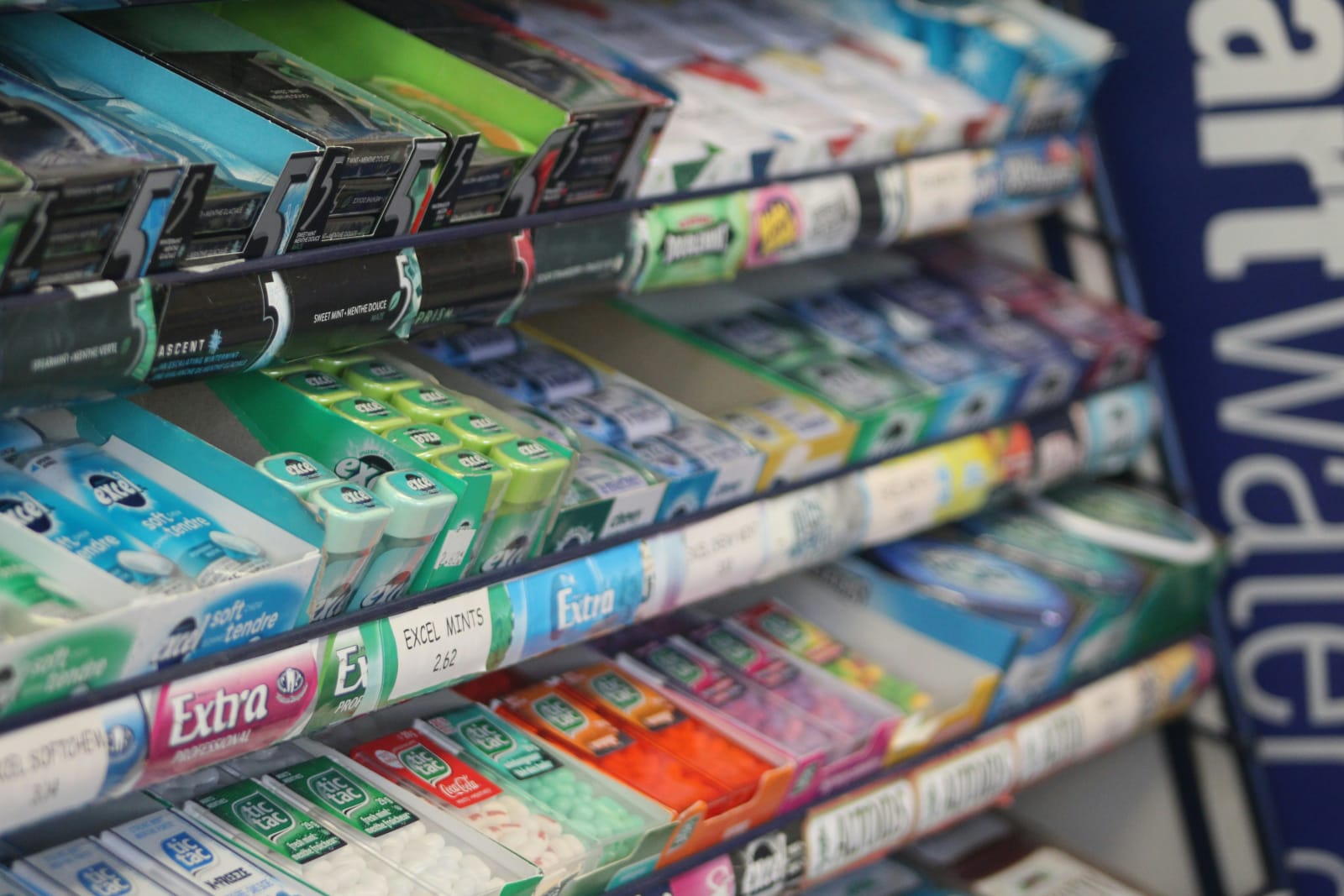
The ingredients of Falim gum

Many “looksmaxxers” have either heard of or use chewing gums like mastic or Falim to strengthen their facial muscles and define their jawline.
While both are tough gums, Falim gum contains artificial, potentially harmful ingredients that those who already chew it or are considering chewing it need to know about first.1
What’s actually listed on a Falim label
Let’s take a look at the ingredients of some popular Falim gum flavors.23
| Flavor | Ingredients |
|---|---|
| Mastic | Gum base, flavoring colorant (titanium dioxide), antioxidants (BHA, BHT) |
| Mint | Gum base, acidity regulators (sodium bicarbonate 1.3%, sodium carbonate 0.7%), flavorings, sweetening (acesulfame-K), Antioxidant (BHA) |
| Forrest Fruits | Gum base, antioxidant (BHT, BHA), flavoring |
While the ingredients vary across flavors, the first ingredient listed on each of these, and all Falim gum labels, is “gum base.”1. Every flavor hides under the same vague descriptors like “gum base” and “flavoring.” The manufacturers do not go into detail on every additive inside their gum.
For more information on what’s inside Falim and other chewing gums, read our article on the composition of commercial chewing gum.
A breakdown of each ingredient: what it is and what it does
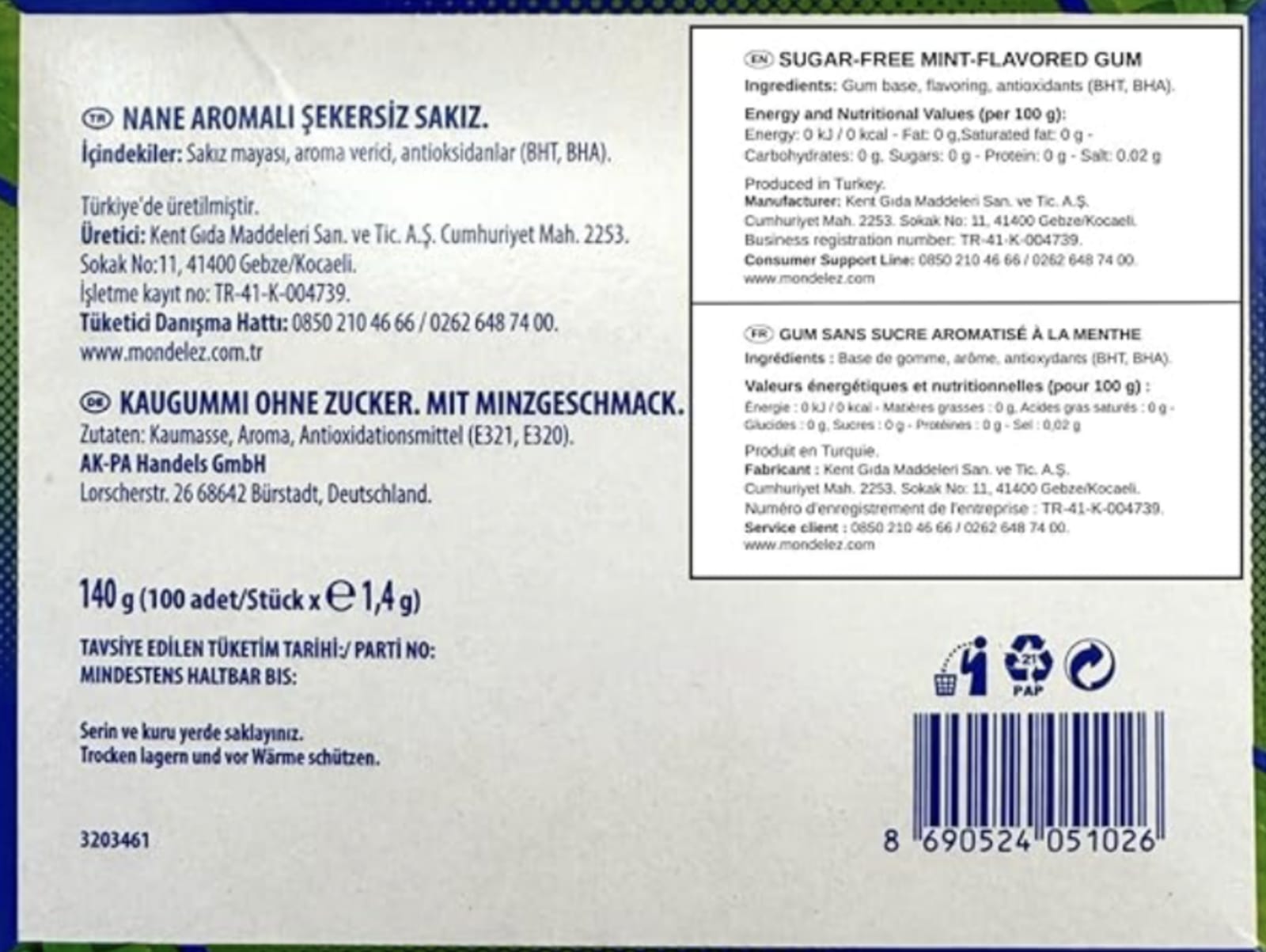
- Gum base: an umbrella term for a range of additives including plastic polymers. It gives the gum flexibility, makes it hold its texture better, and carries the flavor of sweeteners and flavorings.
- Sodium bicarbonate and sodium carbonate: these acidity regulators increase the pH level of saliva, neutralizing oral acidity.4
- Flavorings: Falim gum comes in plain, mint, watermelon, strawberry, fruit mix, and mastic flavors. The nonspecific “flavoring” listed on the label makes it difficult to determine what exactly is used.
- Acesulfame-K: about 200 times sweeter than sugar, this artificial sweetener is used to sweeten the gum.5
- Colorant E171: also known as titanium dioxide, this additive is used to brighten and whiten food. In 2022, the EU banned its use as a food additive due to genotoxicity concerns, but the US and Turkey still permit it.6
- Antioxidants E320 (BHA) and/or E321 (BHT): these are used to prevent gum-base oil rancidity, keep food fresh, and maintain flavor and scent. They’re generally approved and commonly added to gum, but animal studies have raised safety concerns due to potential endocrine-disrupting properties.7 Some countries have restricted their use or moved towards natural alternatives.
What “gum base” means when nothing else is specified
Falim gum lists “gum base” on every product label. As we covered in our breakdown of whether chewing gum is plastic, a vague “gum base” listing on a label means that the product could be made of synthetic polymers such as polyisobutylene, polyvinyl acetate, or styrene-butadiene rubber.8
There’s no way to know what exactly is in a product that contains gum base. While most chewing gums use it, there are plastic-free options that use natural resins.
The mastic variant: a flavoring, not the base
It’s a common misconception that the mastic or Damla Sakızlı variant of Falim gum is a form of mastic gum. Really, it uses mastic flavoring to achieve a piney taste. There may be a hint of mastic in the Damla Sakızlı variant of Falim gum, but “mastic resin” is not listed on the label.
Only “gum base, flavoring, and antioxidants BHA and BHT” are on the label. The broad term “flavoring” suggests the use of an artificial flavorant rather than real mastic resin.
How Falim’s label compares to a single-ingredient mastic gum

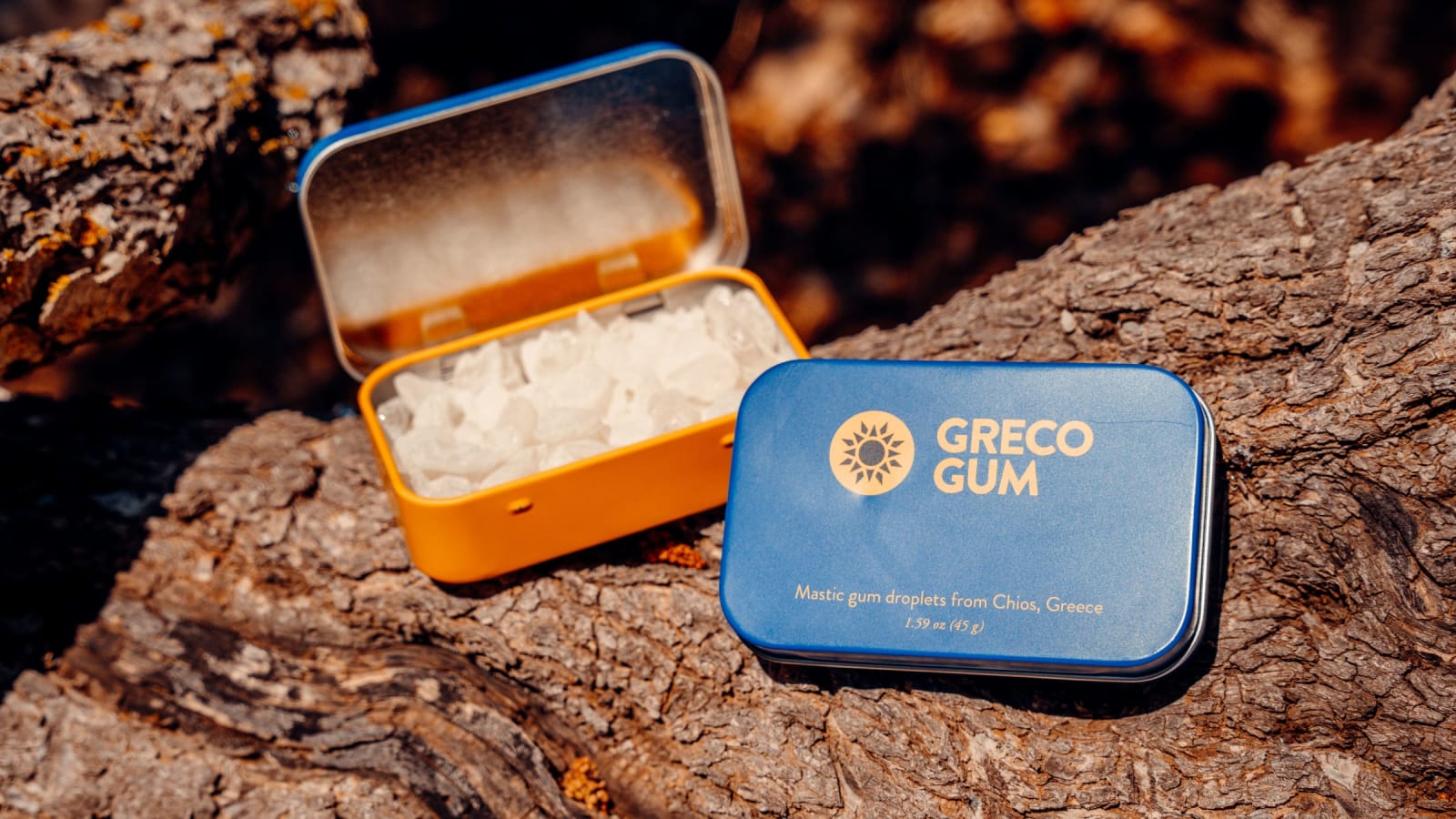
If you’ve used Falim gum to train your jaw and are wondering what to chew instead, there is a better option. Greco Gum is a natural resin alternative that can not only strengthen and define your jaw muscles but has a number of additional benefits including oral freshness and gut and immunity support.
Greco’s mastic gum is made from one ingredient: Chios mastic resin. It contains no sweeteners, gum base, colorants, or preservatives. There is no ambiguity or vague listings on a Greco Gum label.
Falim gum uses questionable ingredients and vague labeling. With mastic gum, you know exactly what you’re getting with no uncertainty.
This article originally appeared online in 2026; it was most recently updated on May 5, 2026, to include current information.

Beatrix Turajski
Beatrix is a health and wellness writer with two blogs and a special passion for mental health, fitness, and nutrition. Her career has taken her from creative writing to interning to freelancing.
References
-
“Falim gum – Isil” Open Food Facts. Last modified February 16, 2026. world.openfoodfacts.org ↩ ↩2
-
“Falim Plain Gum, Forrest Fruits Flavoured (20 Pack (100 Pieces))” Walmart. Accessed April 27, 2026. walmart.com ↩
-
“Falim Sugarless Plain Gum with Carbonat and mint aromatic, 20 Pack, 100 Pieces Each” Amazon. Accessed April 27, 2026. amazon.com ↩
-
Raksha, K.B. et al. “Effect of Chewing Bicarbonate-containing Sugar-free Gum on the Salivary pH: An in vivo Study.” International Journal of Clinical Pediatric Dentistry 9(1) (2016):35–38. doi.org ↩
-
“Aspartame and Other Sweeteners in Food” U.S. Food & Drug Administration. Last modified February 27, 2025. fda.gov ↩
-
“Titanium dioxide: E171 no longer considered safe when used as a food additive” European Food Safety Authority. Accessed April 27, 2026. efsa.europa.eu ↩
-
“Antioxidants (BHA, BHT, TBHQ) in food.” eurofins. Accessed April 27, 2026. eurofins.in ↩
-
Kaveh, M. et al. “Chewing gum base: A comprehensive review of composition, production, and assessment methods: Advances and approaches in biodegradability.” Journal of Texture Studies 54, 9 (2023): 789-807. doi.org ↩