
What is mastic flavor? How it tastes and how to cook with it

What mastic flavor tastes like
Mastic possesses an aromatic, resinous flavor of pine and cedar.
The Armenian Kitchen describes its flavor as “earthy-piney with a hint of bitterness.”1 It isn’t sweet when chewed on its own, but when cooked into food, it takes on a vanilla-like sweetness.
A writer with Saveur recounted her experience taking shots of a mastic-flavored Greek liqueur. “It is sweet with a heady, herbal aroma and a light flavor of pine. I have never tasted anything quite like it.”2
Mastic is a resin, not a flavoring: same tree, different forms
The mastic used in cooking is made from the same Chios resin as mastic used in chewing.
When cooked into a dish, mastic flavor is more diffused and aromatic, whereas it comes across as more resinous and slightly bitter when you chew a piece straight. As a cooking ingredient, it gives a natural sweetness to a dish.
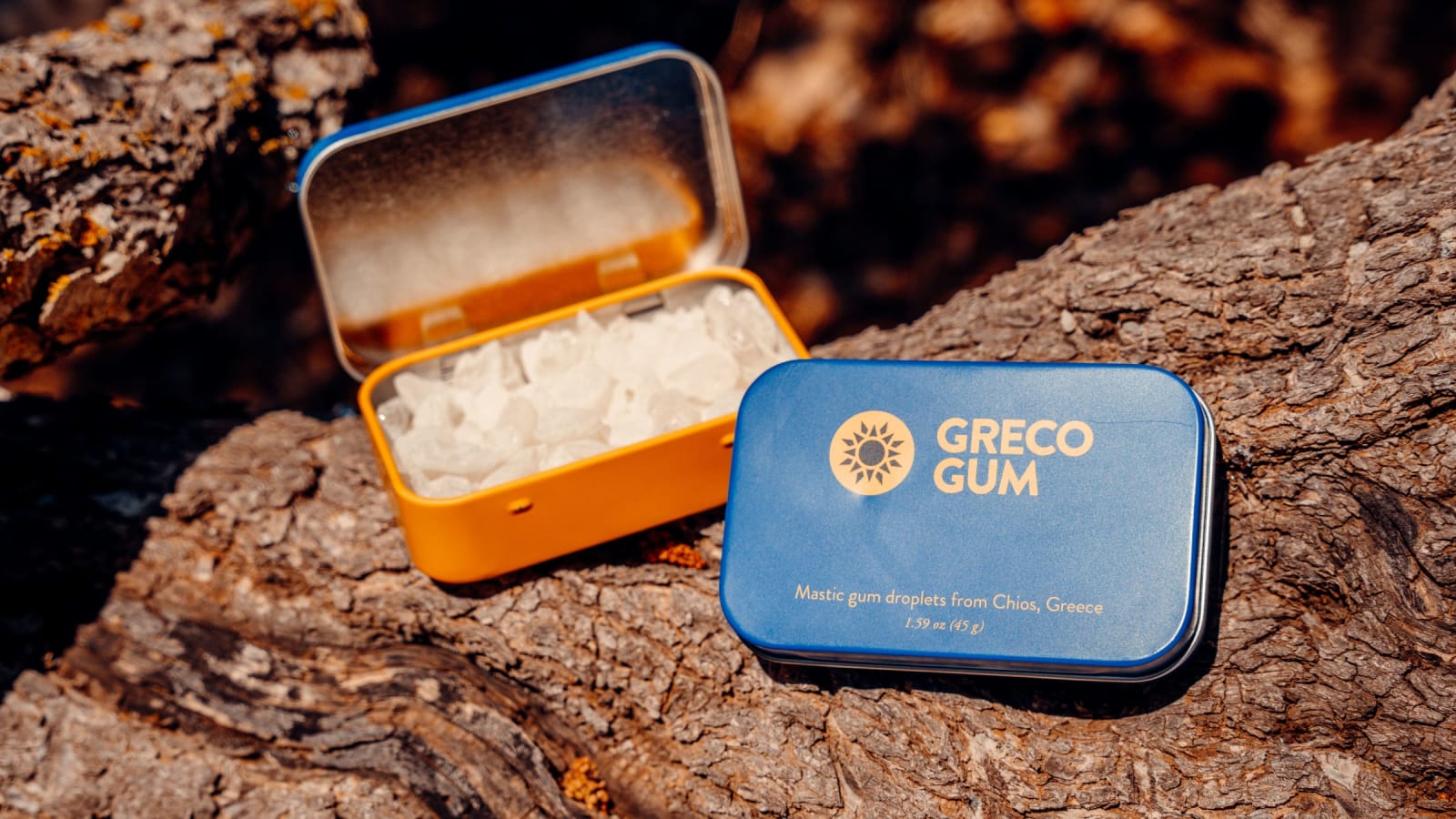
The PDO-protected resin used in culinary mastic is the same Chios-grown mastiha that Greco uses, so the flavor comes from authentic resin, not an artificial flavoring.
The FoodCrumbles blog did an experiment in which they tasted mastic gum plain vs. added into ice cream. Even though they added only ½ teaspoon of crushed mastic to the ice cream, it had a much stronger mastic flavor than the regular gum. The other ice cream ingredients highlighted the mastic flavor.3
Where you’ll taste mastic in Greek food and drink

- Kaimaki is a Greek mastic ice cream. Mastic combined with salep gives the treat a stretchy, chewy texture.4
- In the vanilla “submarine” (ypovrichio) spoon sweet, mastic is the chewy base under a vanilla flavor rather than the headline flavor itself.5
- Tsoureki is a traditional Greek sweet yeast bread that’s usually baked for Easter to break the Lenten fast and for Christmas.4 The inclusion of mastic gives it an earthy, piney flavor hint.
- Chios-style mastic loukoumi is a gelatinous treat, similar to Turkish delight, that’s flavored with mastic resin and oil for flavor and aroma.6
- Mastika (or Mastiha) is a Chios mastic-flavored liqueur.4 Its main ingredient is pure mastic resin.
When it comes to savory foods, mastic resin is also added to lamb and goat, rice dishes, and Greek bread and cheese.4
Cooking with mastic: how much to use and how to grind it
Since mastic is so potent, just a pinch is all you need to flavor a dish. Too much will turn a dish bitter or leave it tasting like medicine.
When grinding mastic powder, it’s usually recommended to add a little sugar so that the powder doesn’t clump under the pestle.4
The Armenian Kitchen’s article lists “expert advice” on cooking with mastic:
“I usually do not measure, so I would guess half a teaspoon. To pulverize (mastic), I use my mortar and pestle, add the gum and an equal amount of sugar and the mahlab, and (then) smash/grind. The gum can get sticky, but the sugar and mahlab help. Then I pass it through a fine sieve to prevent larger pieces from going into the dough. Clean your utensils immediately!”1
What mastic gets confused with
When people hear “mastic flavor,” their minds usually go to one of two unrelated things: gum arabic, an acacia-tree thickener which isn’t actually a flavor, and construction mastic, which is a sealant.
Some brands do use mastic flavoring in products instead of real mastic, but for the most part, if you hear “mastic flavor,” it refers to the flavor that comes from Chios mastic resin.
FAQs about mastic flavor
What can I use instead of mastic?
If a recipe calls for mastic and you don’t have access to any, some bakers say that you can substitute cardamom, anise, or vanilla in place of mastic or mahlepi. You won’t get exactly the same flavor, but it’s better than leaving mastic out entirely.
Is mastic the same as mahlepi?
No, mahlepi is a soft powder made from ground Persian cherry pits. It has a sweeter, floral taste. Mastic and mahlepi are commonly combined in traditional Greek recipes.
What is mastic called in Greek, Turkish, and Arabic?
In Greek, mastic is called mastiha. In Turkish, it is damla sakızı meaning “drop gum.” In Arabic, it’s called mastaka.
Is mastic good for your gut?
Yes, mastic resin has many digestive and gut benefits including reducing H. pylori symptoms.
Can you cook with the same mastic you chew?
Yes, as long as you grind it finely first. To cook with chewing mastic, pulverize it with a mortar and pestle and add some sugar to prevent clumping.
The true test of mastic flavor is trying pure mastic resin on its own. To experience it, try our raw Chios mastic. And if you have questions first, learn what mastic gum is on our blog.
This article originally appeared online in 2026; it was most recently updated on September 1, 2026, to include current information.

Beatrix Turajski
Beatrix is a health and wellness writer with two blogs and a special passion for mental health, fitness, and nutrition. Her career has taken her from creative writing to interning to freelancing.
References
-
“Understanding Mastic.” The Armenian Kitchen. April 12, 2021. thearmeniankitchen.com ↩ ↩2
-
“Ancient Flavor of a Greek Island: Mastic.” Saveur. July 18, 2010. saveur.com ↩
-
“Mastic Flavor Science – Why Mastic Ice Cream Tastes Different Than Pure Mastic Gum.” Food Crumbles. July 2, 2021. foodcrumbles.com ↩
-
“Mastiha: The Greek Resin That Grows Nowhere Else on Earth.” Alpha Omega Imports. April 3, 2026. alphaomegaimport.com ↩ ↩2 ↩3 ↩4 ↩5
-
“Ypovrichio: The Greek ‘Submarine’ Spoon Sweet.” The Greek Vibe. May 3, 2023. thegreekvibe.com ↩
-
“Building Blocks: Loukoumi, Greek Delight.” Culinary Backstreets. August 23, 2018. culinarybackstreets.com ↩