History of mastic gum

In ancient Greece, the aromatic resin from the mastic tree—a shrubby evergreen known formally as Pistacia lentiscus var. chia—was both a prized remedy and a special treat. The very word “mastic” comes from the Greek μαστιχᾶν, meaning “to chew,” hinting at its earliest use as a natural chewing gum.
Greek physicians, including Hippocrates—the father of medicine, extolled Chios mastic for its healing properties. The resin droplets, called mastic tears, were prescribed for digestive troubles, colds, and as a breath freshener.1
Greek women were said to chew this aromatic resin to clean their teeth and sweeten their breath, making mastic gum perhaps the original Mediterranean breath mint. Ancient surgeons even found creative uses, from treating wounds to fashioning glues. By the Classical era, the Greek island of Chios had become the sole source of true mastic, and its reputation as a healing gift of nature was spreading far and wide.
Roman empire: a luxurious spice (1st–3rd centuries AD)
As Chios came under Roman rule, mastic gum traveled across the empire. The Romans incorporated mastic resin into gourmet recipes, perfumes, and medicinal potions. Roman bakers and winemakers also valued mastic’s piney flavor. A famous example of this is Conditum Paradoxum, a spiced wine where mastic was simmered with honey, pepper, saffron, and dates for an ambrosial drink.2
Roman elites chewed mastic as a natural chewing gum to freshen their breath. Meanwhile, physicians continued the Greek medical legacy; the prominent doctor Galen praised mastic’s benefits for bronchial ailments and overall “balance” of the body. By the height of the Roman Empire, Chios mastic—sometimes called “tears of Chios”—was literally worth its weight in silver and traded as a luxury spice across the Aegean and beyond.
Even as far away as Persia and India, people used Chios mastic to fill dental cavities as well as for use as incense in temples. By antiquity’s end, Chios mastic was truly global.
Byzantine & medieval era (4th–13th centuries)
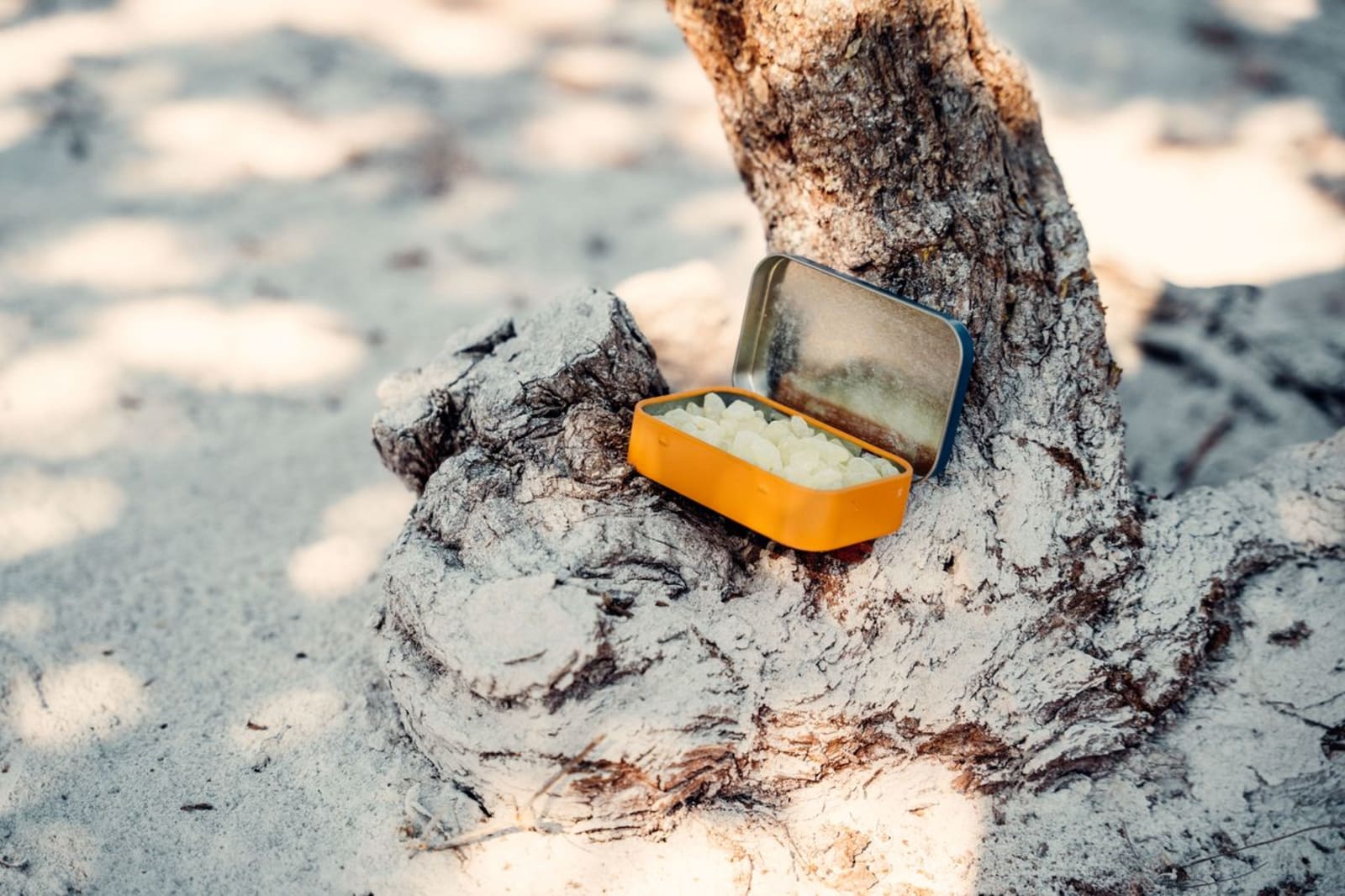
After the Roman era, Chios remained a jewel of the Eastern Roman (Byzantine) Empire. The Byzantine emperors valued mastic so much that the resin trade was reportedly an imperial monopoly.3 During this time, the harvest of mastic continued much as it had for centuries: families would make small incisions in the bark of the mastic trees each summer, and crystal “tears” would drip out and harden for collection.4 These precious drops were carefully cleaned and stored—often under lock and key—as a strategic resource.
From the 7th century onward, however, Chios faced new threats. Arab and pirate raiders prowled the eastern Mediterranean, drawn by the island’s famed riches. Chroniclers note that Arab pirates repeatedly attacked Chios’s shores, looting and destroying ports in pursuit of its aromatic treasure.5
Despite these turbulent times, mastic remained the lifeblood of the island’s economy and identity. By the 11th century, even local monasteries, like Nea Moni of Chios, were cultivating mastic groves, and Venetian and Genoese merchants eagerly sought out what was known as the “white gold” of the Aegean.
Mastic villages and Genoese rule (14th–15th centuries)
The turning point in Chios’s mastic story came in 1346, when the Genoese seized control of the island. The Genoese overlords, notably the powerful Giustiniani family, knew the value of Chios mastic and organized its production with almost military precision. To protect the lucrative mastic production from pirates and smugglers, they established the famed “Mastic Villages” (Μαστιχοχώρια, or latinized Mastichochória).6
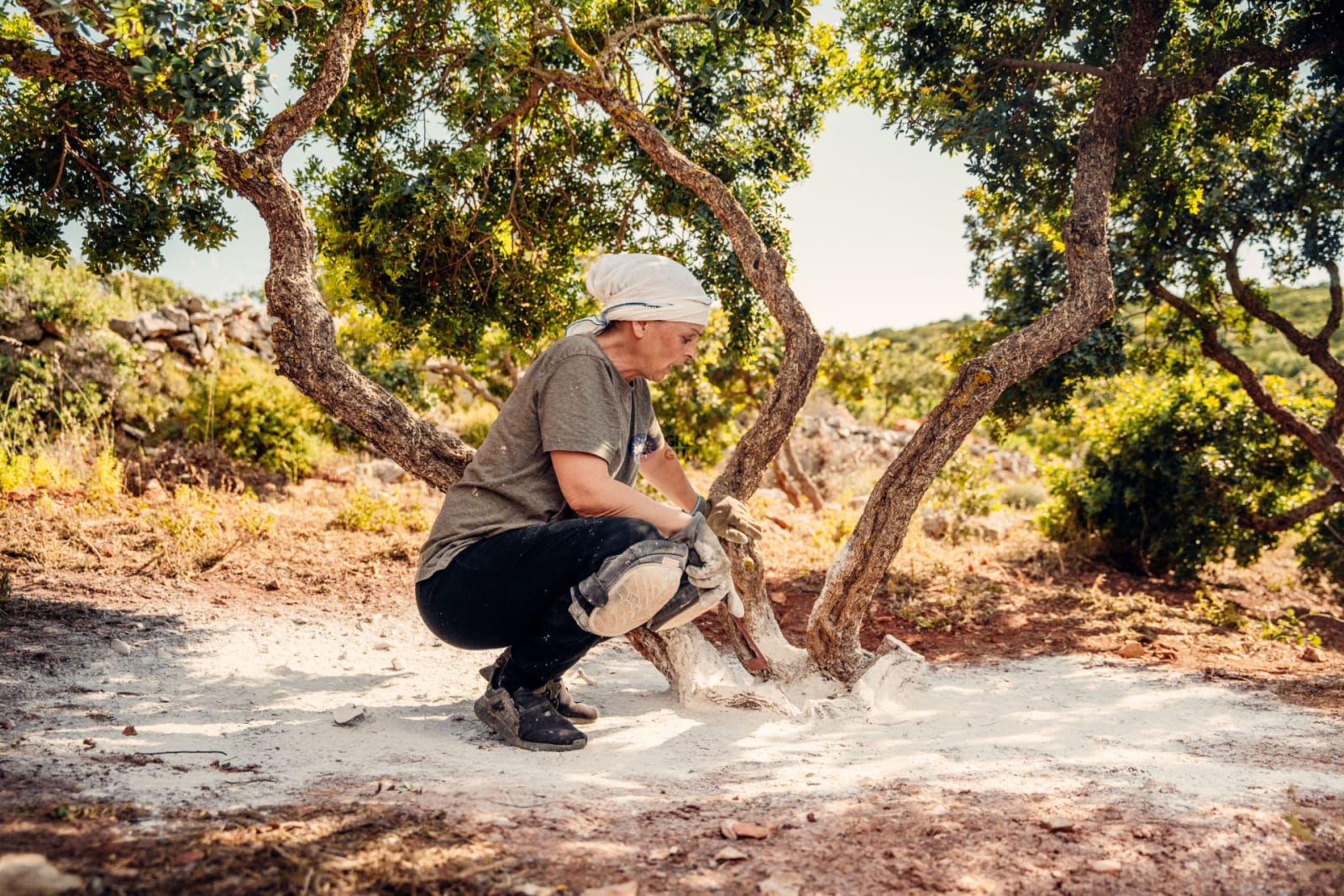
These medieval villages, also known as Mastichochória—and many of which still stand in south Chios—were ingeniously designed as interconnected fortresses. They were built out of sight from the sea, with maze-like narrow lanes and even houses without ground-floor doors. Inside these stone villages, generations of growers labored year-round: pruning trees, sweeping white clay soil under the trunks to catch the falling tears, and collecting and cleaning the resin. Each villager had strict quotas, and smuggling mastic was a crime met with harsh penalties.
By concentrating cultivation in about 24 villages and enforcing quality control, the Genoese created a mastic monopoly that enriched their coffers. Chios prospered during this era; European apothecaries and spice markets were full to the brim, and the islanders, though under foreign rule, built their lives around the resin. Mesta, Pyrgi, Olympoi—the very names of these villages became synonymous with mastic.

Arab & Ottoman era (16th–19th centuries)
In 1566, Chios fell to the Ottoman Empire. A new era began, but mastic still played a starring role. The Ottoman Turks were as enamored with mastic as the Greeks and Genoese before them. In fact, the Sultan in Constantinople valued Chios mastic so highly that he granted the island unusual privileges and autonomy in exchange for a steady ransom of resin. The Sultan’s officials oversaw the annual harvest, ensuring not a single tear went unaccounted.
It’s said that spilling or stealing mastic under Ottoman rule was a grievous offense. According to lore, the punishment for harming a mastic tree could be as severe as for harming a person. This isn’t hard to believe, considering the Sultan’s own harem demanded a constant supply of this precious resource. Women in the palace chewed mastic to freshen their breath and whiten their teeth, and they used mastic-infused cosmetics as part of their beauty regimen.
To keep the resin flowing, the Mastic Villages retained their special status. The locals continued to manage cultivation, and in return they were spared some taxes and certain feudal burdens that other Greek communities endured.
Mastic’s prestige in the Ottoman era is evident in the language of the time. The Turks nicknamed Chios “Sakız Adası,” meaning “Island of Gum”—a nod to its singular product. European travelers of the 17th century wrote that mastic from Chios was “worth its weight in gold,” and the market price often rivaled that of precious spices or silk.
The resin traveled in carved wooden chests from Chios to the Ottoman court, to Cairo and Venice, and as far as India, carried by caravan and ship as a treasured commodity. Yet even amid prosperity, Chios saw hardship. Periodic earthquakes and a notorious massacre in 1822 brought devastation to the island. Still, even tragedy underscored mastic’s importance. During this tumultuous time, the sultan reportedly ordered that the mastic-producing villages be protected so that production could resume.
In the twilight of Ottoman rule, Chios’s identity as “the mastic island” was firmly entrenched. Foreign diplomats, merchants, and literati all knew of the unique trees of Chios that wept magical tears.

Modern era and revival (20th–21st centuries)
After joining the modern nation of Greece in 1912, the island of Chios carried its mastic legacy forward into the new century. Recognizing that this ancient tradition needed protection in the modern world, the mastic growers of Chios formed a cooperative in 1938. Aptly named the Chios Gum Mastic Growers Association, the cooperative was created to collectively organize production and trade. This cooperative, representing families in all the mastic villages, continues to oversee everything from cultivation to export, ensuring that the quality remains top-notch and that the benefits of the mastic trade support the local community.
The mid-20th century saw the introduction of new mastic products and wider scientific interest. Researchers began studying mastic’s medicinal properties in earnest, confirming many of its ancient uses. For example, modern science found that Chios mastic is a natural antimicrobial and antioxidant substance.
Researchers have discovered mastic’s ability to kill Helicobacter pylori, the stubborn bacteria linked to stomach ulcers, which validated what Hippocrates intuitively knew about mastic soothing the stomach. (For more, see our detailed post on mastic gum’s gut health benefits.) Today, mastic is even recognized by the European Medicines Agency as an herbal remedy for indigestion and minor peptic ulcers, and it’s a key ingredient in natural supplements for gastrointestinal health.
In recent years, the world has taken note of Chios’s extraordinary botanical heritage. In 1997, the name Chios Mastiha earned Protected Designation of Origin (PDO) status in the EU. Now, only mastic gum from the Greek island can bear the name of “Chios mastic.”7 And in 2014, UNESCO inscribed the know-how of cultivating mastic on its Representative List of Intangible Cultural Heritage of Humanity.
This UNESCO honor recognized what the people of Chios have known for millennia: the cultivation of mastic is not just farming, but a living tradition and cultural identity. If you visit Chios today, you can tour the Mastic Museum and see firsthand the care that goes into every step—from pruning the gnarled pistachio-like trees in winter, to dusting the ground with white marble dust in summer, to sorting and washing the gem-like resin pieces by hand.
The island’s unique microclimate of warm, dry summers and limestone-rich soil and the dedication of its growers mean that Chios remains the only place on Earth where mastic trees produce this resin in significant quantities. Attempts to cultivate the same trees elsewhere, from nearby islands to places in Turkey or North Africa, have largely failed, highlighting just how special Chios’s environment is.
These days, mastic has fully entered the modern palate and market. What was once a local secret of the Aegean Sea is now a trendy ingredient in global haute cuisine and natural wellness circles. And Chios mastic gum is still chewed as a natural chewing gum—you can even find it as convenient packets of mastic nuggets on our site! Yes, the same pure resin the ancients enjoyed, are now being enjoyed by a new generation.
Greek grandmothers continue to bake mastic into traditional sweets like tsoureki (Easter bread) and spoon sweets, while top chefs experiment with its pine-like flavor in everything from sauces to marinades. Mastic liqueur, a sweet digestive called Mastiha, has become a fashionable drink that’s served straight up cold or mixed into cocktails for a hint of herbal mystique. In fact, Chios Mastiha liqueur itself has PDO status, just like Champagne or Cognac, further underscoring its heritage.
In the Eastern Mediterranean, people have long loved mastic ice cream—the Greek kaimaki or Turkish dondurma—which owes its uniquely stretchy, chewy texture to mastic resin as a stabilizer. You’ll also find mastic’s imprint in toothpastes and oral care products, in soaps and skincare, and in modern pharmacology as an antimicrobial agent and antioxidant-rich supplement.
From the days when Hippocrates walked the halls of Athens recommending mastic for upset stomachs, to the time when sultans safeguarded the “tears of Chios” in palace vaults, to the present moment where chefs and scientists alike sing its praises, the story of Chios mastic gum spans over 2,500 years of history. It’s a story literally etched into the landscape of Chios—in the form of scarred tree bark and stone villages—and woven into the cultural fabric of its people.
These tears have survived empires, inspired folklore, built fortunes, and healed bodies. And through it all, the resilient island of Chios continues to tearfully offer its gift to the world. When you chew a piece of pure Chios mastic gum today, you’re not just freshening your breath—you’re participating in an ancient, living tradition that has traveled through time, conquering hearts and taste buds across civilizations. In a world of synthetic confections, mastic remains a natural wonder: a little drop of history that’s as relevant and delightful now as it was in the ages of heroes and gods.
This article originally appeared online in 2025; it was most recently updated on July 23, 2025, to include current information.

Bob Hanes
Bob Hanes holds an MBA in Logistics, Materials, and Supply Chain Management from the University of Buffalo. He co-founded a biotech company specializing in drug screening solutions for the pharmaceutical sector and writes informative content on health, wellness, and scientific topics.
References
-
Mastic Fantastic: Resinating with history, SECONDS magazine. ↩
-
Wikipedia: Mastic (plant resin). ↩
-
Persson, J. (2024). How mastic gum is harvested, Greco Gum blog. ↩
-
Mastic History, Representation and Preservation of Heritage Crafts. ↩
-
Arab News (2008). Mastic Drops of Chios. ↩
-
UNESCO Intangible Cultural Heritage – Know-how of cultivating mastic on Chios. ↩