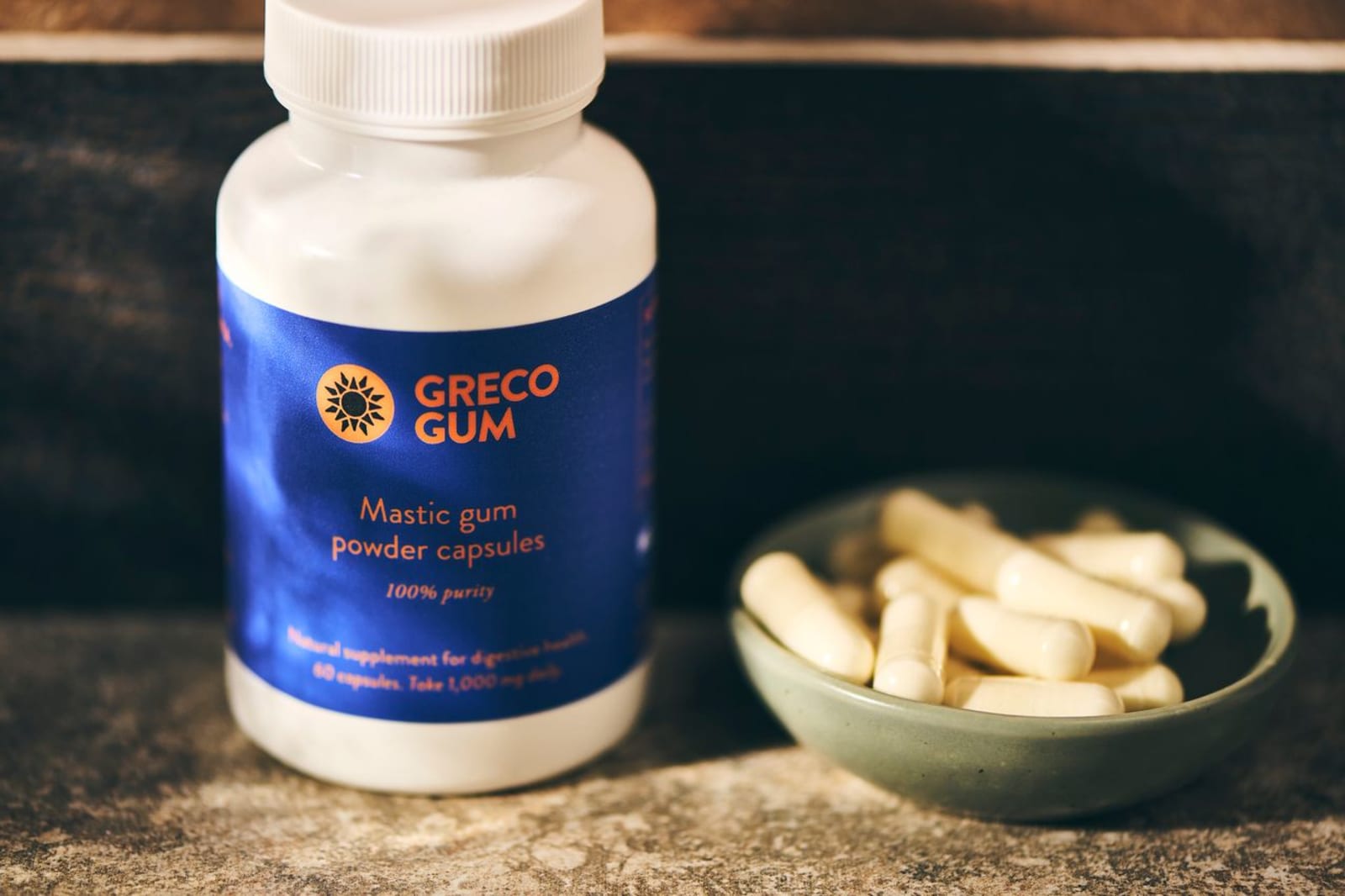
How to use mastic gum: chewing, capsules and more

- 1Start with a couple of pieces so you don’t overfill your mouth.
- 2Before biting, warm the piece in your mouth to soften it.
- 3Work the gum into a wad in your mouth, making sure to switch chewing sides to chew evenly throughout your mouth.
What you’ll feel in the first couple of minutes
At room temperature, mastic resin is brittle. It becomes flexible near body temperature as warmth and saliva soften it. Expect that your gum will come apart on the first few bites and then stick together within the first two minutes of chewing.
You may find that your gum piece is sticky. We sort all of our gum to ensure that each tin has a higher share of clean, chewable pieces. But there may still be some extra sticky pieces in your tin.
Mastic gum’s taste catches some chewers off guard at first. In the first few bites, a bitter taste will hit your mouth, but after a few minutes, the resin will mellow into a light, pleasant piney flavor.
You may also experience jaw soreness. Many jaw-training chewers report that their post-chew jaw soreness indicates to them that their muscle was worked properly.
However, mastic gum should only leave you with mild muscle fatigue. Sharp or radiating pain, clicking or locking of the jaw, or lingering soreness means you should stop and see a dentist or doctor.
How to chew mastic gum, step by step

To start chewing mastic gum, begin with just two nuggets or a few droplets and don’t overfill your mouth. You want enough room in your mouth to comfortably chew your gum wad and move it around.
If you can’t decide between mastic nuggets or droplets, read our comparison page. The only difference is size and consistency, not flavor. You may find nuggets easier to start with since they’re softer.
Next, briefly warm the gum in your mouth before chewing. This will soften it to the right consistency. In the first few bites, get a feel for how you like to chew. You can chew as quickly or as slowly as you choose.
Finally, work your gum pieces into a single wad in your mouth. Chew it with one side of your mouth, and every couple of minutes, switch your chewing side.
Take a look at our guide on how long to chew mastic gum by goal to determine how long and frequent your chewing sessions should be.
If something goes wrong

New mastic gum chewers usually face one or more of a few common problems.
“My gum is too sticky.”
Stickiness is the biggest complaint our customers raise, mainly in regards to dental work concerns.
The gum sticking to your teeth is unavoidable when making a gum without softeners. It’s natural, not a defect. However, there are ways to reduce the stickiness.
Check with your dentist first if you’re concerned that mastic gum could stick to your dental work.
“My gum just breaks apart and crumbles.”
This happens when you bite down on a fresh gum piece without warming it up first.
Visit our page on why mastic gum splinters and how to fix it to learn some quick ways to solve this issue.
“My gum won’t come together into a wad.”
This is another issue that gum crumbling can cause. If you can’t get your gum to come back together after ten minutes of chewing, try adding a softer piece of gum to bring the splintered shards together.
If you’ve been chewing the same piece of gum for a while, it will sometimes break apart into sandlike pieces that can’t be reincorporated into a wad even if you add a new piece.
At this point, you should throw out the old wad and start fresh.
Can you swallow mastic gum?
Don’t worry if you accidentally swallow a piece of mastic gum. It’s safe to swallow, but capsules are generally the easier format for ingesting mastic resin. Don’t try to swallow a large wad, as that may cause you to choke.
Saving gum between sessions
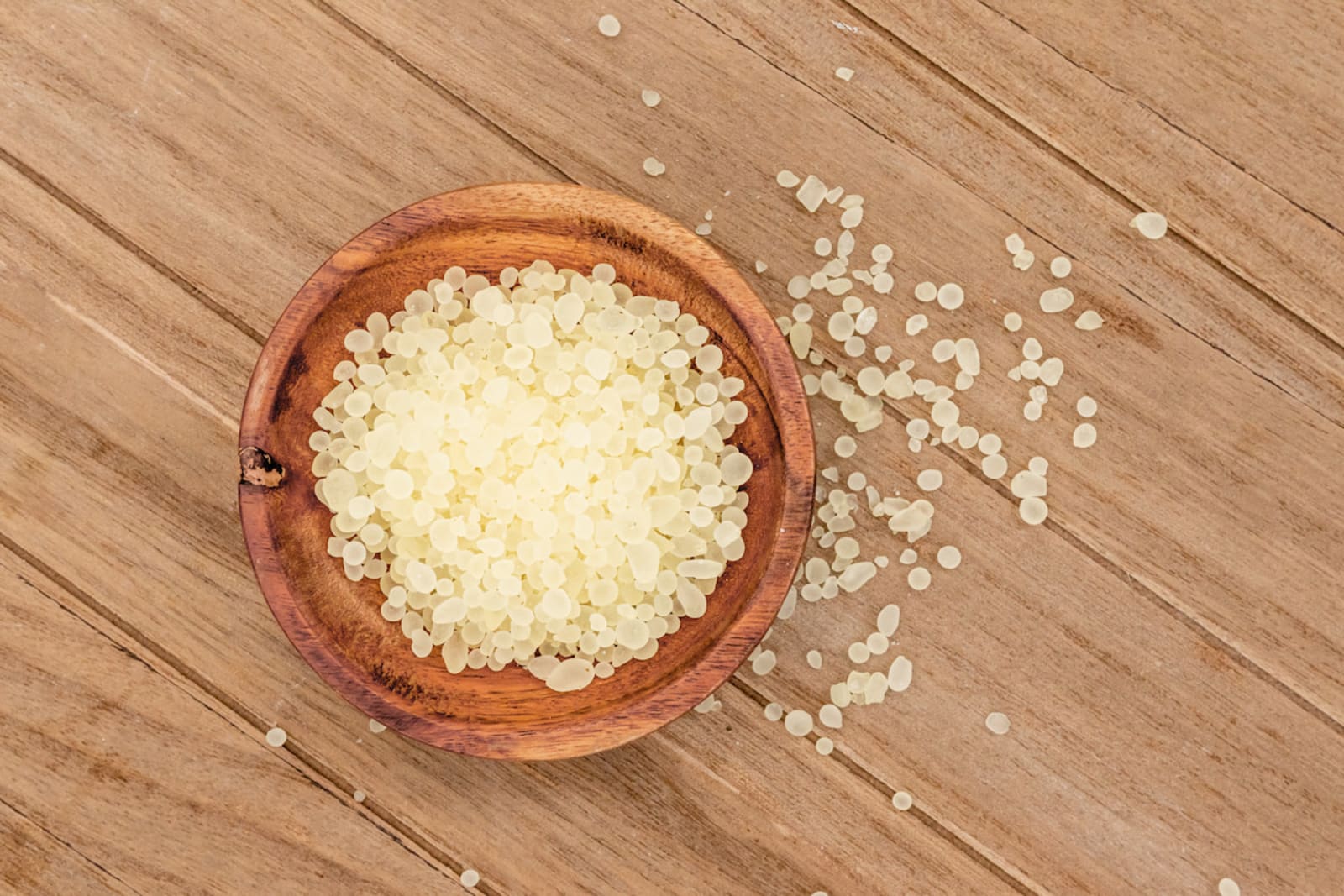
To get the most out of each piece of mastic gum, you can save and re-chew it.
Mastic gum hardens up as it cools, so be sure to re-warm it in your mouth before chewing. Keeping your wad clean will also lengthen how long you can chew it.
Other ways to take mastic
Chewing is not the only format available to take mastic resin.
Capsules: perfect for those who want the same resin without the chewing.
In a small 2010 pilot trial, swallowed mastic capsules cleared H. pylori in roughly a third of patients.1 Because of this, capsules are generally used in gut protocols over chewing gum or loose powder.
For more in-depth information on how mastic gum kills H. pylori, read our blog post on how it works.
How to take mastic gum capsules
Mastic capsules are encapsulated mastic powder designed to be swallowed with water. Adults can generally take up to about 1 g/day. You may take these if you dislike the texture or taste of mastic gum or want to take in the resin fast and on-the-go.
Powder: along with powder in capsules, you can also take loose mastic powder. It has two main uses: as a flavoring in desserts, drinks, and breads and as a relief for gut discomfort.
While some people do take it for their gut, keep in mind that the trials with clinical results used mastic capsules, not loose powder.1
Oil: a less common form of mastic gum is mastic essential oil. It is an aromatic, topical oil distilled from mastic resin.
It can be used in tiny amounts in food or as an oral treatment.
Which form is right for you?
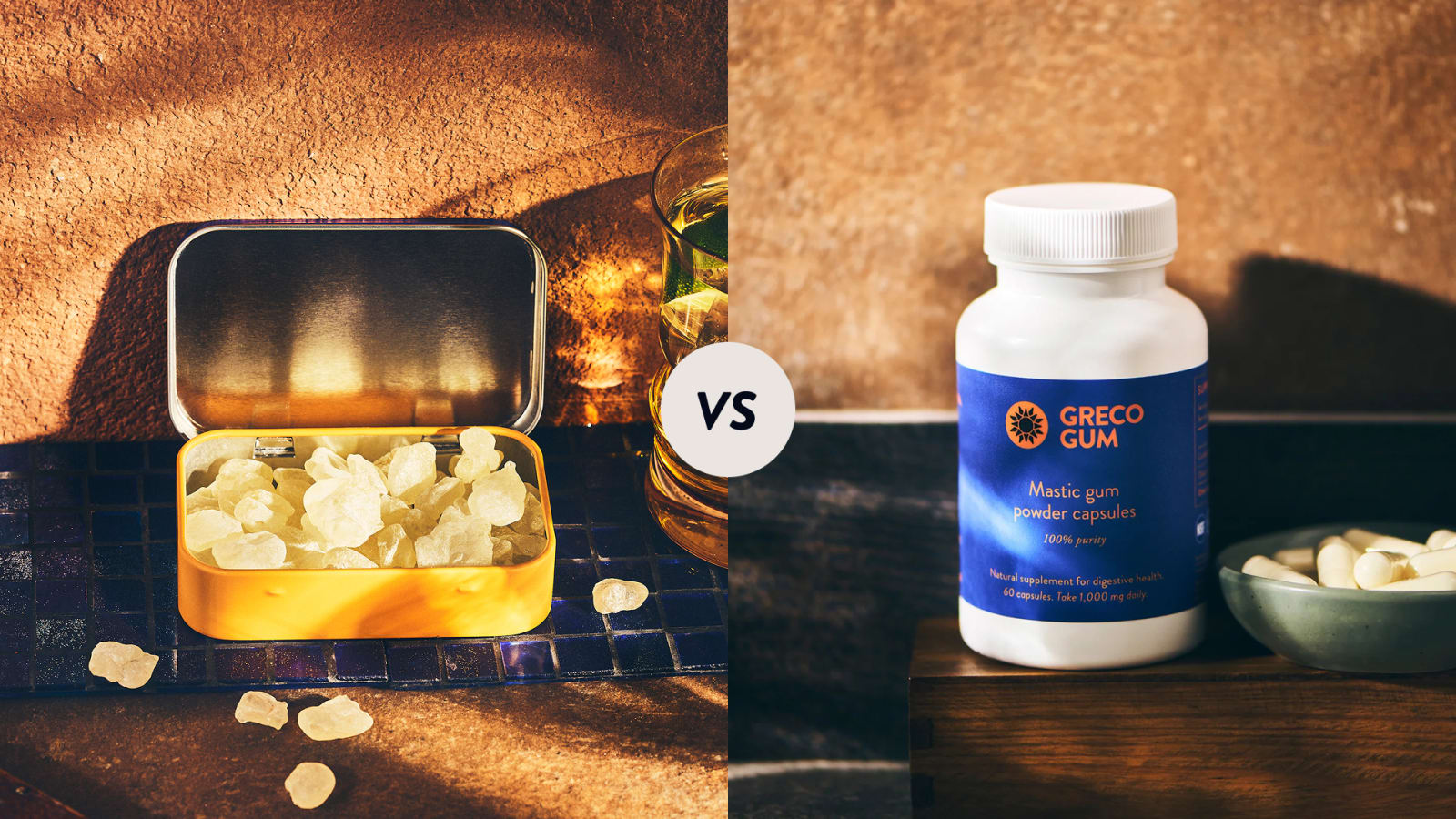
| Form | Use |
|---|---|
| Chew | Oral and dental health, jaw and facial muscle development, and reflux improvement |
| Capsule | Digestive health, H. pylori treatment, and lowering cholesterol and glucose levels2 |
| Powder | Culinary flavoring and gut health |
| Oil | Culinary flavoring |
To help you decide which form you should take, visit either our comparison page of mastic gum nuggets vs. droplets or our comparison of mastic gum vs. powder.
If you’re a texture-averse person, we recommend our mastic powder capsules.
FAQs about using mastic gum
Can you take mastic as a capsule instead?
Yes, mastic gum capsules are widely sold. Whether you should take them instead of mastic gum depends on your goals.
Can I chew mastic gum every day?
Yes, many chewers do. How often depends on your goal. Our how long to chew guide breaks it down.
Can you chew mastic gum with braces?
Since mastic gum is so sticky, it may stick to your braces and get in the metalwork. It can also snap your brackets due to its hardness. We advise caution for those who want to chew with braces and recommend checking with a dentist.
Why is my mastic gum so hard, and how do I soften it?
If your mastic gum is very hard, you may have gotten a particularly tough piece, or you may not have softened it in your mouth enough before chewing. To soften it, let it sit in your mouth without chewing for a minute so that your body temperature can warm it up. Also try mixing a softer gum piece into your wad.
This article originally appeared online in 2026; it was most recently updated on July 19, 2026, to include current information.

Beatrix Turajski
Beatrix is a health and wellness writer with two blogs and a special passion for mental health, fitness, and nutrition. Her career has taken her from creative writing to interning to freelancing.
References
-
Dabos, K. J., et al. “The effect of mastic gum on Helicobacter pylori: a randomized pilot study.” Phytomedicine 17, no. 3-4 (2010): 296-299. doi.org ↩ ↩2
-
Kartalis, A., et al. “Effects of Chios mastic gum on cholesterol and glucose levels of healthy volunteers: A prospective, randomized, placebo-controlled, pilot study (CHIOS-MASTIHA).” European Journal of Preventive Cardiology 23, no. 7 (2016): 722-729. doi.org ↩