How to take mastic gum for H. pylori: dosage and timing
| What | How much | When | Form | Duration |
|---|---|---|---|---|
| Mastic gum | 350–1,000 mg per dose | Three times daily, evenly spaced | Capsules/powder (swallowed, not chewed) | 14 days minimum |
Take 350–1,000 mg of pure mastic gum powder in capsule form, three times daily for at least 14 days. Space each dose as evenly as possible throughout the day. Continue through any prescribed antibiotic treatment, and retest 4–6 weeks after finishing your protocol to confirm results.
For comparative study results and evidence discussion, see how mastic gum kills H. pylori.
The clinical dosing protocol
We reviewed the available clinical literature on mastic and H. pylori and built the protocol below from it, so you don’t have to piece it together yourself. The key study1 tested two dosing groups: one receiving 350 mg of pure mastic per dose, another receiving 1,050 mg per dose. Both groups took mastic three times per day for 14 days.
Starting dose: 350 mg vs 1,000 mg
Start at 350 mg to see how your body responds. If you feel no stomach discomfort after 3–4 days, you can move up to 500–700 mg per dose. Jumping straight to 1,000 mg often causes loose stools without meaningfully improving results.
| 350 mg, if: | 1,000 mg, if: |
|---|---|
| First time using mastic | Already tolerate mastic well |
| Sensitive stomach | Doctor recommends higher dose |
| Unsure of tolerance |
In a small pilot study1, the 350 mg group achieved a 30.77% eradication rate (4 out of 13 patients), while the 1,000 mg group achieved 38.46% (5 out of 13). The difference was not statistically significant, which is one reason we recommend starting lower and working up. Full study results can be found here.
Our own capsules contain 500 mg of pure mastic each, which sits right in the middle of the studied range. This is deliberate. 350 mg is the minimum effective dose from the research, but 500 mg gives you a comfortable margin above that floor while still keeping you well below the 1,000 mg level where side effects become more common. One capsule three times a day puts you at 1,500 mg total daily intake, which aligns closely with the protocols that showed results in clinical testing.
Three times daily: what that actually means
The clinical study1 instructed patients to dose three times daily, but never specified whether that should be with meals or without. Consistent spacing matters more than eating schedules, because the goal is to keep mastic in contact with the stomach lining throughout the day.
Aim for roughly even spacing: morning, mid-afternoon, and before bed. That pattern works better than the typical breakfast-lunch-dinner schedule, which tends to cluster two doses close together. You don’t need to wake up at midnight. Just spread them across your waking hours.
Minimum 14 days (why shorter doesn’t work)
The clinical trial1 ran for 14 days, and all results reflect that timeframe. Shorter protocols haven’t been studied and likely won’t provide enough time for mastic to work against an entrenched infection like H. pylori.
Some practitioners extend treatment to 4–6 weeks, especially when using mastic without antibiotics. That goes beyond the published research, but it’s common enough in practice that it’s worth mentioning. For a fuller breakdown of timing — including what to expect week by week and when to retest — see how long to take mastic gum for H. pylori.
Form matters: capsules vs chewing
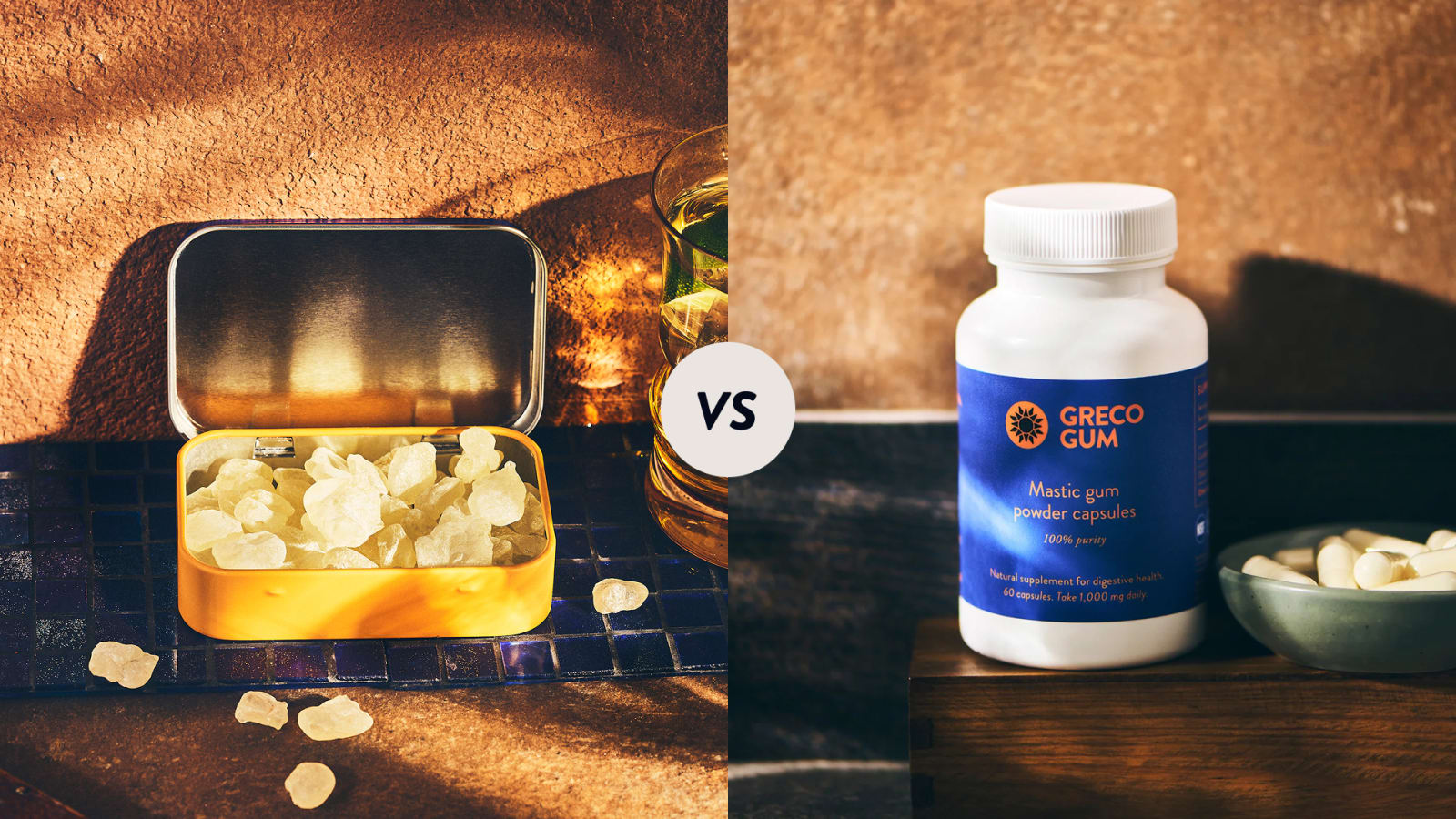
Mastic can be chewed as resin or swallowed as powder capsules, but the research that showed results against H. pylori only used the swallowed form.
What the studies actually used
The clinical trial1 used mastic in capsule or powder form that patients swallowed, not chewed resin. If you want to follow the protocol that actually produced eradication results, swallow mastic via powder capsules. This sends it straight to the gut where it can act against H. pylori directly. Capsules also deliver the broader gut health benefits of mastic more effectively than chewing does.
What happens when you chew instead
Chewing mastic for H. pylori is essentially doing oral care, not gut treatment. When you chew, the active compounds mix with saliva and get absorbed through oral tissues rather than reaching the stomach in meaningful concentrations.
Chewing mastic gum does provide real oral health benefits, but its impact on H. pylori hasn’t been studied. Only capsules have. Swallowing mastic powder capsules is the most effective studied method to target the gut and fight H. pylori (see how mastic protects against H. pylori infection).
Learn more about the differences between chewing mastic gum resin and swallowing mastic gum powder capsules.
Powder capsules: prefilled vs DIY
You can buy empty capsules and mastic powder separately, then measure and fill each capsule yourself. This gives you precise control over dosage, but it takes time and effort.
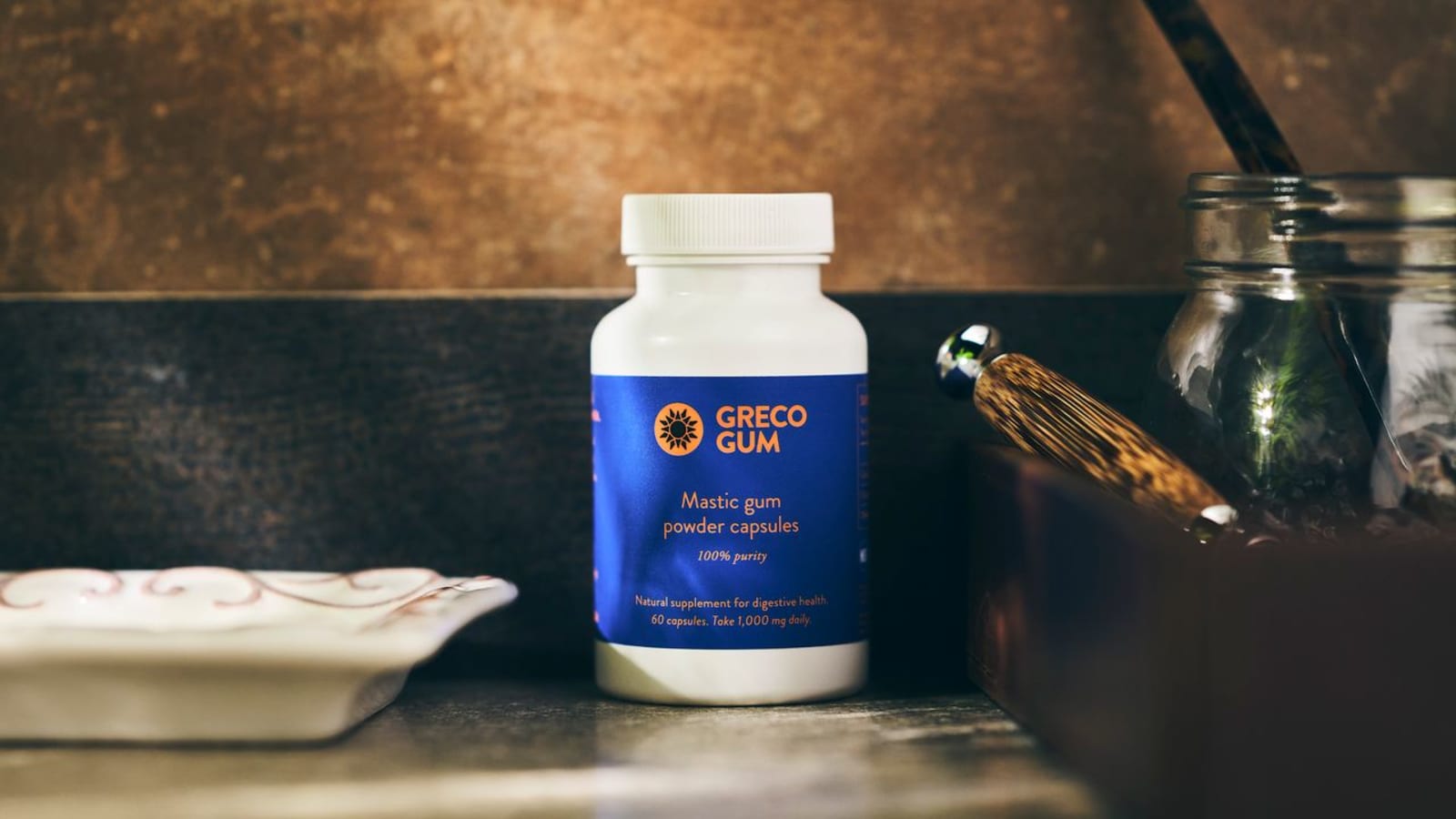
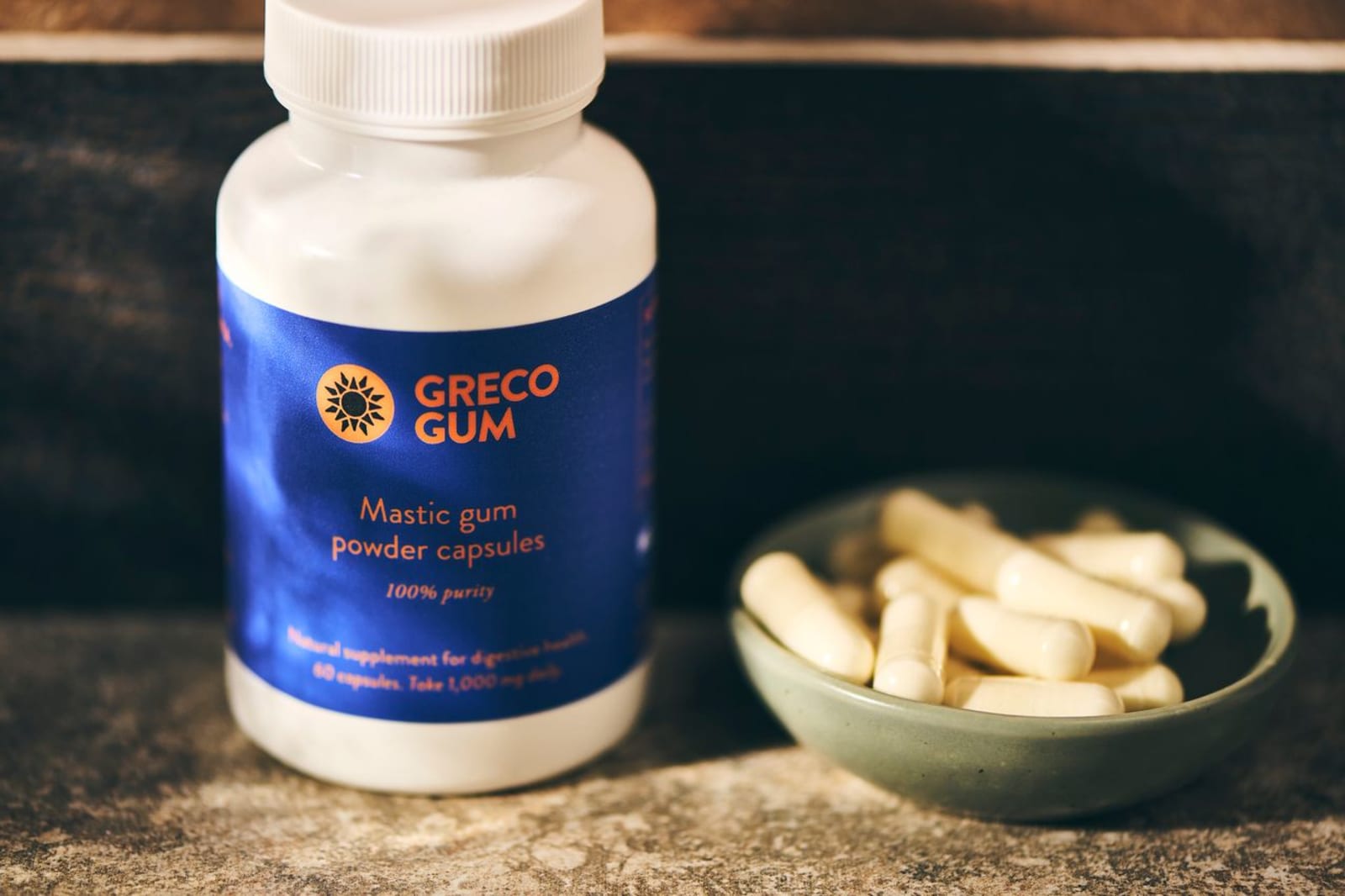
The simpler option is prefilled mastic powder capsules. When shopping, check the dosage per capsule and make sure you’re buying high-quality mastic. For your convenience, Greco Gum offers prefilled mastic gum powder capsules made from pure Chios mastic, with 500 mg per capsule.
Daily schedule (practical timing)
The researchers had patients take mastic three times per day for two weeks1. They didn’t specify meal timing, and that’s fine. Even spacing between doses matters more than when you eat.
Ideal spacing: roughly even intervals
Take mastic powder capsules three times daily with as much time between each dose as you can manage. Consistent spacing keeps mastic working against H. pylori in your stomach throughout the day rather than in concentrated bursts.
Real-world schedule: morning, afternoon, before bed
If you’re taking mastic three times a day, perfect spacing would mean every 8 hours. Something like 8:00 AM, 4:00 PM, and midnight. That’s not realistic for most people.
A schedule that actually works: take your first dose before breakfast, your second mid-afternoon, and your third before bed. It won’t be perfectly even, but it doesn’t need to be. The best schedule is the one you can actually stick to for 14 straight days. Your work obligations, daily routine, and sleep schedule all matter.
Why you don’t need to wake up at midnight
If waking up to take mastic doesn’t fit your life, don’t force it. Space your doses evenly across your waking hours instead. Sleep is when your body recovers and repairs, and losing it defeats the purpose of trying to get healthier in the first place.
What to take it with (and what to avoid)

Food vs empty stomach (studies didn’t specify)
The clinical study didn’t say whether patients took mastic with or without food. Based on our experience and general absorption principles, taking it on an empty stomach (about 30 minutes before meals) is probably best because it lets mastic coat the stomach lining directly without food getting in the way.
If you experience mild nausea on an empty stomach, take it right before eating or with a small amount of food instead. Getting the dose in consistently matters more than optimizing the exact timing around meals.
Other supplements and medications
The clinical trial1 was careful about what else patients were taking. Two groups received mastic-only treatment, while a third combined 350 mg of mastic three times daily with a PPI (pantoprazole) twice daily. That combination group showed zero eradication, which is worth noting if you’re currently on acid-suppressing medication.
In a separate study2, researchers added mastic gum to a standard triple-drug antibiotic regimen. That combination achieved a 92.2% eradication rate, compared to 63.3% with antibiotics alone. Full study discussion can be found here.
If you’re also taking antibiotics
If your doctor has prescribed antibiotics, you can stay on that regimen while adding mastic as a supplement. The research supports this approach. Mastic has successfully boosted antibiotic effectiveness in at least one study2, so the two can work together rather than being an either-or decision.
When to increase dose
Starting conservative (350 mg)
Begin at 350 mg per dose and pay attention to how your body responds over the first few days. Some mild stomach adjustment is normal, but anything beyond that is worth noting. For a full breakdown of what to watch for, see our guide on mastic gum safety.
Assessing tolerance after 3–4 days
If you experience no stomach discomfort after 3–4 days, your body has adapted well and you can consider increasing to 500–700 mg per dose. The clinical study1 only tested two extremes (350 mg and 1,000 mg), so a moderate increase gives your body time to adjust without jumping to a dose that’s more likely to cause side effects.
If you’re using Greco Gum’s 500 mg capsules, you’re already in this sweet spot with a single capsule per dose.
When higher doses don’t help
Jumping to 1,000 mg often causes loose stools without significantly improving eradication. The study data1 supports this: the 350 mg group eradicated H. pylori in 4 out of 13 patients (30.77%), while the 1,000 mg group eradicated in 5 out of 13 (38.46%). That’s not a meaningful difference, especially when you factor in the increased side effects at the higher dose.
Full evidence discussion can be found here.
Testing and follow-through
Don’t test too early
A lot of people finish the 14-day protocol, feel better, and assume they’re in the clear. But feeling better doesn’t always mean the infection is gone. H. pylori levels can drop enough to relieve symptoms without being fully eradicated.
The 5–6 week waiting period (what the study did)
Testing timing matters more than most people realize. The clinical study1 retested patients 5 weeks after finishing treatment, not immediately after. Testing too early gives unreliable results because residual bacteria can take time to rebound to detectable levels. Aim for 4–6 weeks post-treatment, and let your doctor know about this timing window so they don’t schedule your retest too soon.
If results are negative vs still positive
A negative H. pylori test 4–6 weeks after finishing treatment means the infection is no longer active. Even so, you may want to keep monitoring for symptoms, especially in the first few months.
If you still test positive, consider extending the treatment window or increasing your mastic dosage in consultation with your doctor. This is common clinical practice, even though it goes beyond what the published study protocols tested.
FAQs
Should I take mastic gum on an empty stomach for H. pylori?
The clinical study didn’t specify meal timing. Based on our experience and general practice, taking it on an empty stomach about 30 minutes before meals is probably ideal. If that causes nausea, take it right before eating instead.
Can I chew mastic gum instead of taking capsules for H. pylori?
No. Chewing mastic gum mainly benefits oral health. The patients who achieved H. pylori eradication in the research took pure mastic in swallowed powder form1, not chewed resin.
Learn more about the differences between chewing mastic gum and swallowing mastic powder capsules.
How many times a day should I take mastic gum for H. pylori?
Three times daily, based on the clinical research1. Aim for roughly even spacing between doses.
How long should I take mastic gum for H. pylori?
At least 14 days1. Shorter protocols haven’t been studied and likely won’t give mastic enough time to work against an established infection.
Can I take mastic gum with antibiotics for H. pylori?
Yes. If you’re already on antibiotics or your doctor prescribes them, adding mastic can significantly improve results. One study recorded 92% eradication with mastic plus antibiotics, compared to 63% with antibiotics alone2.
If possible, though, some people prefer to try mastic alone first since it has fewer side effects than antibiotic treatments. Mastic-only protocols1 have lower eradication rates than combination therapy2, but they’re also gentler on your system.
Comparative study results can be found here.
What time of day is best to take mastic gum for H. pylori?
There’s no specific best time. Take it three times daily with even spacing between doses. A realistic schedule for most people is before breakfast, mid-afternoon, and before bed.
Next steps
Ready to start the protocol? Get pure Chios mastic in capsule form, or get the complete Gut Health Protocol: the same capsules, plus nuggets to chew for daily support.
Need to verify your treatment worked? Retest 4–6 weeks after finishing the protocol, not sooner.
Further reading
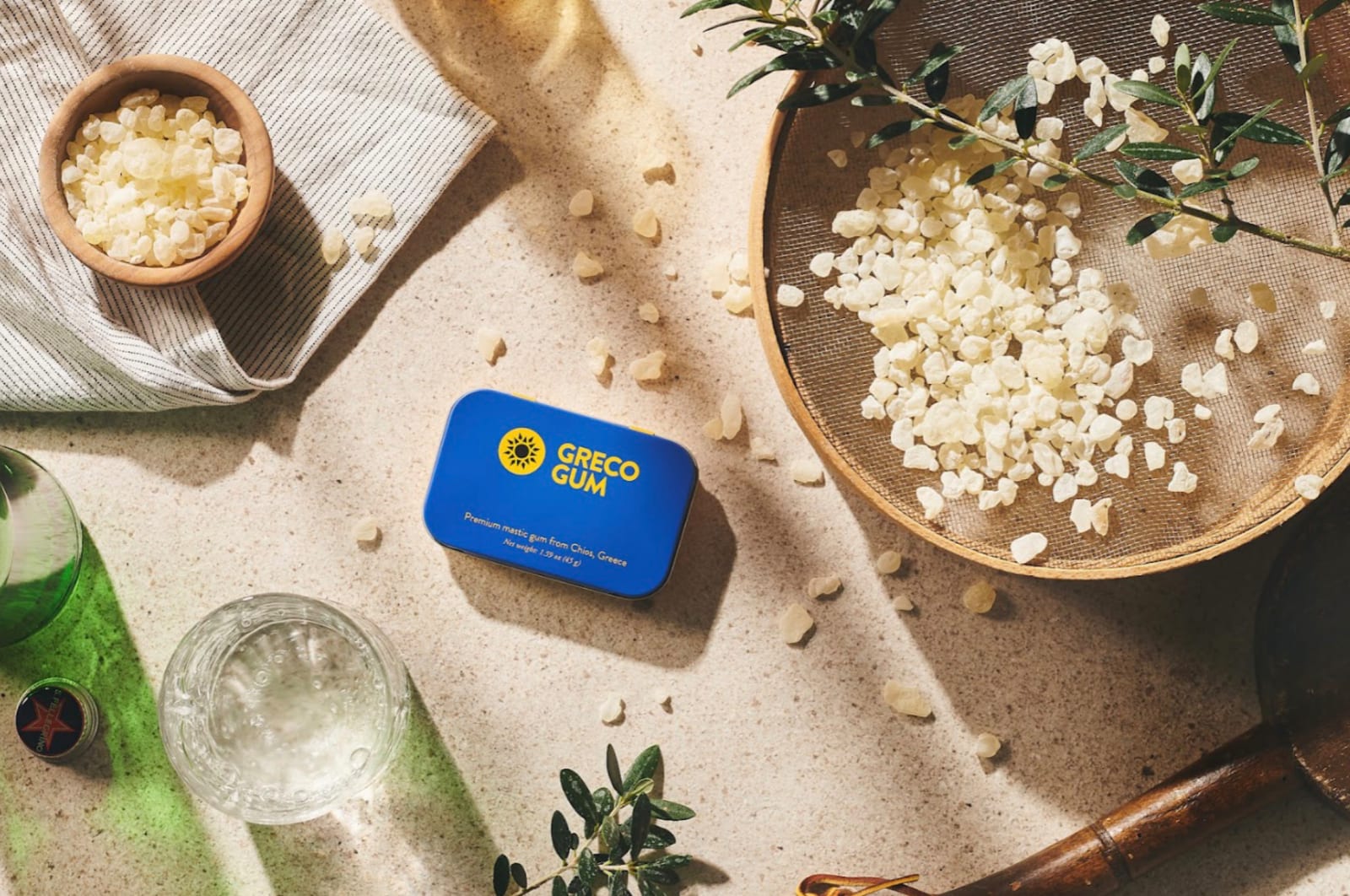
If you’re looking to start mastic treatment for H. pylori, try the highest quality mastic gum powder capsules on the market. For a deeper look at the evidence behind this protocol, read our full analysis on how mastic gum kills H. pylori. And if you’re curious about what else mastic can do beyond H. pylori, we cover the full range of research-backed mastic gum benefits in a separate guide.
This article originally appeared online in 2026; it was most recently updated on February 24, 2026, to include current information.

Eric Chin
Eric writes about ancestral nutrition, functional training, and ingredient purity. He’s a contributor to The WarKitchen, including “Flavors of Combat” (Issue 28) and “The Egg: Nature’s Perfect Food” (Issue 35).
References
-
Dabos, K. J., E. Sfika, L. J. Vlatta, et al. “The Effect of Mastic Gum on Helicobacter pylori: A Randomized Pilot Study.” Phytomedicine 17, no. 3–4 (2010): 296–299. doi.org. PMID 19879118. ↩ ↩2 ↩3 ↩4 ↩5 ↩6 ↩7 ↩8 ↩9 ↩10 ↩11 ↩12 ↩13 ↩14
-
Addissouky, T. A., A. A. Khalil, and E. El Agroudy. “Assessing the Efficacy of a Modified Triple Drug Regimen Supplemented with Mastic Gum in the Eradication of Helicobacter pylori Infection.” American Journal of Clinical Pathology 160, suppl. 1 (2023): S19. doi.org. ↩ ↩2 ↩3 ↩4