Health benefits of mastic gum powder capsules

Mastic gum is packed with an arsenal of incredible health benefits. In the form of mastic gum powder, these benefits are delivered straight to the gut for the body to absorb and put to immediate use.
Chios mastic is antimicrobial12, which means it retains the benefits that fall under this umbrella term: anti-inflammatory123456, antioxidant1278, antibacterial1291011. These properties make mastic a very effective agent to help combat harmful microbes, fight illness and disease, and protect and heal the gut from attacks.
Differences between mastic powder and mastic gum
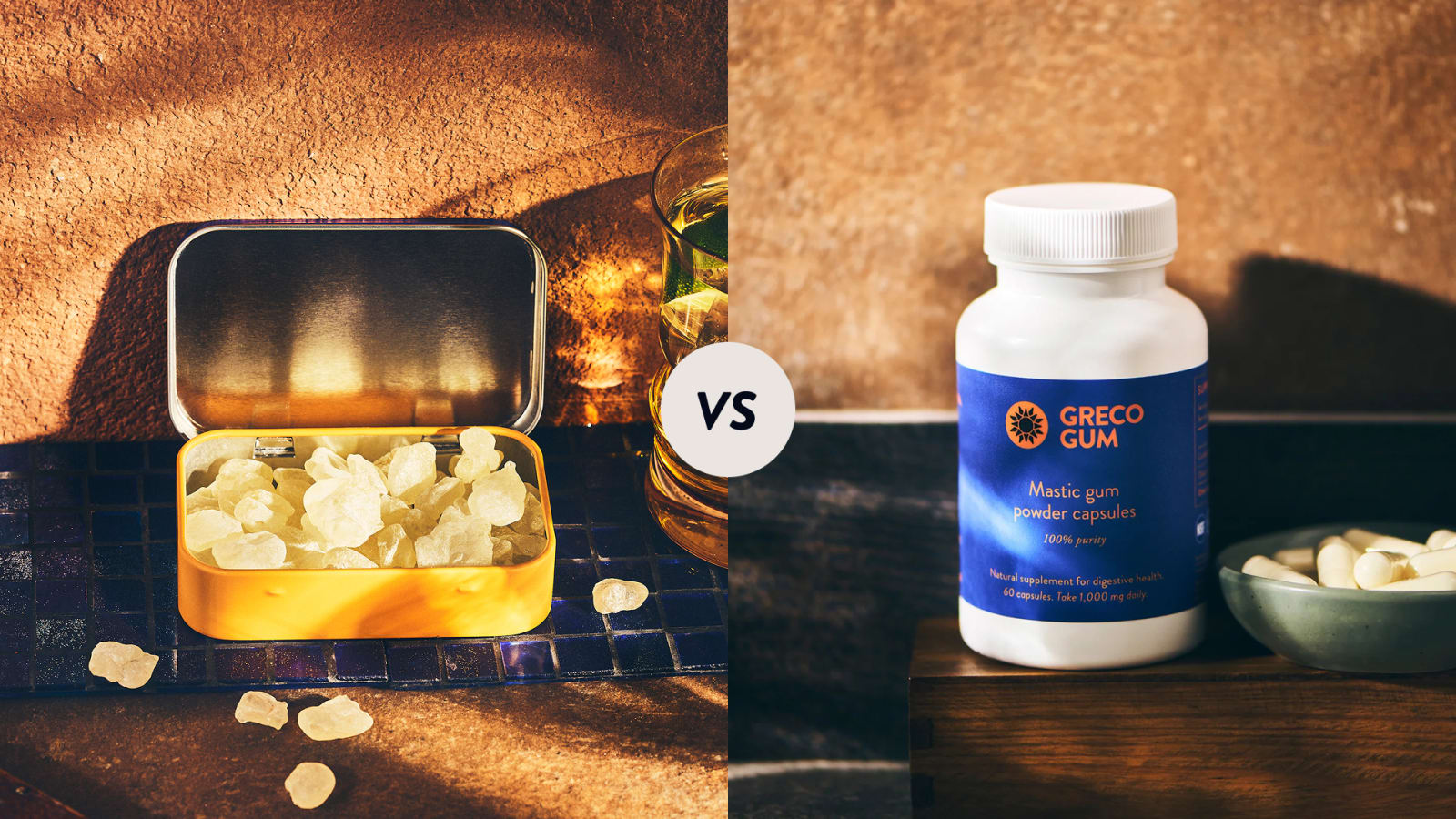
Along with mastic chewing gum, Chios mastic is consumed in the form of powder.
Following months of land preparation and mastic tree care, mastic resin is harvested. It then undergoes stages of drying, cleaning, and sorting. Many pieces of resin will go on to become mastic chewing gum. Smaller pieces will be droplets, while larger ones will become nuggets. Others may not have the specific physical attributes to be made into chewing gum.
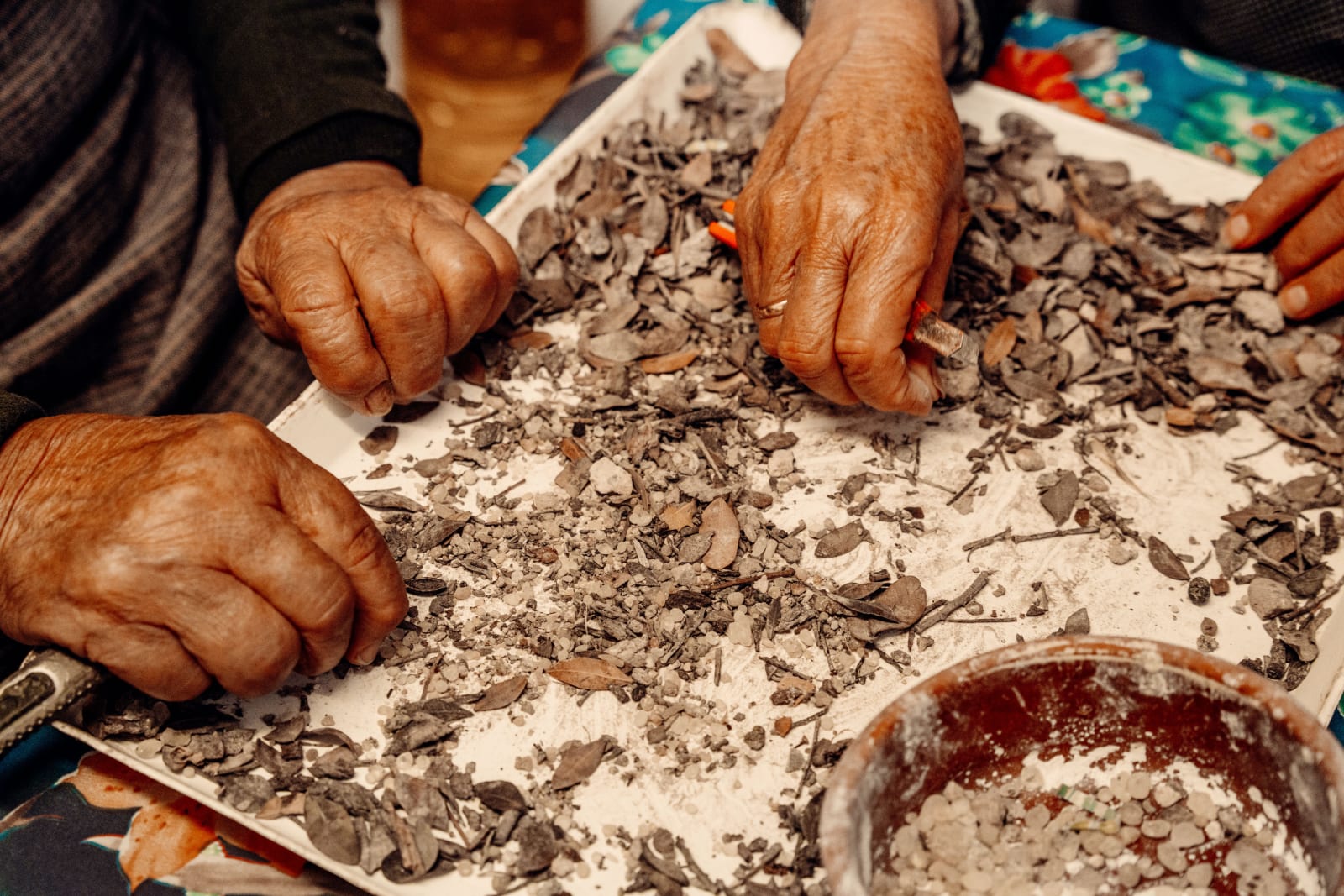
The pieces that don’t make the cut to be processed as chewing gum won’t go to waste, as there are other ways to use them. A common method to use these pieces of resin is to grind them up into a fine powder and store them for later use. The stored powder is known as mastic gum powder.
Both mastic chewing gum and mastic gum powder are 100% natural, as verified by the Chios Mastiha Growers Association, who say that “the entire production and cleaning process of Chios Mastiha is free of all chemicals and additives and has remained unchanged throughout the centuries.” While they share health benefits, each form has certain advantages over the other.
Mastic gum powder has many of the same properties as mastic chewing gum, but since they are consumed in different ways, the benefits of mastic will be experienced in the location they spend the most time. When mastic gum is chewed, most of the health benefits will be for oral health (but gut health benefits do come from swallowing saliva infused with mastic essential oils/compounds and pieces of mastic gum itself). When mastic gum powder is swallowed with water (recommended way to consume it), it goes straight to the gut to be absorbed. From there, the beneficial action will occur in the gut.
Antimicrobial benefits
The compounds contained within Chios mastic exhibit antimicrobial properties, extremely effective in fighting off harmful microorganisms (aka microbes). This helps to fortify our gut, promoting a healthy environment for beneficial microbes to thrive and our system to function effectively.
Anti-inflammatory

When consumed in its ground-up form, mastic gum powder can be one of the best supplements for gut health and digestive issues.
Chios mastic contains anti-inflammatory properties12 which can help reduce inflammation of the gut. Numerous studies show that mastic can significantly reduce inflammation in experimental colitis345 and inflammatory bowel diseases(IBD)6.
Our body’s systems work in harmony with one another. By dealing with inflammation in the gut, the digestive system can be healthier and more efficient in its function.
Through the aid of its anti-inflammatory properties, mastic gum powder can also help lower the stress that the immune system faces. Requiring less involvement to fight against gut inflammation, the immune system is now free to redirect its healing efforts throughout the body (cellular repair, muscle/tissue recovery, illness prevention).
Antioxidant
Mastic gum, both in chewing gum and powder form, demonstrates antioxidant activity12 that helps the gut maintain optimal health and function.
A 2021 study showed that the antioxidant properties of mastic worked as a complement to the anti-inflammatory activity, by exhibiting cytoprotective effects against colitis through significant reductions in inflammation and oxidative stress7.
A controlled trial conducted in 2018 aimed to assess the effects of Chios mastic against oxidative stress in active IBD patients8. Researchers discovered that mastic was able to significantly lower oxidative stress, showing the impressive potential of mastic gum in limiting the oxidative damage caused by free radicals.
Antibacterial
The digestive benefits of Chios mastic are also evident by its antibacterial properties12. Fighting harmful microbes keeps the gut safe from pathogens – a role mastic has proven effective in on numerous occasions.
H. pylori infection
Helicobacter pylori (also known as H. pylori) is a type of bacteria infamous for causing a variety of gut issues. Ranging in their intensity, symptoms can appear as mild discomfort all the way up to extreme pain. Common symptoms of the H. pylori stomach infection include include bloating, heartburn, nausea, and lack of appetite, but the infection can develop into more serious complications like ulcers (stomach, duodenal), aching pain, burning sensations, internal bleeding, and even some forms of cancer if not cared for.
Studies have been conducted to examine the impact of Chios mastic on H. pylori. Researchers described significant results in combatting H. pylori infection.
At various concentrations, Chios mastic effectively killed off high percentages of H. pylori: 50% at a lower concentration and 90% at a higher concentration9. In other cases, mastic was even more successful: it completely eradicated H. pylori infection10[11].
Impact on gastrointestinal issues

In addition to eliminating and helping to prevent future H. pylori infection, the antibacterial benefits of mastic gum extend to those with gastrointestinal (GI) disorders12. By reducing harmful pathogens and their subsequent growth within the gut, mastic also helps to eliminate the issues they cause.
In a controlled clinical trial, mastic was investigated as a potential treatment for duodenal ulcers. 80% of all patients experienced symptomatic relief, while endoscopically proven healing occurred in 70%. Compared to the placebo, the study group observed a significant difference in results and noted the beneficial healing effect that mastic had on ulcers, without producing any side effects12.
In another study, Chios mastic was investigated for its potential gastric and duodenal anti-ulcer activity. Researchers recorded that mastic treatment led to significant reductions in the intensity of gastric mucosal damage13.
A variety of other symptoms can be relieved with mastic gum powder, including (but not limited to):
- Bloating
- Constipation
- Diarrhea
- Heartburn
- Stomach pain (aches, burning sensations, general discomfort)
Mastic powder may also help mitigate certain gastrointestinal disorders and related issues:
- Inflammatory Bowel Disease (IBD; Crohn’s Disease and Ulcerative Colitis)
- Irritable bowel syndrome (IBS)
- Ulcers (stomach and duodenal, as previously mentioned)
- Damage to the gut lining
How does mastic gum powder fight so many gut issues?
All of the antimicrobial properties of mastic gum work as a team, ranging across anti-inflammatory, antioxidant, and antibacterial combat. Reducing inflammation, free radical-induced oxidative stress/damage, and harmful bacteria all help to eliminate the main causes of gut issues, which alleviate symptoms of GI issues as they progress. These protective measures attack the problems, aiming to limit them and any resulting impact they may have.
When you eliminate the root cause of a problem, all of the resulting issues that stem from the initial problem (now solved) will be heavily, if not fully, reduced. An analogy could be saying that a dog park is experiencing a lot of violent conflicts. Out of 100 dogs in the dog park, 13 dogs are being violent and disruptive. Without these 13 dogs (the initial problem in this scenario), the attacks, fights, and disharmony they caused would virtually disappear. By dealing with the initial negative influence, all of the potential problems it causes won’t have the chance to develop. This can be applied to how mastic combats issues in the gut, among other things.
Mastic powder also leads our gut to take preventive measures. After being fast-tracked to the gut, beneficial compounds within mastic gum powder (like terpenes and polyphenols) help reinforce our gut lining to be stronger against potential threats in the future, while also repairing any damage it may have previously incurred. These compounds help foster a beneficial environment for good microbes to thrive, allowing the gut environment to be healthy and balanced.
Digestive and gut health benefits

Chios mastic gum powder may potentially be the best supplement you can take when it comes to gut benefits and digestive health.
It has shown that it can help prevent the growth of harmful bacteria, kill existing pathogens within our gut, and limit (and even heal) the damage these microbes can cause. There are so many benefits packed into these capsules, which are quick and convenient to take.
Try them out for yourself here
This article originally appeared online in 2025; it was most recently updated on October 1, 2025, to include current information.

Eric Chin
Eric writes about ancestral nutrition, functional training, and ingredient purity. He’s a contributor to The WarKitchen, including “Flavors of Combat” (Issue 28) and “The Egg: Nature’s Perfect Food” (Issue 35).
References
-
Soulaidopoulos, Stergios, Aikaterini Tsiogka, Christina Chrysohoou, et al. “Overview of Chios Mastic Gum (Pistacia lentiscus) Effects on Human Health.” Nutrients 14, no. 3 (2022): 590. https://doi.org/10.3390/nu14030590. PMID 35276949; PMCID PMC8838553. ↩ ↩2 ↩3 ↩4 ↩5 ↩6 ↩7 ↩8
-
Tabanca, Nurhayat, Ayse Nalbantsoy, Paul E. Kendra, et al. “Chemical Characterization and Biological Activity of the Mastic Gum Essential Oils of Pistacia lentiscus var. chia from Turkey.” Molecules 25, no. 9 (2020): 2136. https://doi.org/10.3390/molecules25092136. ↩ ↩2 ↩3 ↩4 ↩5 ↩6 ↩7 ↩8
-
Cui, H., X. Li, X. R. An, et al. “Masticadienonic Acid from Chios Mastic Gum Mitigates Colitis in Mice via Modulating Inflammatory Response, Gut Barrier Integrity and Microbiota.” Phytomedicine 108 (2023): 154518. https://doi.org/10.1016/j.phymed.2022.154518. PMID 36403513. ↩ ↩2
-
Gioxari, A., A. C. Kaliora, A. Papalois, et al. “Pistacia lentiscus Resin Regulates Intestinal Damage and Inflammation in Trinitrobenzene Sulfonic Acid-Induced Colitis.” Journal of Medicinal Food 14, no. 11 (2011): 1403–1411. https://doi.org/10.1089/jmf.2010.0240. PMID 21612460. ↩ ↩2
-
Papalois, A., A. Gioxari, A. C. Kaliora, et al. “Chios Mastic Fractions in Experimental Colitis: Implication of the Nuclear Factor κB Pathway in Cultured HT29 Cells.” Journal of Medicinal Food 15, no. 11 (2012): 974–983. https://doi.org/10.1089/jmf.2022.0116. PMID 22891614. ↩ ↩2
-
Papada, E., A. Gioxari, C. Amerikanou, et al. “Regulation of Faecal Biomarkers in Inflammatory Bowel Disease Patients Treated with Oral Mastiha (Pistacia lentiscus) Supplement: A Double-Blind and Placebo-Controlled Randomised Trial.” Phytotherapy Research 33, no. 2 (2019): 360–369. https://doi.org/10.1002/ptr.6229. PMID 30450689. ↩ ↩2
-
Zahouani, Y., K. Ben Rhouma, K. Kacem, H. Sebai, and M. Sakly. “Aqueous Leaf Extract of Pistacia lentiscus Improves Acute Acetic Acid-Induced Colitis in Rats by Reducing Inflammation and Oxidative Stress.” Journal of Medicinal Food 24, no. 7 (2021): 697–708. https://doi.org/10.1089/jmf.2020.0020. PMID 33156733. ↩ ↩2
-
Papada, E., A. Forbes, C. Amerikanou, et al. “Antioxidative Efficacy of a Pistacia lentiscus Supplement and Its Effect on the Plasma Amino Acid Profile in Inflammatory Bowel Disease: A Randomised, Double-Blind, Placebo-Controlled Trial.” Nutrients 10, no. 11 (2018): 1779. https://doi.org/10.3390/nu10111779. PMID 30453494; PMCID PMC6267573. ↩ ↩2
-
Marone, P., L. Bono, E. Leone, et al. “Bactericidal Activity of Pistacia lentiscus Mastic Gum Against Helicobacter pylori.” Journal of Chemotherapy 13, no. 6 (2001): 611–614. https://doi.org/10.1179/joc.2001.13.6.611. ↩ ↩2
-
Dabos, K. J., E. Sfika, L. J. Vlatta, and G. Giannikopoulos. “The Effect of Mastic Gum on Helicobacter pylori: A Randomized Pilot Study.” Phytomedicine 17, no. 3–4 (2010): 296–299. https://doi.org/10.1016/j.phymed.2009.09.010. PMID 19879118. ↩ ↩2
-
Huwez, F. U., D. Thirlwell, A. Cockayne, and D. A. Ala’Aldeen. “Mastic Gum Kills Helicobacter pylori.” New England Journal of Medicine 339, no. 26 (1998): 1946. https://doi.org/10.1056/NEJM199812243392618. PMID 9874617. ↩
-
Al-Habbal, M. J., Z. Al-Habbal, and F. U. Huwez. “A Double-Blind Controlled Clinical Trial of Mastic and Placebo in the Treatment of Duodenal Ulcer.” Clinical and Experimental Pharmacology and Physiology 11, no. 5 (1984): 541–544. https://doi.org/10.1111/j.1440-1681.1984.tb00864.x. PMID 6395994. ↩
-
Al-Said, M. S., A. M. Ageel, N. S. Parmar, and M. Tariq. “Evaluation of Mastic, a Crude Drug Obtained from Pistacia lentiscus for Gastric and Duodenal Anti-Ulcer Activity.” Journal of Ethnopharmacology 15, no. 3 (1986): 271–278. https://doi.org/10.1016/0378-8741(86)90165-0. PMID 3724207. ↩