How long to take mastic gum for H. pylori
| Phase | Timeline | What typically happens | What to do |
|---|---|---|---|
| Week 1 | Days 1-7 | Many people start noticing less bloating, reduced discomfort | Continue protocol consistently, track symptoms |
| Week 2 | Days 8-14 | Symptom improvement often continues | Complete the 14-day protocol |
| Weeks 3-4 | Days 15-28 | Post-treatment monitoring period | No mastic; observe if symptoms stay improved |
| Weeks 5-8 | Days 29-56 | Stabilization window | Optional retest period if confirming eradication |
The researched protocol1 for mastic consumption lasts for 14 days. Most people feel symptom improvement within the first week or two, but symptom relief doesn’t mean H. pylori is gone. You can feel significantly better and still test positive for H. pylori (as symptom improvement happens faster than eradication). Symptom relief and bacterial eradication are two different outcomes. Understanding this gap matters for setting realistic expectations.
If you want to confirm eradication, wait 4-6 weeks after finishing treatment before retesting.
The 14-day timeline from research
What the Dabos study actually tested (where 14 days comes from)
In clinical trials from 20101, patients were assigned to take their respective treatments for 14 days. This specific duration of time has actual published research results to support any efficacy claims made within this timeline.
Some practitioners do choose to extend to 4-6 weeks, especially when using mastic alone without antibiotics, but this goes beyond what’s been formally studied. The “14 days” you see everywhere comes from this one specific research protocol1, not from universal clinical consensus or biological law. It’s just the timeframe that researchers tested.
When people extend to 4-6 weeks (clinical practice, not research)
If you’re taking mastic alongside antibiotics, match the antibiotic course duration prescribed by your doctor. If you’re using mastic alone and symptoms haven’t improved much after 14 days, some people extend their treatments to 4-6 weeks. This isn’t based on published studies—it’s clinical practice from practitioners working with patients who needed longer exposure. Talk to your doctor before extending, especially if symptoms haven’t changed at all.
For a refresher on the mastic dosing protocol, see how to take mastic for H. pylori.
What to expect week by week

Week-by-week symptom timeline (generally):
- Days 1-7 (week 1): Early response period (some people start feeling better)
- Days 8-14 (week 2): Continued treatment (symptom improvement often builds)
- Days 15-28 (weeks 3-4): Post-treatment observation (see if improvements hold)
- Days 29-56 (weeks 5-6): Retest window opens (if you want confirmation)
Weeks 1-2: What symptom changes to expect
Within the first two weeks, most people report feeling better. Symptom relief will look different for everyone, but common improvements include:
- Less bloating
- Less stomach discomfort or pain
- Better digestion
This is a good sign that mastic is working against H. pylori, but it doesn’t mean the infection is completely gone. Some people experience steady improvement throughout both weeks, while others notice changes early and then plateau. Either pattern is normal—the important thing is completing the full 14-day protocol to ensure consistent gut exposure to mastic.
Symptom relief and bacterial eradication are two different outcomes. You can feel significantly better and still test positive for H. pylori. Understanding this gap matters for setting realistic expectations about what “success” looks like.
What “feeling better” tells you (and what it doesn’t)
Feeling better is a strong sign that mastic is successfully fighting against H. pylori. In the 2010 study1, about one-third of people using mastic alone achieved eradication, but more experienced symptom relief (view the results in detail, here). Expectations for treatment should be set around improvement first and not guaranteed eradication.
For the full comparative study results, see how mastic gum kills H. pylori.
For a guide on how mastic protects and fights against H. pylori, visit our comprehensive evidence overview.
After the 14-day protocol: What comes next
After 14 days of consistent mastic treatment, most people stop and enter an observation period to see if symptom improvements hold. Some people choose to extend treatment. Here’s how to decide what makes sense for you.
Most people stop at 14 days if:
- Following the researched protocol
- Taking mastic with antibiotics (match the antibiotic duration)
- Symptoms have improved significantly
Some people extend to 4-6 weeks if:
- Using mastic alone (without antibiotics) AND symptoms haven’t improved much after 14 days (consult your doctor first)
- Your medical practitioner has recommended extended duration
- You’re taking mastic for other gut health benefits beyond H. pylori and want to continue
There’s no strict cutoff—if mastic is helping your digestion and you’re tolerating it well, continuing beyond 14 days is fine. The 14-day minimum is what’s been studied specifically for H. pylori, but mastic supports overall gut health and can be taken longer-term if it’s working for you.
The post-treatment observation period (days 15-28)
If you stop at 14 days, enter a two-week observation period where you take no mastic. This lets you see whether the symptom improvements you experienced during treatment continue on their own.
During days 1-14, your stomach had consistent exposure to mastic. If H. pylori levels decreased, this was likely due to mastic’s daily antibacterial activity. During days 15-28, your body readjusts to operating without mastic intervention, and bacterial levels stabilize at whatever your new baseline is.
Tracking whether improvements hold
During the observation period, pay attention to whether the symptom relief you experienced while taking mastic continues or fades. This tells you something useful:
If improvements hold (or even continue building) without mastic, the treatment likely made a lasting impact on your H. pylori levels or gut environment.
If symptoms gradually return to pre-treatment levels, the infection may still be active at similar levels, and you might want to discuss next steps with your doctor—possibly including combination therapy or retesting.
When and why to retest
Retesting bacterial levels after you finish treatment will allow you to measure any progress made against the infection. Comparing your pre-treatment levels to your post-treatment levels will measure how well mastic actually worked against H. pylori and confirm whether or not symptom relief was a result of H. pylori elimination.
The 5-week retest protocol from studies
In clinical studies1, researchers retested their patients’ H. pylori levels 5 weeks after they completed their treatments. This allowed the patients’ bacterial levels to balance out and reset to their new post-treatment baseline. Full analysis of the study’s results can be found here.
Why testing too early gives unreliable results
Testing for H. pylori earlier than 4 weeks can give unreliable results because bacterial levels need time to stabilize after treatment stops. If you want to follow protocol and confirm whether H. pylori is gone, the Dabos study1 retested at 5 weeks after treatment ended.
Working with your doctor on timing
If you’re working with a doctor, let them know you took mastic and when you finished, so they can time the test appropriately. Testing too soon wastes money and gives you unclear information.
If symptoms persist or return

Don’t immediately restart mastic
If you experience the same symptoms as you did pre-mastic or if you still test positive for H. pylori infection after treatment, don’t automatically return to another round of mastic. First, talk to your doctor about whether a different approach makes sense.
When combination therapy makes more sense
Research shows that mastic worked better when combined with antibiotics (92% eradication)2 than alone (30-38% eradication)1. If your first attempt was mastic by itself, the next best step might be combination therapy, not just repeating what didn’t work the first time.
Next steps to discuss with your doctor
Talk to your doctor about what you experience during your two weeks of treatment and during your two week observation period. Explain any symptoms that came back and compare how you feel after treatment to how you felt before you started, to explore next steps on how to move forward.
FAQs
How long should I take mastic gum for H. pylori?
14 days is the minimum amount of time that you should take mastic gum, as supported by clinical trials1.
Can I take mastic gum for longer than 2 weeks for H. pylori?
Yes. The 14-day protocol is what’s been studied for H. pylori specifically, but if mastic is helping your digestion and you’re tolerating it well, continuing longer is fine. Many people take mastic for general gut health benefits beyond H. pylori treatment. If you’re using it specifically for H. pylori eradication and symptoms haven’t improved after 14 days, talk to your doctor before extending.
When should I retest for H. pylori after taking mastic gum?
After treatment, you should wait at least 4-5 weeks to retest. Patients from the Dabos study retested 5 weeks after their treatment ended1. Any test completed earlier than 4 weeks can be unreliable because bacterial levels need time to fully stabilize after treatment stops.
How long does it take for mastic gum to work against H. pylori?
The researched protocol is 14 days of pure-mastic therapy1. No shorter timeframe has been studied in depth. Most people usually feel symptom improvement within the first week or two, but symptom relief doesn’t mean H. pylori is gone, so retest 4-5 weeks after treatment ends.
What if my symptoms come back after stopping mastic gum?
If the symptoms you had pre-treatment return, do not automatically start another round of mastic. First, talk to your doctor about how you feel and they will discuss whether or not a different approach makes sense.
Can I stop mastic gum if I feel better before 14 days?
No, mastic should be taken for the full 14 days because H. pylori is an infection that rapidly evolves and adapts to counter our immune response3. Treatment protocols shorter than 14 days haven’t been studied in depth because they are unlikely to be successful against such a difficult infection.
What to do next
If you want to understand what kind of results to expect from mastic treatment, read about what the research actually shows.
Need a refresher on the dosing protocol? Here’s how to take mastic for H. pylori.
If you have safety concerns, see why mastic is safe.
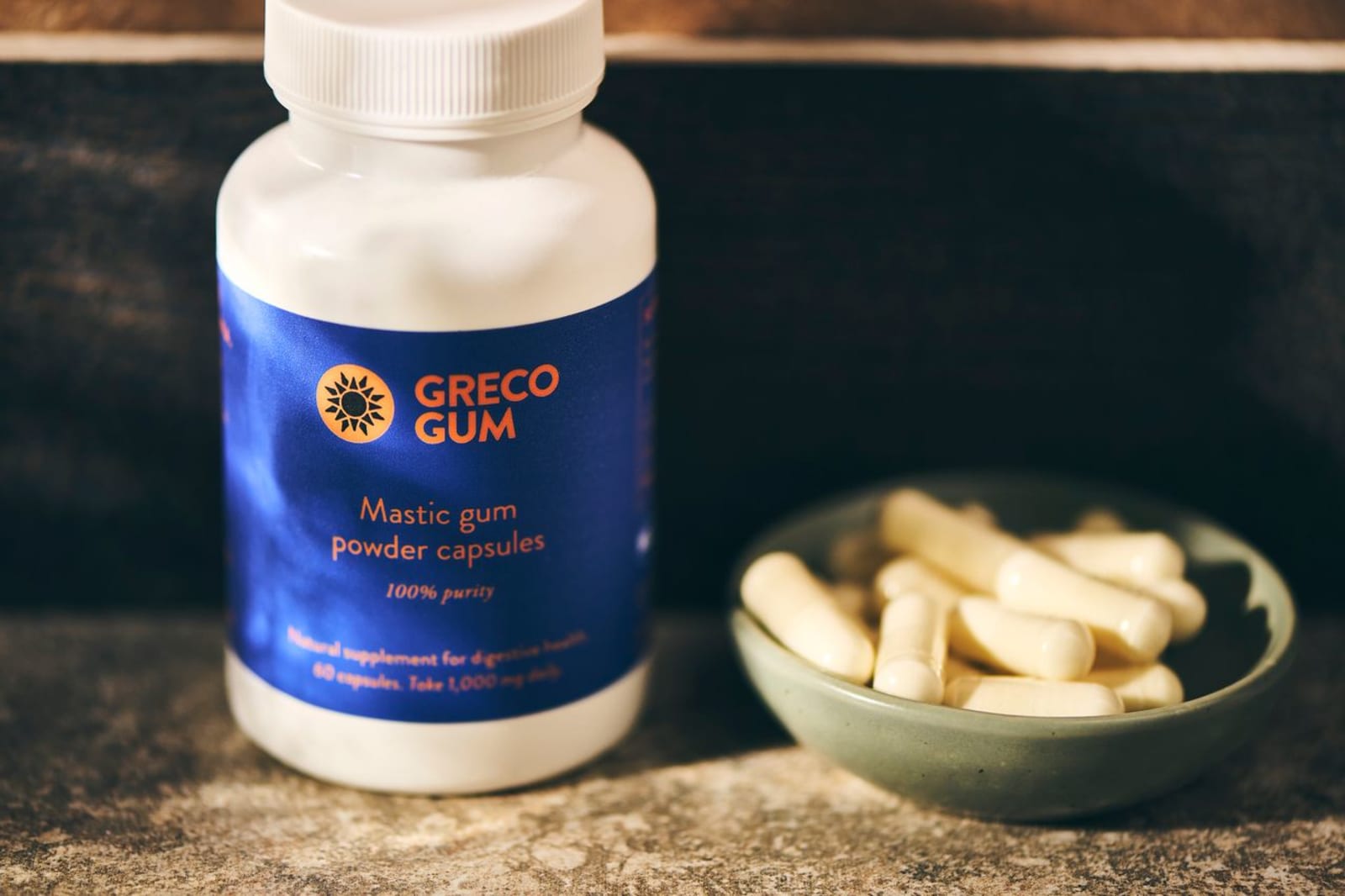
Ready to start? Get pure Chios mastic in capsule form, or get the complete Gut Health Protocol: the same capsules, plus nuggets to chew for daily support.
This article originally appeared online in 2026; it was most recently updated on March 5, 2026, to include current information.

Eric Chin
Eric writes about ancestral nutrition, functional training, and ingredient purity. He’s a contributor to The WarKitchen, including “Flavors of Combat” (Issue 28) and “The Egg: Nature’s Perfect Food” (Issue 35).
References
-
Dabos, Konstantinos J., Eirini Sfika, Loukia J. Vlatta, Georgios Giannikopoulos, et al. “The Effect of Mastic Gum on Helicobacter pylori: A Randomized Pilot Study.” Phytomedicine 17, no. 3-4 (2010): 296-299. doi.org. ↩ ↩2 ↩3 ↩4 ↩5 ↩6 ↩7 ↩8 ↩9 ↩10
-
Addissouky, T. A., Ahmed A. Khalil, and Eman El Agroudy. “Assessing the Efficacy of a Modified Triple Drug Regimen Supplemented with Mastic Gum in the Eradication of Helicobacter pylori Infection.” American Journal of Clinical Pathology 160, Supplement 1 (2023): S19. doi.org. ↩
-
Atherton, John C., and Martin J. Blaser. “Coadaptation of Helicobacter pylori and humans: ancient history, modern implications.” The Journal of Clinical Investigation 119, no. 9 (2009): 2475-2487. doi.org. ↩