
What is gum base made of? Ingredients explained

Gum base is the chewy foundation of a piece of gum, the part left in your mouth after the flavor fades. On a label it is a legal umbrella term covering elastomers (the stretchy polymers), softeners, resins, and fillers. In most commercial gum those elastomers are synthetic, so a standard gum base is partly plastic; a few gums use a natural resin as the base instead.
What “gum base” means on an ingredient label
Turn a pack of gum over and “gum base” is usually the first item on the list. It reads like a single ingredient. In practice it works more like a category heading: under the FDA’s food additive rules (21 CFR 172.615), a manufacturer can file dozens of permitted substances under that one phrase.1 The word tells you what the part does, which is give the gum its chew. It does not tell you what the part is made from.
Those permitted substances sort into a few groups:
- Elastomers: the polymers that give gum its stretch and springy chew.
- Softeners and plasticizers: waxes and oils that keep the base pliable so it does not set hard.
- Resins: materials that bind the base together and help it hold flavor.
- Fillers: fine mineral powders that add bulk and body.
- Antioxidants: small amounts of preservative that keep the base fresh.
All five groups can sit behind the same two words, so the wrapper almost never names the specific elastomer or filler you are actually chewing.1
What gum base is actually made of
Strip away the label language and most modern gum base comes down to a couple of synthetic polymers, softened and bulked out with cheaper materials.
The two you are most likely chewing are polyisobutylene and polyvinyl acetate.2 Polyisobutylene is a synthetic rubber from the same family as the butyl rubber used in tire inner tubes, related to it rather than identical. Polyvinyl acetate is the same polymer sold as white PVA glue, the kind used in schools and for woodworking. Both come in food-grade versions here, but they are the same basic materials you would meet in a hardware store.
Around those polymers sit a few supporting players: waxes such as paraffin to keep the base soft, fillers like calcium carbonate (chalk) or talc for bulk, and a small dose of an antioxidant such as BHT to keep the oils from turning rancid.3 None of this shows up on the wrapper by name, since it all falls under “gum base.”1
Everything else you taste in a stick of gum sits outside the base as its own ingredient: the sweeteners, the mint or fruit flavor, the colors and coatings. We break those down in our guide to what chewing gum is made of.
Is gum base the same as plastic?

The honest answer is closer to yes than most gum brands would like. Polyisobutylene and polyvinyl acetate are both synthetic polymers, the same broad class of material as many everyday plastics.2 When people call gum base “basically plastic,” they are pointing at something real. The base of a standard stick of gum is built on man-made polymers your saliva cannot break down, which is why a chewed piece keeps its shape and sticks to pavements for years.
What those polymers do once they are in your mouth is a separate and busier question. Research published in March 2025 found that chewing gum can release microplastics into saliva as you chew. That question, and what the study actually measured, lives on our page on whether chewing gum is plastic.
Natural gum base: chicle then and now

Synthetic polymers are a recent development. The first commercial gum bases were natural. Before the polymers arrived, gum base meant chicle, a milky latex tapped from the sapodilla tree in Central America.2 Chicle held that role through the late 1800s and early 1900s. Then, over the middle of the twentieth century, makers switched to cheaper petroleum-derived synthetics that were easier to source and store, and chicle stopped being the default. Today you will find it in a handful of heritage brands rather than at the checkout counter.
The fuller story of that shift is in our history of chewing gum.
Where mastic fits: a resin that is its own base
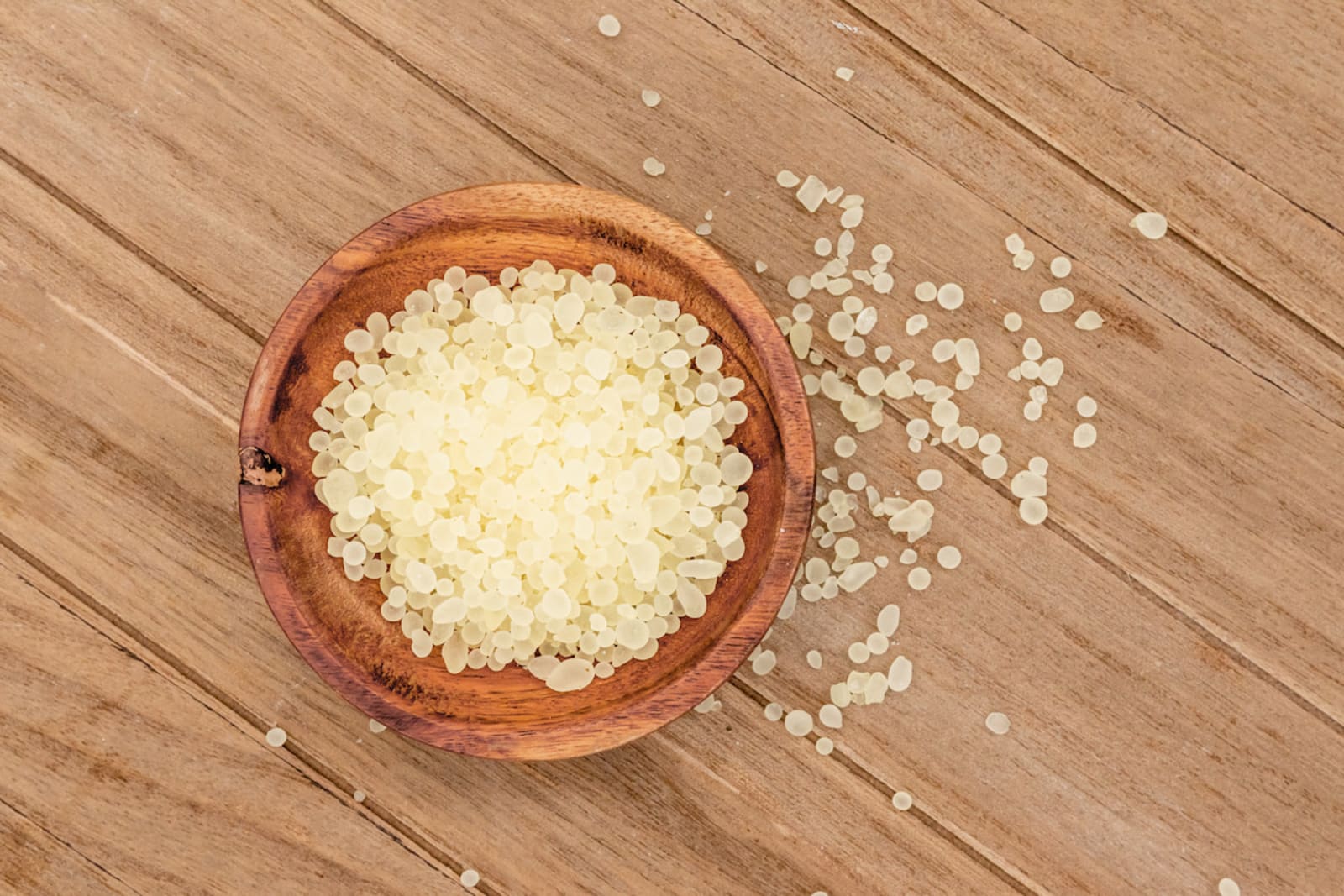
Mastic is a third kind of gum base, and an unusual one. It is a natural resin from the mastic tree, grown on the Greek island of Chios. It sets firm and then softens as you warm it in your mouth, so the resin works as the base by itself, with no synthetic polymers and no separate softeners added. Greco Gum is exactly that: Chios mastic resin and nothing else, so the base is simply the mastic. There are no synthetic polymers in it, which is what the plastic worry about conventional gum comes down to.
This is also where “mastic gum” on a shelf gets confusing. Falim-style gums, for instance, read as mastic gum but are built on a hard plastic base with (likely) only a small amount of mastic powder added for flavor and bite. So what you are chewing is a plastic base carrying a mastic taste, rather than mastic resin. We go through one of those labels line by line in our breakdown of Falim gum ingredients.
If what you want is a gum whose base is only resin, our guide to mastic gum covers what it does and how to spot the real thing before you buy. For the wider set of resin and plant-based options, we compare the best plastic-free chewing gums.
What is the difference between natural and synthetic gum base?
A synthetic gum base is built on man-made polymers such as polyisobutylene and polyvinyl acetate, softened with waxes and bulked with fillers. The natural version is a plant resin, like chicle or mastic, that chews on its own without any of that. Both give a chew that lasts. The difference is that only one of them comes off an ingredient list you can read in full.
Why do companies use synthetic gum base instead of chicle?
It comes down to cost and convenience. Petroleum-derived polymers are cheaper to make and easier to buy in bulk, and they keep longer on a shelf than chicle, which has to be tapped from trees by hand. As gum demand grew through the twentieth century, synthetics let manufacturers scale in a way natural resin could not.
Does mastic gum contain gum base?
In a true mastic gum, the resin is the base, so there is no separate “gum base” to add. Greco Gum, for one, is only Chios mastic resin. Be careful with gums marketed as mastic that still list “gum base” on the label, since those are usually a synthetic base carrying a mastic flavor.
Is gum base bad for you?
The worry most people have is really about the synthetic polymers, so “is gum base plastic?” is the more useful question to ask. The polymers used are permitted in food by the FDA,1 and the practical catch is that the label will not tell you which of them are in your gum. If your concern is plastic and microplastics specifically, we cover the research on our page on whether chewing gum is plastic.
This article originally appeared online in 2026; it was most recently updated on July 23, 2026, to include current information.

Beatrix Turajski
Beatrix is a health and wellness writer with two blogs and a special passion for mental health, fitness, and nutrition. Her career has taken her from creative writing to interning to freelancing.
References
-
Code of Federal Regulations, title 21, sec. 172.615, “Chewing Gum Base.” Accessed July 23, 2026. ecfr.gov. ↩ ↩2 ↩3 ↩4
-
Kaveh, M. et al. “Chewing gum base: A comprehensive review of composition, production, and assessment methods: Advances and approaches in biodegradability.” Journal of Texture Studies 54, 9 (2023): 789-807. doi.org. ↩ ↩2 ↩3
-
“What is in chewing gum?” Science Focus. Accessed July 23, 2026. sciencefocus.com. ↩