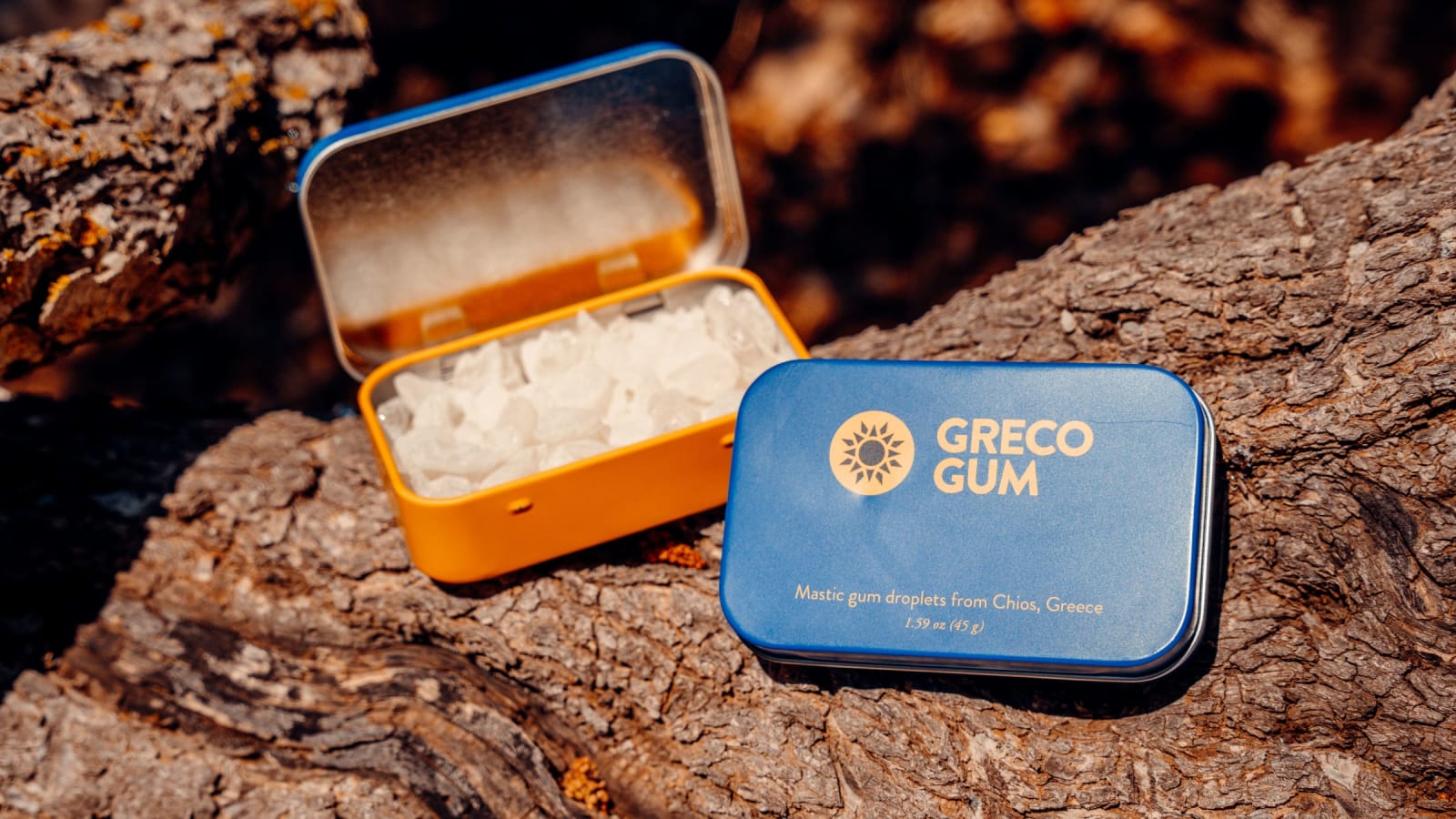
Is mastic gum legit or a scam?

Mastic gum is the sap of the Pistacia lentiscus tree, grown on the island of Chios, and used medically since the time of the Ancient Greeks.
If you’ve seen influencers claim it solved all their health problems and turned them into an Adonis overnight, or bad reviews from someone who ordered mastic gum but got a mound of sticky slop or pure powder when they expected gum, you’re right to be skeptical.
But real, properly sourced mastic gum is a legitimate health product with scientifically documented benefits. Chewing it can be a valuable tool for gut and oral health, and it can even grow your jaw muscles, making your face more attractive.
Below, we’ll cover why your skepticism is valid and where it should be re-aimed, what the science says mastic gum can really do, and what to realistically expect when you try it.
Why you should be skeptical of mastic gum

We get it.
You see borderline miraculous claims about supplements, foods, and protocols all day on social media. You’ve wasted time and money on them with nothing to show for it, and don’t want to get burned again.
We appreciate your skepticism, but we want to make sure it’s aimed at the right target.
Mastic gum itself is not the problem; in fact, it’s the solution for many ailments, used for 2,400 years with modern peer-reviewed studies backing up what the ancient Greeks already knew.
The problem is the scammers selling it.
Since 2020, dropshippers who sell cheap, diluted, or flat-out fake mastic gum have partnered with looksmaxxing influencers who cherry-pick early research, invent benefits based on speculation, or flat-out lie to hit their numbers.
Seeing this is the majority of the market, and you’ve never heard about it from your doctor or dentist, we don’t blame you for thinking it’s all a scam.
Why hasn’t your doctor mentioned it?

Most American doctors simply aren’t trained on natural products like mastic gum in medical school. Instead, their curriculum focuses on drugs that can be patented and prescribed because they have the most clinical studies supporting them (and because they make the most money).
Mastic, on the other hand, is just a humble tree sap. It can’t be patented, so institutional medicine has no incentive to study, teach, or promote it.
Meanwhile, in Europe, mastic gum is registered as a traditional herbal medicine by the European Medicines Agency, and holistic doctors and dentists who’ve done their research use it regularly in their practices worldwide.
But even if a well-meaning American doctor heard about mastic gum online, it would probably be from some TikToker telling them it spot-reduced fat on their neck or gave them “hunter eyes,” so they’d dismiss it anyway.
To that doctor, and you as a skeptic, here is what the research actually shows.
Top research-backed benefits of mastic gum
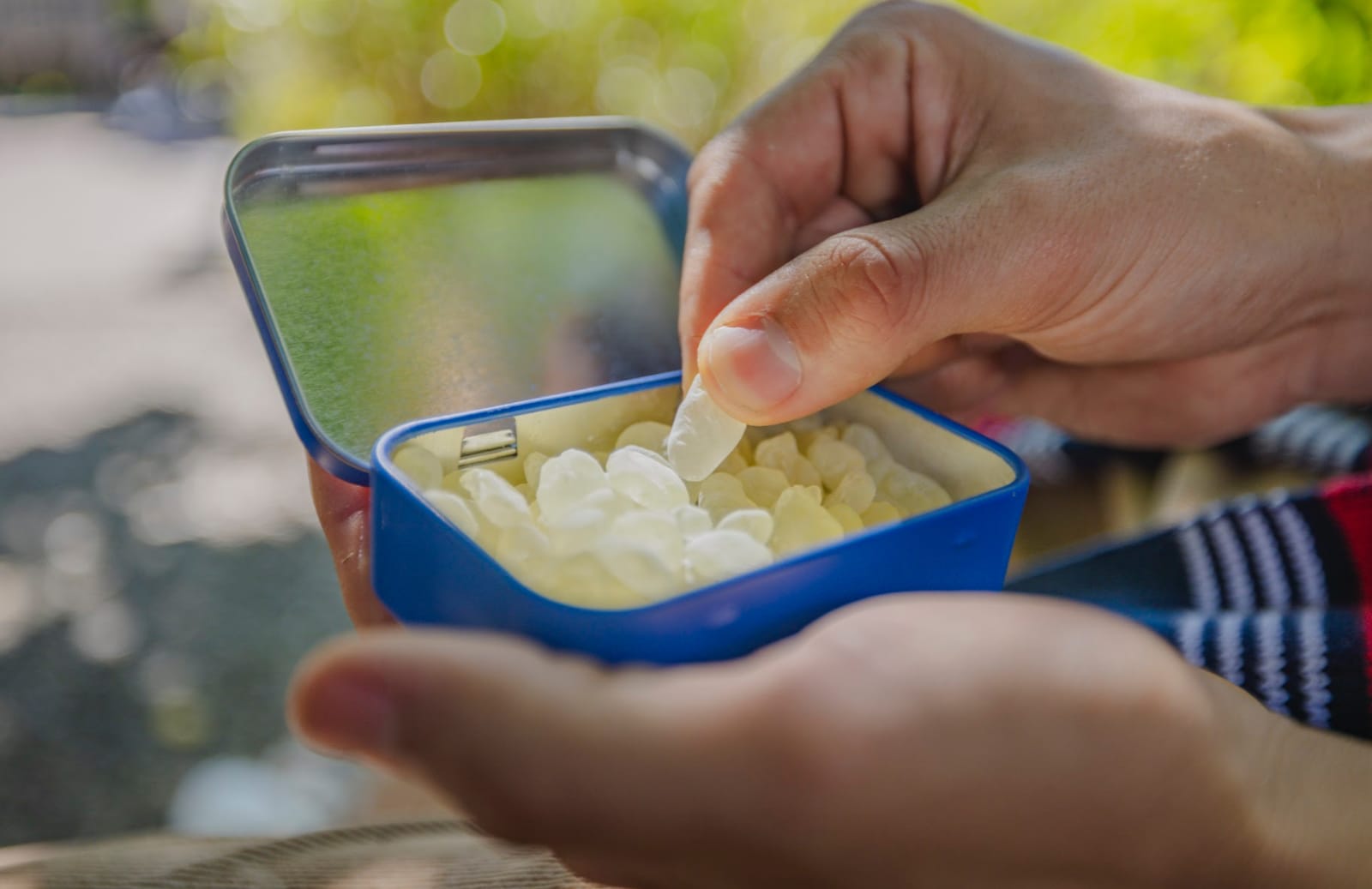
Beyond being a natural, toxin-free chewing gum, mastic gum has strong clinical data suggesting it cleanses the gut and oral microbiomes, fighting pathogenic bacteria, bad breath, and even plaque and cavities with its antimicrobial compounds.
Mastic gum has many uses; whether it “works” or not depends on what you’re using it for. If you’re looking to help balance your microbiome or tone your jawline, you’re in luck. Mastic will likely work for you, and we’ve got the evidence to back it up.
But if you’ve heard that mastic gum is a miracle that will cure your grandma’s cancer, we have bad news for you. Here’s what you can be confident about:
Treats H. pylori

The strongest, evidence-backed use case for mastic gum is its role in fighting the pathogen H. pylori, which affects an estimated 40-50% of the world and can cause chronic gut inflammation, ulcers, and even stomach cancer.1
In a 2010 clinical trial, mastic gum taken alone achieved complete H. pylori eradication in roughly a third of patients.2 A later trial found that adding mastic gum to standard antibiotic therapy pushed eradication rates to 92%, compared to 63% with antibiotics alone.3
Learn more about how mastic gum kills H. pylori and find your protocol to defeat it.
Reduces bad breath

We also have strong data showing that mastic gum reduces bad breath, as the antimicrobial compounds in mastic gum kill the sulfur-producing bacteria in your mouth that cause it.
A 2025 clinical trial showed mastic toothpaste reduced hydrogen sulfide levels (the main compound that makes breath smell) by 84% in just 2 weeks of daily use.4
Explore more oral health benefits and find your breath-freshening protocol.
Fights plaque and cavities

The data on mastic gum’s anti-plaque and anti-cavity properties (also a result of its antimicrobial compounds) is slightly less robust but still strong.
In a randomized trial, participants who chewed mastic gum showed significantly less plaque buildup and gingival inflammation compared to those using placebo gum, even during a 7-day period without brushing.5
A 2007 study found that chewing mastic gum for just 15 minutes significantly reduced levels of Streptococcus mutans, the primary bacteria that cause cavities, in orthodontic patients.6
We don’t have any data that flat out indicates mastic gum prevents cavities. The studies just haven’t been done. That said, we do know it kills the bacteria that cause cavities, just like mouthwash.
Stimulates jaw muscle growth

There are no clinical studies showing mastic gum can grow the jaw muscles, but we can confidently claim it has the ability to because muscle hypertrophy is well-established biology. We’ve also seen hundreds of verified customer transformations, and even more online.
Still, you can’t trust everything you see.
Understand exactly how mastic gum can grow your jawline and see real-world success stories so you know what you can realistically expect.
These are the conditions where mastic gum has been clinically studied with strong outcomes.
Smaller studies with low sample sizes or done on animals also hint at its potential therapeutic use for acid reflux, indigestion, and inflammatory bowel diseases like Crohn’s, but the data is too weak at this time to make confident claims.
What mastic gum can’t do

Influencers love to throw around weak or inconclusive data like it’s causal, irrefutable proof. It may end up being true, but advertising it as such is potentially harmful, as patients will look to it as a natural cure when they may need other medical interventions.
They’ve also been known to claim mastic gum burns fat, regrows decayed teeth, gives you 20% more oxygen with every breath, and even cures cancer.
There are kernels of truth here, but these claims are extrapolations taken to extremes.
Mastic gum:
- Tones the face by building jaw muscle over time (which can make the face appear more angular, not “spot reduce fat”)
- Has antioxidants and kills H. pylori (which can both protect against cancer, not cure it)
- Helps remineralize early, pre-cavity lesions, with one 2009 trial putting it on par with xylitol gum (it does not regrow enamel that has already decayed, and it is not a whitener)
- Is used by myofunctional therapists to strengthen facial muscles as part of their work to improve airways (not give you “20% more oxygen” just by chewing it)
Mastic gum is a resin from a tree.
It has legitimate medical uses backed by research, but it’s not a miracle cure. Explore more of what mastic gum can and can’t do.
Besides the wild claims, the other reason you should be skeptical about mastic gum is the integrity of the product and the brands that sell it. Not all mastic is the same.
Identifying scams in the mastic gum market

Mastic gum is a speciality product that only grows reliably on one part of one small island.
To avoid paying the price for proper sourcing, brands will buy uncertified (not clean or quality checked) mastic gum from the black market, dilute their gum by adding filler, or sell you other gums dressed up as mastic in their marketing.
In doing so, they not only tarnish the name of mastic brands and the gum itself, but also the hardworking farmers who have relied on it for an honest living for thousands of years.
Here are their tactics spelled out.
Fake mastic gum
Some brands sell cheap resins like frankincense, dammar, or pine resin, labeling them as “mastic gum.” These gums may look similar, but they will not have the same studied effects as mastic gum, nor will they provide the resistance your jaw needs to grow.
Diluted mastic gum
Brands like Falim take real mastic powder and cut it with plastic gum base, so the actual mastic content is minimal. Others like Underbrush are not plastic-based; instead, they mix a bunch of different tree saps like chicle and mastic for “more health benefits.”
Either way, you are not getting the doses that studies found to be therapeutic using real mastic gum.
Half-filled tins
Many mastic brands are guilty of charging high prices, only to fill half the tin up with gum or with brittle pieces that turn to dust during shipping. That, or the pieces come stuck together from heating during shipping in plastic packaging (the vast majority of brands).
Properly packaged, stored, and shipped mastic gum arrives at your doorstep how it comes off the tree (only without the dirt and sticks).
No sourcing transparency
Legitimate mastic gum comes exclusively from the Greek island of Chios and has a Protected Designation of Origin (PDO) from the European Union. PDO is a point of pride for mastic companies and farmers who source them; it’s the same certification system used for Champagne and Parmigiano-Reggiano.
If a brand doesn’t tell you where its mastic comes from, you may be getting fake or black market mastic that won’t hold up to standards.
If you want to avoid getting ripped off, learn what to look for when buying mastic gum, so you can properly enjoy mastic gum and its many benefits.
What you can realistically expect from mastic gum

If you decide to try mastic gum, here’s what we’ve seen from customers who actually stick with it.
For oral and gut health, results come relatively quickly. People notice fresher breath within days (or even one session) and improved gut symptoms within a few weeks of consistent use.
For jawline development, the timeline is much longer. People who stick with it recognize that the jaws take time to grow, like any other muscle. They use proper chewing technique for safe, sustainable gains and start seeing visible changes after 3-6 months of dedicated effort.
The people who quit early fall into two camps: those who bought into the influencer BS and expected overnight miracles, and those who bought subpar products that rightly scared them away.
Though it comes straight from God’s garden, mastic gum is not miraculous. It is merely a versatile tool; like all tools, its efficacy depends on the user’s knowledge and technique.
Use our guide to understand how long to chew for your specific goal for maximum efficiency and maximum results.
If you’re no longer a skeptic and ready to start, pick up some mastic gum of your own.
FAQs
Why is mastic gum so expensive?
Real mastic gum comes from only one place: the southern portion of the Greek island of Chios. It has Protected Designation of Origin (PDO) status, limited annual yield, and is entirely hand-harvested and cleaned according to tradition. Add in international shipping and tariffs, and the price reflects the reality of bringing a rare specialty product from a single island to you.
Learn more about what goes into mastic’s pricing.
How is mastic gum different from regular chewing gum?
First, mastic gum has one ingredient: mastic gum. It is all natural and toxin-free with no artificial preservatives, flavorings, or plastic gum bases.
Second, mastic gum not only saves you from exposure to these chemicals but also actively adds to your health and appearance with its 120+ medicinal compounds and tough texture, which benefits the gut and mouth while building strong, robust jaw muscles.
See what mastic can actually do for your jawline and microbiome.
How do I know if a mastic gum brand is legit?
Legit mastic gum brands source from farmers who are part of the Chios Mastiha Growers’ Association, which certifies quality. If a brand isn’t flexing its sourcing, it’s a red flag.
You also want to look for metal tins instead of plastic packaging, and transparency of piece count per tin, real reviews from trusted figures, and more. Understand exactly what to look for when shopping for mastic gum.
Is there anyone who shouldn’t try mastic gum?
People with TMJ disorders or fragile dental work (crowns, bridges, temporary fillings) should be careful with mastic gum, as the hardness can aggravate sensitive jaw joints and damage or pull out dental work.
If you want the gut health benefits without the chewing, mastic powder or capsules work just as well. If you have TMJ, see if mastic is right for you.
This article originally appeared online in 2026; it was most recently updated on July 29, 2026, to include current information.

Christian Arnold
Christian writes about technology’s impact on health and medicine 3.0. Among other things he’s a contributor to The Solarium.
References
-
Chen, Yi-Chu et al. “Global Prevalence of Helicobacter pylori Infection and Incidence of Gastric Cancer Between 1980 and 2022.” Gastroenterology 166, no. 4 (2024): 605-619. doi.org ↩
-
Dabos, K.J., Sfika, E., Vlatta, L.J., and Giannikopoulos, G. “The Effect of Mastic Gum on Helicobacter pylori: A Randomized Pilot Study.” Phytomedicine, vol. 17, no. 3-4 (2010): 296-299. doi.org ↩
-
Addissouky, T.A., A.A. Khalil, and A.E. El Agroudy. “Assessing the Efficacy of a Modified Triple Drug Regimen Supplemented with Mastic Gum in the Eradication of Helicobacter pylori Infection.” American Journal of Clinical Pathology 160, Supplement 1 (2023): S19. doi.org ↩
-
“The effect of Chios mastic toothpaste on halitosis and oral hygiene in orthodontic patients: a randomized clinical trial.” Journal of Breath Research (2025). doi.org ↩
-
Takahashi, Keiso et al. “A pilot study on antiplaque effects of mastic chewing gum in the oral cavity.” Journal of Periodontology 74, no. 4 (2003): 501-5. doi.org ↩
-
Aksoy, A., N. Duran, and S. Toroglu. “Short-term effect of mastic gum on salivary concentrations of cariogenic bacteria in orthodontic patients.” Angle Orthodontist 77, no. 1 (2007): 124-8. doi.org ↩