
Health · Backed by a 2025 UCLA study (American Chemical Society)
Bombshell UCLA study: your chewing gum sheds thousands of plastic particles straight into your mouth
Up to 3,000 microplastic particles from a single piece. And they collect in your tissues, even crossing the blood-brain barrier. So I stopped, and switched to a resin people have chewed for 1,000 years.

By Nick Brisson · Updated June 2026
Try it risk-free for 30 days. If it’s not for you, keep the tin and we refund you in full.
4.8 from 1,000+ reviews100,000+ tins sold
“Hard to chew, lasts forever, and perfect if you want to avoid microplastics.”
I chewed gum every day for years. Breath, focus, something to do with my mouth on a long drive. I never once thought about what it was made of.
Then I read the ingredients. Not the flavors. The base.
Most gum is built on a plastic base
You’re swallowing plastic every time you chew
Right now, if there’s gum in your mouth, you’re chewing a slab of synthetic rubber and swallowing what comes off it. Polyethylene, the plastic in shopping bags. Your jaw is the grinder, your saliva is the solvent, your throat is the drain.
“Gum base” is the part that does the chewing, and the manufacturer isn’t required to tell you what’s in it. Here’s what’s usually in it.
After World War II, chemists worked out how to make synthetic rubber, and it replaced the natural tree resins gum used to be made from. Today most gum bases are some mix of polyethylene, polyvinyl acetate, and styrene-butadiene rubber. Polyethylene is the plastic in shopping bags. Styrene-butadiene is the rubber in car tires. Polyvinyl acetate is wood glue. None of it dissolves. That’s the whole point of a base: it’s engineered to stay rubbery in your mouth for as long as you keep working it.
UCLA, presented at the American Chemical Society, 2025
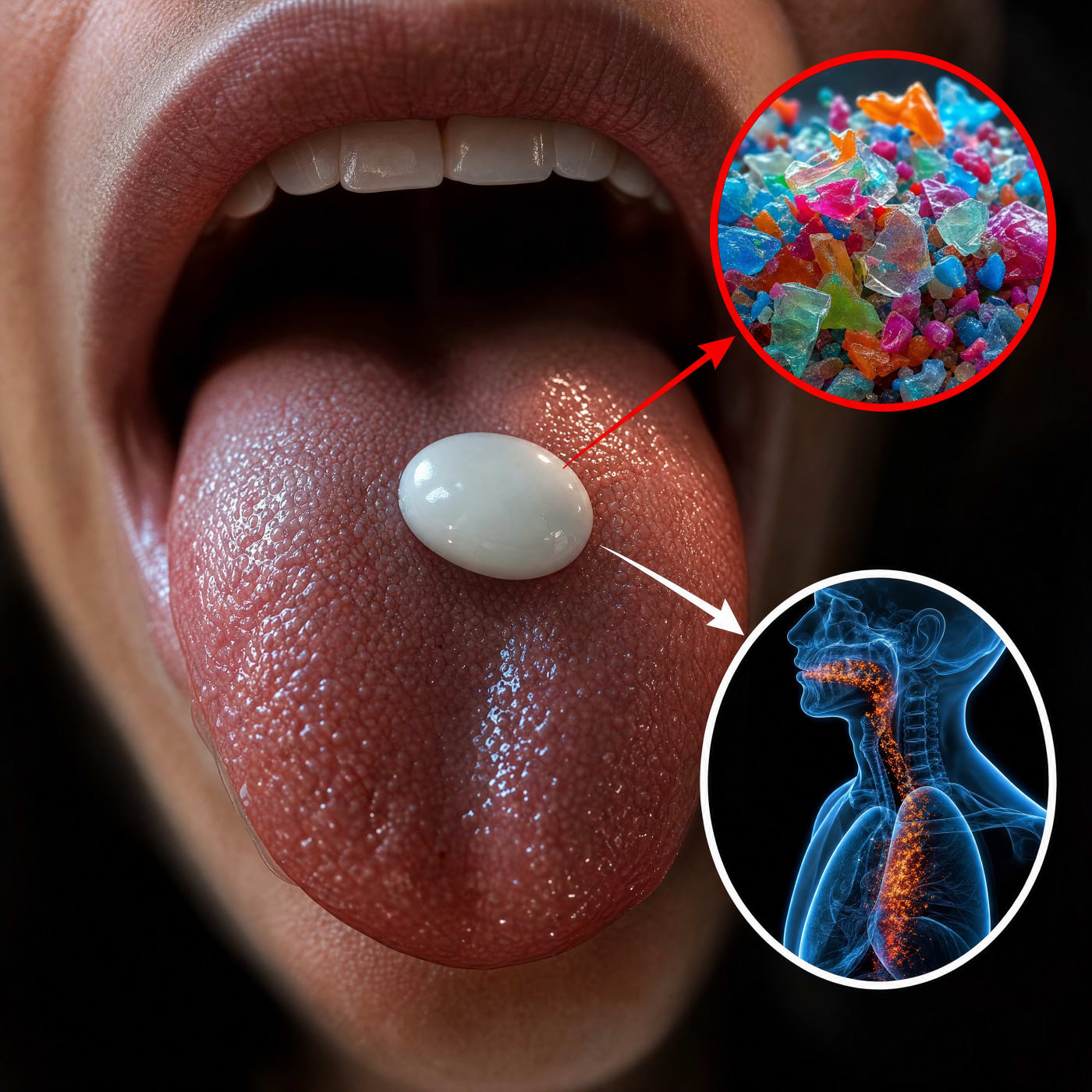
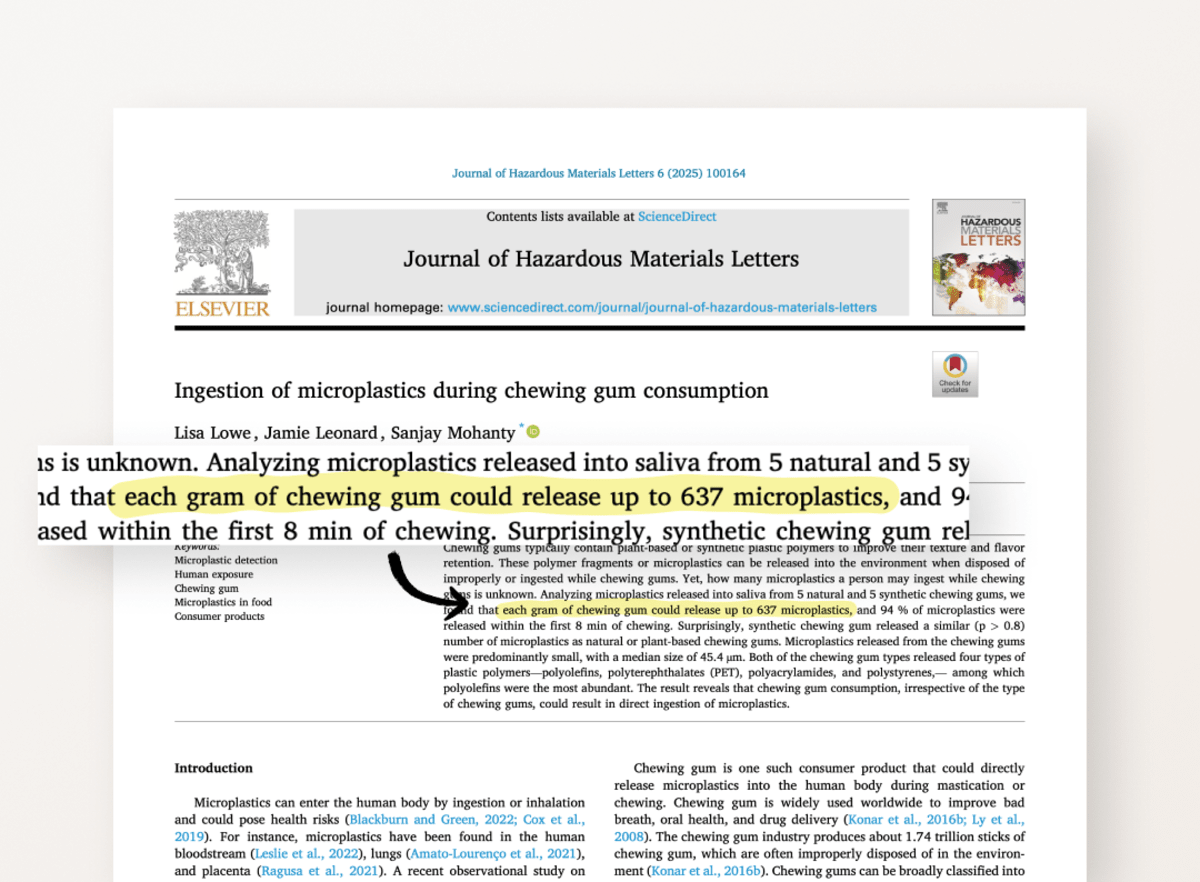
In March 2025, UCLA researchers had people chew gum in the lab and measured what came off into their saliva. On average, gum shed about 100 microplastic particles per gram, and some pieces shed as many as 600 per gram, which works out to roughly 3,000 fragments from one large piece. Most of it came loose fast: by eight minutes about 94% of what they captured had been released.1 The grind of your own jaw is enough to break the base into pieces small enough to swallow.
Friction + heat = plastic in your saliva
Why it happens
- 1
Friction.
The constant grind of chewing wears on the synthetic base and works small fragments loose.
- 2
Heat and saliva.
Warmth and moisture soften the polymer, so it flakes apart faster the longer you chew.
- 3
You swallow it.
Those fragments mix into your saliva. The UCLA team measured them leaving the gum within minutes.

It doesn’t stop at your mouth
Microplastics don’t pass through you. They lodge, and they stay.
They collect in the tissues with the most fat to hold them, and the findings have gotten hard to look away from.
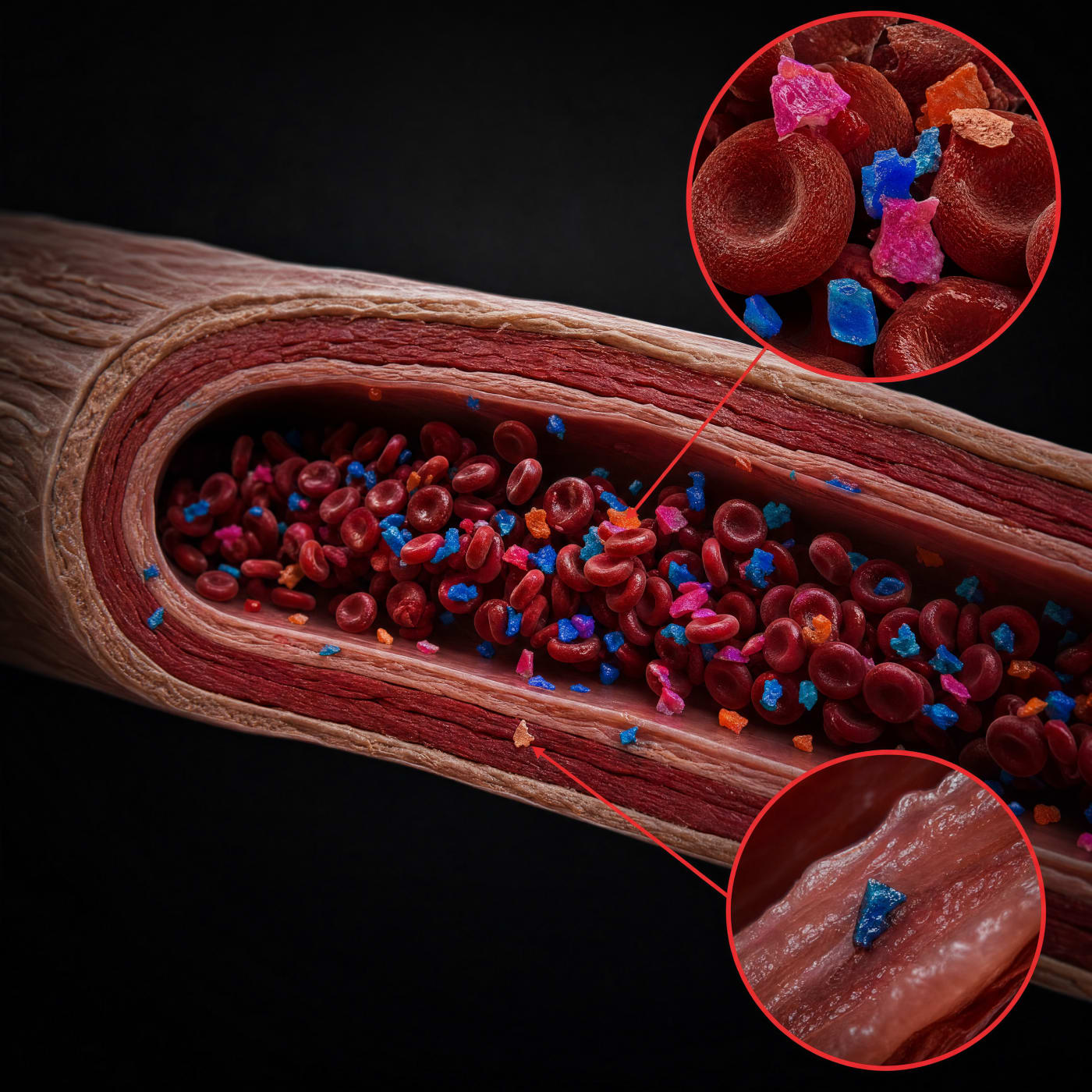
In 2024, researchers cut open human arteries and found microplastic in the plaque. The people who had it were far more likely to have a heart attack, a stroke, or die in the years that followed.2 They found it in every human testicle they tested.3 They found more of it in their brains than in their livers or kidneys, climbing year over year, with the highest levels in the people who died with dementia.4
Nobody is going to tell you your chewing gum did any one of those things, and we won’t pretend the cause-and-effect science is settled, because it isn’t. But you already know which direction this runs. You’re putting a material engineered never to break down into your mouth twice a day, and your own jaw is breaking it down anyway. There’s no reason to keep feeding that pile.
There’s a version that skips the synthetic base entirely. It’s older than the plastic kind.
Older than the plastic kind
There’s one kind of gum that was never plastic to begin with

Before synthetic rubber, people chewed resin straight from the tree. The best of it comes from the mastic tree, Pistacia lentiscus, which to this day refuses to produce its resin anywhere except the southern half of one Greek island: Chios. Hippocrates was recommending it by 400 BC, for digestion and for breath. People have chewed it, unchanged, for over a thousand years.
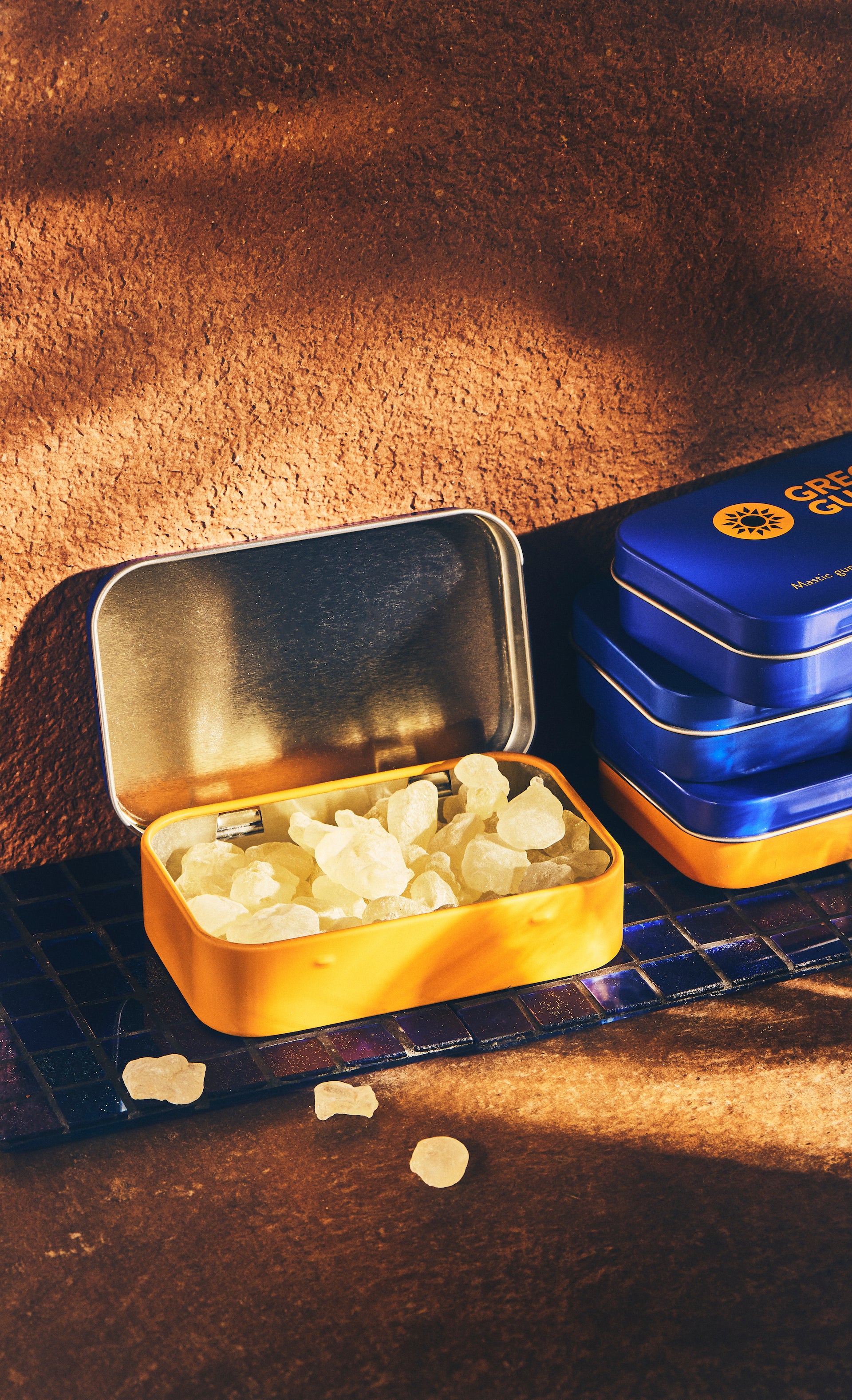
That’s what Greco Gum is. Crystallized mastic resin, hand-harvested on Chios through the official growers’ association, and nothing else. One ingredient. No gum base, because the resin is the gum.
There’s only so much of it. The trees give a fixed yield each season, all of it harvested by hand, and the world wants more than the island can make. That’s why real mastic isn’t cheap, and it’s why it sells out.
What changes when you switch
Switching gets you more than escaping plastic
The microplastics are the reason most people quit regular gum. The jaw is the reason they stay.
A jawline you can see in the mirror. Your masseter is a muscle, and like any muscle it grows when you work it. Mastic is dense and firm, so an hour of chewing loads all four jaw muscles the way a heavy set loads a bicep. Customers tell us the same thing on repeat: a few weeks in, the line of their jaw is sharper, and other people notice before they do.
One piece, all morning. Regular gum is dead in ten minutes. A single nugget keeps its chew for hours, and you can park it and come back to it. You’re not blowing through a pack a day.
Nothing in it but the tree. Pure crystallized resin from Chios. No synthetic base, no softeners, no plastic to grind off and swallow. The thing you came here to escape, gone.
A calmer stomach. People have chewed mastic for digestion since Hippocrates, and a clinical trial on Chios mastic found it eased the symptoms of functional dyspepsia. It takes the edge off bloating and settles a heavy, gassy gut.5
Breath that stays fresh. Mastic goes after the bacteria behind bad breath instead of masking them with a mint coating that quits in twenty minutes.
A few honest things first
Before you try it

It’s hard at first. The first sixty seconds, a fresh piece feels like it might be too tough. Give it a moment. Your jaw warms it, it softens, and it turns into a proper chew. Treat it like a new food, not a stick of Orbit.
The flavor is mild and a little piney, closer to clean forest than to candy. Most people grow to prefer it fast. After a couple weeks, regular gum tastes like sweetened rubber, because that’s what it is.
And one real caution, because we’d rather tell you than have you find out: raw mastic is genuinely hard. If you have fillings, crowns, or braces, start slow and chew gently. This is the real, tough stuff, not a soft commercial gum.
Real mastic, shipped fast
Why people buy it from us

There’s a lot of fake mastic out there, and a lot of it melts in a shipping box somewhere over the Atlantic. We source ours through the official growers’ association on Chios, the same harvest the island has protected for generations, and ship it from a warehouse in the United States. Most orders leave within one business day. You get the real thing from Chios, at the speed of a domestic order, without it turning to soup in customs.
We’re a small team. Three friends who got obsessed with this stuff and decided to do it properly. Email us and an actual person answers.
4.8 from 1,000+ reviews · 100,000+ tins sold
What chewers say
“Great exercise for your jaw without the microplastics.”
“The best all-natural gum I’ve come across, with the benefits, gut health, stronger jaw, and without the risks of traditional gums like microplastics. No-brainer getting Greco.”
“A buddy I hadn’t seen in a while complimented me on how my jawline was jacked.”
“I’ll never go back to regular gum now. I love how this never disintegrates.”
“It can be chewed for hours and hours until your masseters are nice and sore. Leaves your teeth feeling like you just left the hygienist.”
4.8 from 1,000+ reviews100,000+ tins sold
Start here
Start with the Starter Pack

Mastic comes in two shapes, and people have strong preferences once they’ve tried both. So your first order is both.
What you get: one travel-sized tin of Nuggets (Mikro, 15g, our softer, larger pieces) and one of Droplets (Mikro, 15g, our harder, smaller pieces). Two ways to chew, so you can find the one you’ll come back for.
That’s $19.86 a tin, vs $26.48 bought separately.
Bought on their own, the two tins are $52.96. As the Starter Pack, you pay $39.72, about 25% off. It’s the cheapest way to try both and find your variety before you commit to a full-size tin.
A heads-up, not a sales tactic: we run out. Mastic is a small annual harvest, demand outpaces supply worldwide, and we’ve sold out of tins more than once this year. When a SKU is gone, it’s gone until the next production run lands. If it’s in stock right now, this is the time.
Risk-free 30-day trial. Mastic isn’t for everyone. If it’s not for you, email us within 30 days and we’ll swap it for the other variety or refund you in full, shipping included. Keep the tin. There’s nothing to send back. One per customer, on grecogum.com.
Ships from the US, usually within one business day. Secure checkout.


Real people, real gum.